Andropause is a gradual, age-related decline in testosterone levels, while hypogonadism is a medical condition where the body cannot produce enough testosterone. Andropause develops slowly with aging, whereas hypogonadism can occur at any age and often requires medical treatment.
Now, here's the thing. Both can look strikingly similar on the surface. We're talking low testosterone levels, erectile difficulties, nagging fatigue, and that frustrating brain fog.
You often hear the term andropause vs hypogonadism and assume they mean the same thing, but they don't. Still, clinical guidelines from the Endocrinology Society stress a crucial point: doctors need to separate normal, age-related testosterone decline from true hypogonadism. Getting that distinction right is what leads to accurate diagnosis and effective treatment.
So what does this blog offer? A clear, expert breakdown of andropause vs hypogonadism, plus a closer look at why testosterone tends to fall over the years. Read it to learn more.
Why Testosterone Declines With Age
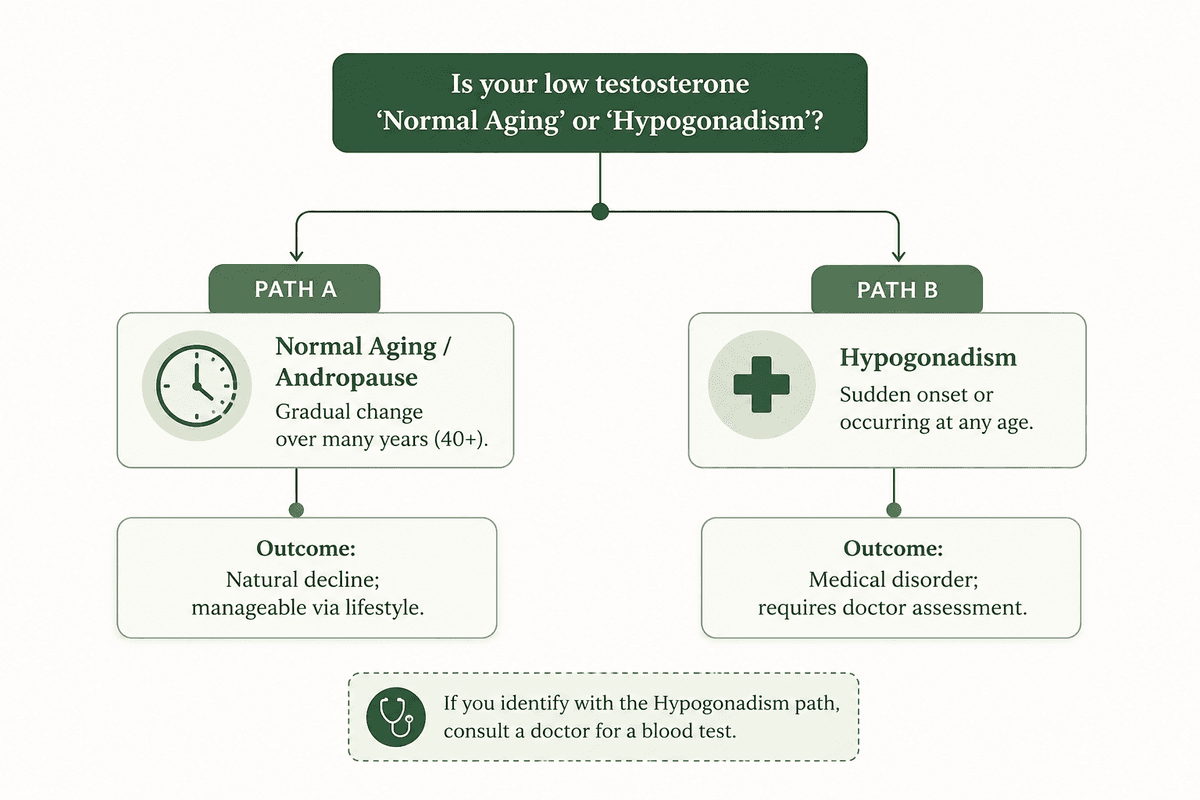
The testosterone decline usually occurs when men age. This decline usually begins around the age of late 30s and speeds up over time. Research studies show that testosterone declines with age, and this decline usually happens after the age of 40 approximately at a rate of 1% per year. (Vermeulen, 2000). This drop is a natural part of getting older.
But here is the important part. Not every man will feel strong effects from this drop. Some older men have testosterone levels that remain high, while others see a bigger drop. The rate of decline varies from person to person. Factors like weight, stress, and other illnesses may speed up this process.
What Is Andropause?
Andropause is a term used to describe age-related testosterone decline, but is not a universally accepted medical diagnosis. Some people call it male menopause. However, this name is a bit misleading. Unlike women who stop having periods, men do not lose their ability to make sperm.
According to a medical paper in the journal Maturitas, "the word andropause is not a true equivalent of menopause (Vermeulen, 2000). As menopause is a sudden hormonal decline, whereas andropause is a gradual testosterone deficiency in men over time. Therefore, the term andropause is used to describe the symptoms linked to age-related testosterone deficiency, when men age.
Symptoms of Andropause
Following are the symptoms of andropause. Let’s have a look at them:
- Low energy and feeling tired all the time
- Difficulty concentrating or feeling foggy
- Lower interest in sex (low libido)
- Erectile dysfunction
- Mood changes like sadness or irritability
- Loss of muscle mass and more body fat
Many of these signs look like normal aging. That is why doctors must be careful. Clinical investigations help rule out other causes.
Is Andropause a Natural Part of Aging?
Yes, for most men, the mild drop in testosterone is a natural part of growing older. However, a severe drop is not normal. According to the Mayo Clinic, the term "male menopause" is often used in media, but it is not a standard medical term (Mayo Clinic, n.d.).
The key point is that andropause describes a gradual change in testosterone levels. It does not happen overnight. And not every man will have strong symptoms of hypogonadism from this natural process.
What Is Hypogonadism?
Male hypogonadism is a medical condition, in which the body is unable to produce enough testosterone. Clinical studies define hypogonadism as having low testosterone levels plus clear signs and symptoms.
Unlike natural aging, hypogonadism may occur at any age. A young man may have it, or even a baby boy can be born with it. It is caused by disorders affecting testicles, the hypothalamus, or the pituitary gland.
Types of Hypogonadism
There are two main types of hypogonadism, which are given below:
Primary Hypogonadism
This type starts in the testicles. The testicles themselves cannot make enough testosterone. Common causes include:
- Genetic conditions like Klinefelter syndrome
- Injury to the testicles
- Chemotherapy or radiation treatment
- Mumps infection that affects the testicles
In this type, the brain tries to fix the problem. It sends more signals to the testicles, but the testicles cannot respond.
Secondary Hypogonadism
Secondary hypogonadism may stem from the conditions that directly affect the hypothalamus and the pituitary gland. Research investigations show that tumors, certain drugs, or systemic disorders may cause this type.
Causes of Hypogonadism
The causes of hypogonadism are different from normal aging. Here are some known causes:
- Klinefelter syndrome (a genetic condition)
- Undescended testicles at birth
- Type 2 diabetes (which can affect hormone balance)
- HIV/AIDS
- Pituitary gland tumors
- Severe stress or rapid weight loss
- Long-term use of opioid pain medicines
As you can see, a man can have hypogonadism at age 20 or 80. It is not tied only to age.
Symptoms of Hypogonadism
The symptoms of hypogonadism look a lot like those of andropause. But they are often more severe. They may include:
- Erectile dysfunction that does not get better
- Infertility (trouble having a baby)
- Loss of underarm or pubic hair
- Growth of breast tissue (gynecomastia)
- Very low sperm production
- Sexual dysfunction
- Hot flashes (similar to women in menopause)
If a young man has these symptoms of hypogonadism, doctors will look for a specific cause. They will not just say it is aging.
Andropause VS Hypogonadism: Key Differences Explained
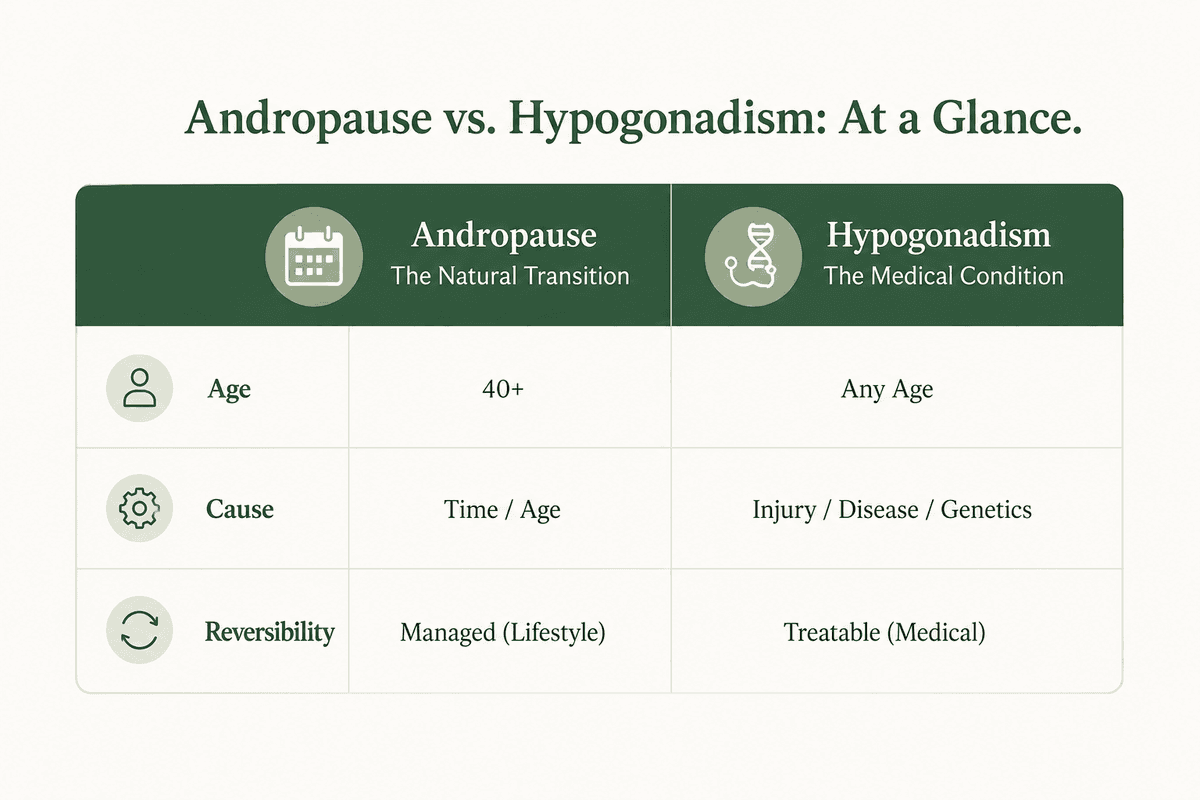
The key differences between andropause and hypogonadism are explained below:
| Feature | Andropause | Male Hypogonadism |
| Primary Cause | Natural aging | Disease or injury to testicles/pituitary gland |
| Age of Onset | Middle age or older (40+) | Any age (from birth) |
| Testosterone Level | Mild to moderate | Often very low |
| Reversibility | Not reversible but manageable | May be treatable if the cause is found |
| Fertility | Usually maintained | Often reduced or lost |
Is Andropause the Same as Hypogonadism?
No, andropause is not the same as hypogonadism. Andropause means a slow, expected drop in testosterone levels due to age. Male hypogonadism means a medical problem that stops the body from making enough testosterone.
The problem may happen at any age. A man can have low testosterone from aging (andropause) without having true hypogonadism. Or a young man can have hypogonadism from a disease.
According to clinical guidelines published in the Annals of Internal Medicine, distinguishing between these two is very important for proper treatment. (Qaseem et al., 2020).
Which Condition Is More Severe For Men? Hypogonadism or Andropause
Hypogonadism is generally considered more severe and significant, because it involves defined hormonal deficiency with identifiable causes. Research studies by clinical experts also associate it with other disorders. Research investigations show that untreated hypogonadism is linked with reduced bone mineral density and increased risks of osteoporosis. ((Bhasin et al., 2010).
Moreover, it is also associated with higher rates of type 2 diabetes and metabolic syndrome, according to a study in Diabetes Care. These medical conditions may affect many aspects of life, including appetite, weight, and energy levels.
[cta]On the other hand, studies demonstrate that andropause is considered less severe compared to hypogonadism. Because it is a natural process. In andropause, testosterone drops happen due to age or when a person grows older. This drop in testosterone levels gradually decreases over time, not occurring suddenly.
Can You Have Both?
Yes, a man can have both conditions. Imagine an older man who has normal testosterone decline from age (andropause). Then he develops a pituitary gland tumor (hypogonadism). His testosterone levels may drop much faster and lower than expected.
In this case, onset hypogonadism (new hypogonadism) happens on top of normal aging. Research studies suggest that obesity and type 2 diabetes are also strongly associated with low testosterone levels, and it may worsen over time. (Dhindsa et al., 2004).
How Healthcare Professionals Diagnose Low Testosterone
Doctors do not guess when it comes to testosterone levels. They follow a clear process. Healthcare professionals start with a full medical history and physical exam. According to Endocrine Society clinical practice guidelines, diagnosis requires:
Blood Test for Testosterone
The main test is a blood draw. Doctors measure total testosterone levels. The best time for this test is in the morning (between 8 and 10 AM).
This is when testosterone levels are the highest. If the first test shows low levels, the doctor will repeat it. Clinical investigations require two low readings before making a diagnosis.
Additional Hormone Testing
If the blood test shows low testosterone, doctors may run more tests. They may check:
- LH and FSH (these are brain hormones that control the testicles)
- Prolactin (a hormone that can be high with pituitary tumors)
- Estradiol (a form of estrogen)
These tests help the doctor decide between primary and secondary hypogonadism.
When Diagnosis Confirms Hypogonadism
A diagnosis of male hypogonadism requires two things. First, low testosterone levels from a blood test. Second, clear symptoms of hypogonadism (like sexual dysfunction or low energy). If a man has low numbers but no symptoms, doctors may not start treatment. They may just watch and wait.
If both things are confirmed, then the doctor will tell the patient that he has hypogonadism (low testosterone levels).
Physical and Psychological Effects of Low Testosterone
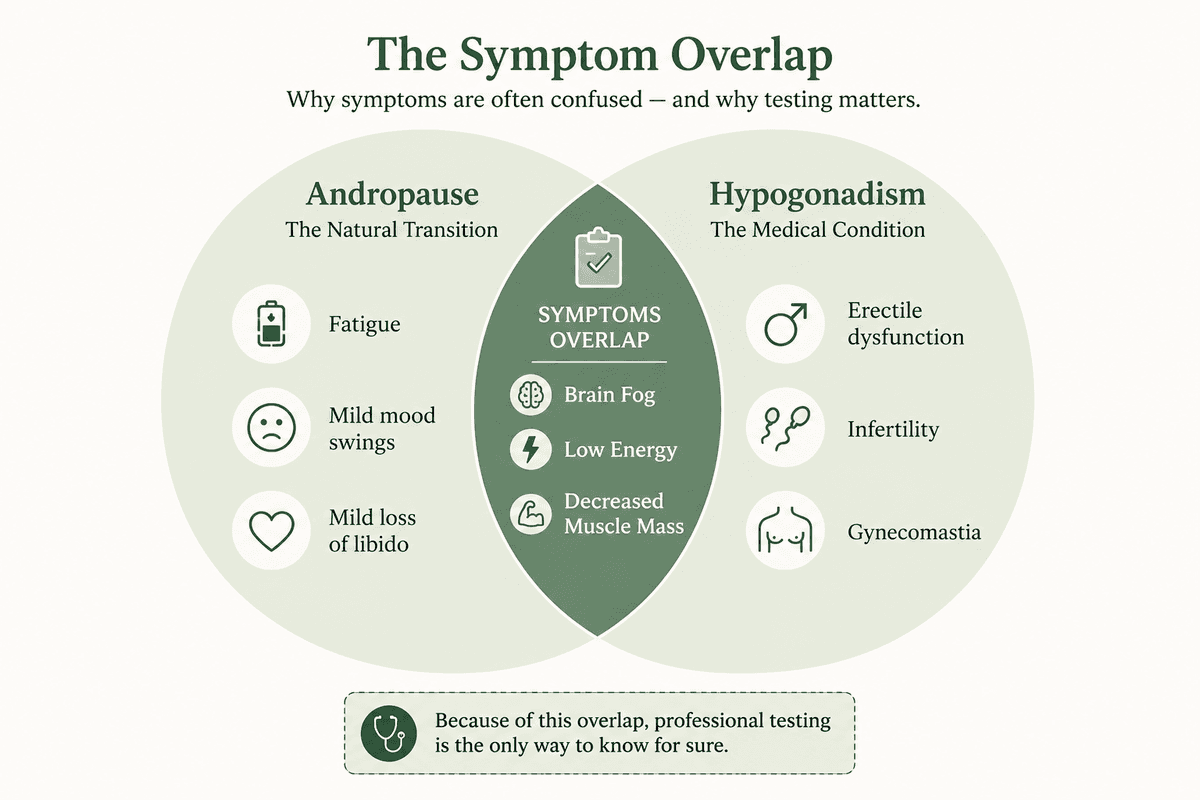
The physical and psychological effects of low testosterone are given below:
Impacts on Physical Health
- Loss of muscle mass
- Increase in body fat (especially belly fat)
- Erectile dysfunction
- Weaker bones (higher risk of breaks)
- Sperm production may drop, leading to fertility issues
Impacts on Mental Health
- Difficulty concentrating at work or home
- Low mood or signs of depression
- Lack of motivation or drive
- Poor sleep quality
- Memory lapses (forgetfulness)
According to a review in the Journal of Clinical Endocrinology & Metabolism, these effects can greatly lower a man's quality of life (Bhasin et al., 2010).
What are the Treatment Options for Low Testosterone?
Treatment depends on the cause. For true male hypogonadism, doctors often recommend medical therapy. For mild age-related drops (andropause), lifestyle changes may be enough.
Lifestyle Management
For many older men, these steps can help boost energy and health:
- Lose weight (excess body fat lowers testosterone)
- Exercise (especially lifting weights)
- Get enough sleep (poor sleep lowers hormone levels)
- Reduce stress (high stress raises cortisol, which blocks testosterone)
Testosterone Replacement Therapy (TRT)
Testosterone replacement therapy is a common treatment for hypogonadism. It comes in many forms: gels, injections, patches, or pellets. Testosterone replacement therapy may improve muscle mass, mood, and sex drive in symptomatic men with clinically confirmed hypogonadism.
However, it is not for everyone and also carries risks. According to the American College of Physicians and the Annals of Internal Medicine, doctors should discuss the risks of testosterone replacement therapy before starting it (Qaseem et al., 2020). These risks may include:
- Worse sleep apnea (breathing pauses during sleep)
- An increase in red blood cells (raising stroke risk)
- Possible harm to the prostate (though evidence is not clear)
Hormone Replacement Therapy (HRT)
Hormone replacement therapy is a broader term. It includes testosterone replacement, along with other hormones to treat clinically diagnosed low testosterone levels. A healthcare professional decides which type of hormone replacement suits a diagnosed person. According to one study, hormone replacement therapy should be provided according to the needs and after the prescription of a healthcare professional.
When Should You See a Doctor?
You should see a doctor in case you are facing the following symptoms:
- Low libido
- Low energy levels
- Infertility
- Erectile dysfunction (ED)
- Persistent fatigue
- Mood swings
- Irritability
- Loss of muscle mass
- Brain fog
The doctor will prescribe blood tests to confirm your medical condition before deciding treatment.
Disclaimer: This blog is for educational purposes only. It does not offer medical advice. Always talk to your doctor about your testosterone levels or symptoms of hypogonadism. Do not start or stop any therapy without a healthcare professional's guidance.
Frequently Asked Questions
How does a man know If he has hypogonadism?
A man may have hypogonadism if he has persistent symptoms like low libido, fatigue, and confirmed low testosterone levels on two separate morning blood tests. Diagnosis requires both symptoms and lab results.
What is the common cause of andropause?
The common cause is simply men's age. Over time, the testicles slowly produce less testosterone. This is a natural part of getting older.
Does andropause end?
No, andropause does not end. Testosterone levels continue to drop very slowly over a man's life. But the rate of drop may slow down after age 70.
When does andropause usually start?
Andropause usually starts around age 40 to 50. However, many men do not notice symptoms until their late 50s or 60s.
What are the first signs of hypogonadism?
The first signs may be low sex drive, erectile dysfunction, and extreme tiredness. Some men also notice less facial or body hair.
Can masturbation cause low testosterone?
No. Research studies have found no link between masturbation and low testosterone levels. This is a common myth. Testosterone decline happens from aging or disease, not from normal sexual activity.
References
- https://www.mayoclinic.org/healthy-lifestyle/mens-health/in-depth/male-menopause/art-20048056
- https://pmc.ncbi.nlm.nih.gov/articles/PMC4046605/
- https://www.sciencedirect.com/science/article/pii/S0378512299000754?__cf_chl_tk=YG5dfVZox7snXQXWs_f36FdZkaOSArmQF4xzuhzCxIg-1776942888-1.0.1.1-lfyDD7w_aM7zURIJ3sBMsvUwSjyxoBbgCkhmdszsmFk
- https://diabetesjournals.org/care/article-abstract/30/4/911/25724/Clinical-and-Biochemical-Assessment-of?redirectedFrom=fulltext
- https://www.acpjournals.org/doi/10.7326/M19-0882
- https://www.endocrine.org/clinical-practice-guidelines/testosterone-therapy?utm_source=chatgpt.com