You are tired all the time. Your motivation has dropped. You feel like a different person than you were five years ago. If that sounds familiar, stress and your hormones may have more to do with it than you think.
Cortisol and testosterone work against each other in the body. When cortisol goes up, testosterone often goes down. The relationship is not perfectly one-to-one, but the pattern is well established in the research.
This matters because long-term stress is common. Work pressure, poor sleep, and financial worry all keep cortisol levels high. Over time, that can chip away at testosterone levels and produce symptoms that many men write off as just getting older.
This article explains the cortisol vs. testosterone relationship, what happens when that balance breaks down, and what the evidence actually supports when it comes to addressing it.
What Is Cortisol and What Does It Do?
Cortisol is your primary stress hormone. Your body releases it when it senses danger or pressure. It is produced by the adrenal glands and controlled by the HPA axis, which stands for the hypothalamic-pituitary-adrenal axis.
Here is how it works. Your brain detects a stressor. The hypothalamus sends a signal. The pituitary picks it up and tells the adrenal glands to release cortisol. The whole process can kick off within minutes.
In small doses, cortisol is helpful. It raises your blood sugar, sharpens focus, and helps you respond quickly. The problem starts when it stays elevated for a long time.
What Is Testosterone and How Is It Produced?
Testosterone is the main male sex hormone. In men, it is mostly made in the testes. A smaller amount comes from the adrenal glands. Its production is controlled by the HPG axis, the hypothalamic-pituitary-gonadal axis.
The process works like this. The hypothalamus releases a signal hormone called GnRH. That tells the pituitary to release LH and FSH. LH then tells the Leydig cells in the testes to make testosterone. Levels are highest in the morning and drop through the day.
Testosterone affects muscle mass, bone strength, libido, mood, energy, and red blood cell production. When several of these start declining at once, low testosterone may be a factor.
How Cortisol and Testosterone Interact: The HPA-HPG Axis Relationship
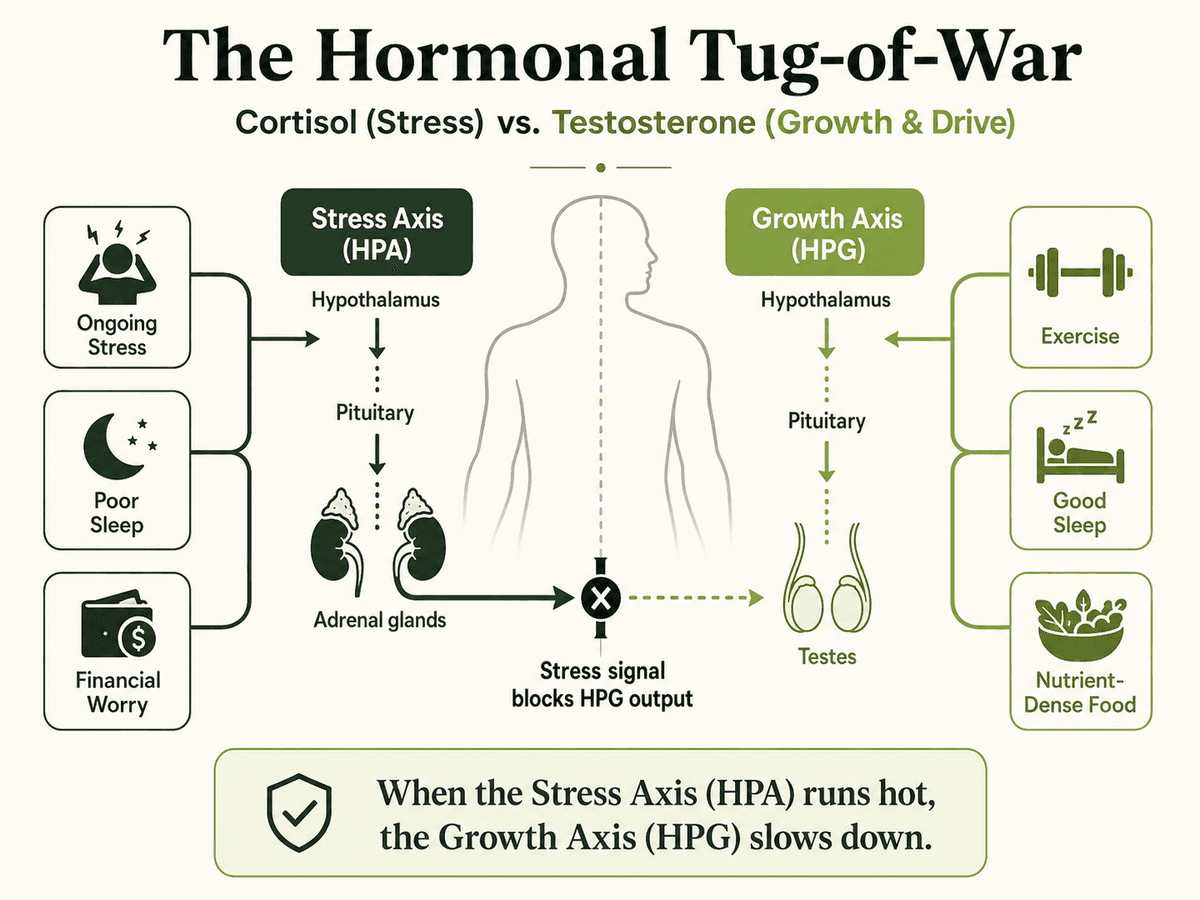
These two hormones are controlled by separate systems in the body and have different roles, even though those regulatory systems talk to each other. When the stress response activates and cortisol goes up, it directly interferes with testosterone secretion.
A review published in Metabolic Brain Disease looked at how the HPA and HPG axes interact. The authors found that long-term activation of the stress axis can reduce testosterone output over time.
High Cortisol Levels and Testosterone Suppression
High cortisol levels suppress testosterone through a few key pathways as part of the body's response to ongoing stress, and this effect can be triggered through these same mechanisms. First, cortisol acts on the Leydig cells and makes them less responsive to LH. Second, it raises a protein called SHBG, which grabs onto free testosterone and takes it out of circulation. This matters clinically: a total testosterone reading may appear within normal range in a chronically stressed man while free testosterone the biologically active fraction is meaningfully suppressed by elevated SHBG. This is why providers should measure free testosterone alongside total testosterone in men presenting with stress-related symptoms.
A study in the Journal of Sports Science and Medicine tested 45 men at rest and after hard exercise. At rest, cortisol and testosterone were not clearly related. After exercise, higher cortisol went with lower total testosterone. The authors noted the link was associative, not proven cause and effect.
A 2025 review in the Indian Journal of Endocrinology and Metabolism looked at the testosterone-to-cortisol ratio as a practical tool. A falling ratio can signal that stress is outpacing recovery.
Shared Precursor Competition (Pregnenolone Steal): Both cortisol and testosterone are synthesized from the same cholesterol-derived precursor pregnenolone. Under chronic stress conditions, the body shunts pregnenolone toward cortisol production, potentially reducing the raw material available for testosterone synthesis. This mechanism is sometimes called the "pregnenolone steal" in clinical endocrinology and provides a biochemical explanation for why men under prolonged physical or psychological stress can experience suppressed testosterone even when LH signaling is intact. It is distinct from the LH suppression pathway and represents a second independent route by which high cortisol can reduce testosterone output.
Acute Stress vs. Chronic Elevated Cortisol
Acute stress is part of the body’s fight or flight mode, and a short, intense stressor may cause a brief rise in testosterone. But that effect is inconsistent and not seen across all studies.
Chronic stress is a different picture. In most cases, a short stress reaction does not have the same hormonal effect as sustained elevation. A study in the journal Stress collected saliva samples from men and women before and after a social stress test. Testosterone dropped in both groups after the stressor. Levels hit their lowest point around 20 minutes in. They had not returned to baseline by the end of the 35-minute window.
The authors also found that the testosterone drop was largely independent of cortisol levels. This suggests the HPG axis responds to stress on its own, not just through cortisol.
When Hormones Fall Out of Balance: What It Actually Feels Like
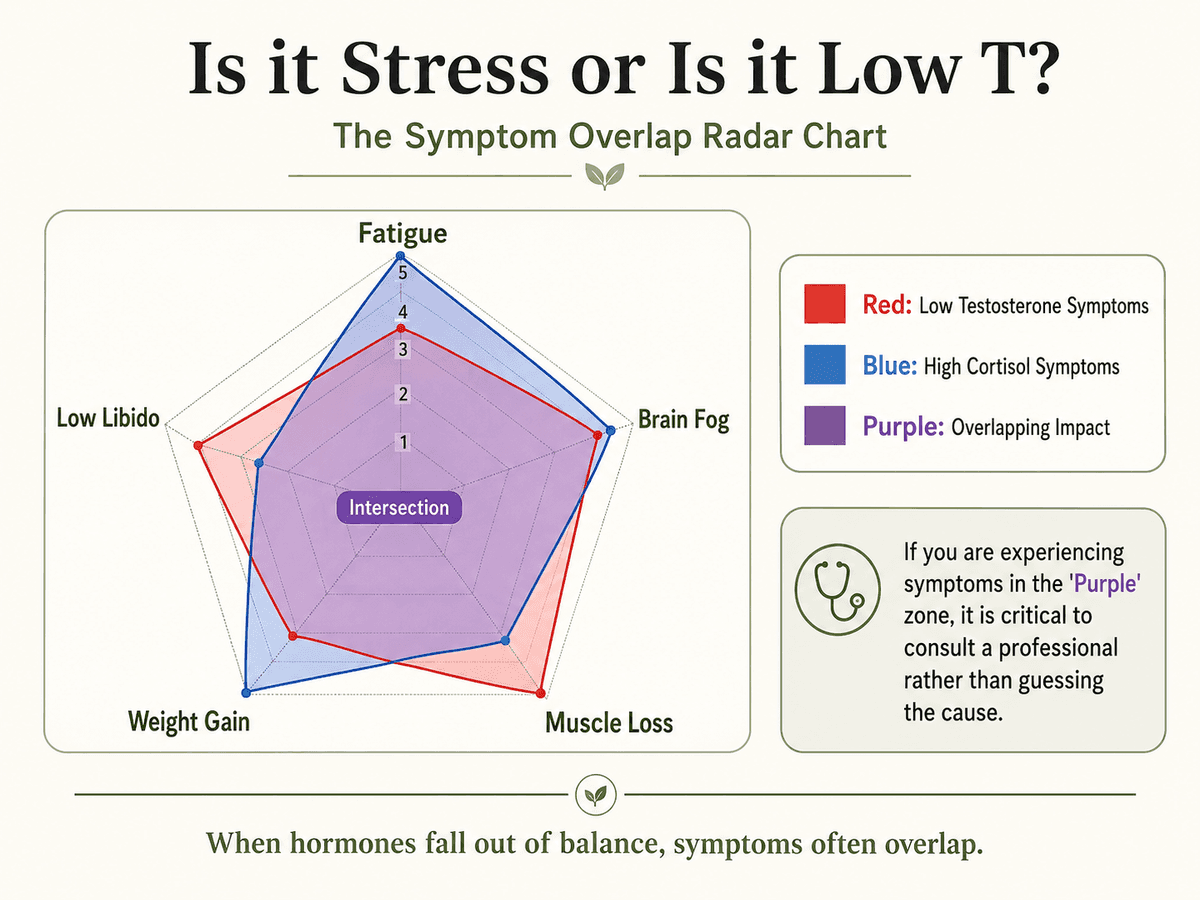
When cortisol stays high and testosterone stays low, it shows up in the body. High testosterone levels support energy, mood, and drive. Low testosterone levels do the opposite. It is not just a number on a lab report. Most men feel it in their daily life before they ever get tested.
A clinical review in Medical Clinics of North America listed the main symptoms of low testosterone as reduced libido, erectile difficulty, muscle loss, increased body fat, low bone mass, depressed mood, and fatigue. A review in Urologic Clinics of North America also noted strong links between low testosterone, obesity, and metabolic problems.
Here is what that can look like day to day:
Muscle Breakdown
Testosterone drives muscle protein synthesis. When it falls and cortisol stays high, the body shifts into a breakdown state. Strength drops. Recovery slows. Men often notice this even when they are still training regularly.
Mood Changes
Low testosterone has been linked to depressive feelings, irritability, low motivation, emotional flatness, and anxiety. The connection between testosterone and mood is real. But it is not the only factor at play. Multiple systems are involved.
Decreased Sexual Function
Reduced libido and erectile difficulty are two of the most commonly reported symptoms of low testosterone. Testosterone plays a role in both desire and physical response. Other factors like stress, cardiovascular health, and medications also contribute.
TRT is FDA-approved for testosterone deficiency treatment, not for men without clinically confirmed hypogonadism. It can be given by injections, gels, or pellets, and potential adverse effects include acne and prostate enlargement.
Low Energy Levels
Fatigue and low drive are common with low testosterone. High cortisol makes this worse. It disrupts sleep and interferes with how the body regulates energy. The two together can leave a man feeling consistently drained.
Poor Cognitive Function
Evidence suggests testosterone plays a role in memory, focus, and mental sharpness. The review in Urologic Clinics of North America found that men with low androgens showed signs of cognitive decline. The evidence here is moderate. Results vary from person to person.
This use has not been approved by the FDA.
Low Bone Density
Testosterone helps maintain bone strength throughout a man's life. When levels fall for a long time, bones get weaker. This raises the risk of fractures and osteoporosis. It is one of the most overlooked effects of long-term low testosterone.
Weight Gain
Low testosterone is linked to higher body fat, especially around the belly. That fat tissue converts testosterone to estrogen through a process called aromatization. The result is a cycle: lower testosterone leads to more body fat, which drives testosterone even lower.
The Dual-Hormone Hypothesis: When High Cortisol Blocks Testosterone's Drive
The Core Idea
The dual-hormone hypothesis says cortisol and testosterone play different roles in behavior, and testosterone is more likely to lead to dominance-related behavior when cortisol is low. When cortisol is high, testosterone's influence on status-seeking behavior, dominance, and drive is blocked or reversed.
The idea was first tested in research published in Hormones and Behavior. They looked at leadership and competition tasks. Testosterone was linked to dominant behavior, but only in people with low cortisol. In high-cortisol individuals, that link disappeared or flipped.
What the Data Shows
A meta-analysis in Neuroscience and Biobehavioral Reviews pulled together 33 studies with data from over 8,500 people. Here is what they found:
- High cortisol does appear to blunt testosterone's influence on behavior, but the effect across the general population is small
- The interaction showed up most clearly in direct competition and social status situations
- In everyday contexts, the link between the two hormones was weaker
- The researchers flagged that positive findings may have been overrepresented, meaning the true effect could be even smaller
The literature does not show a simple positive association between cortisol and testosterone across everyday settings.
Who It Applies To
A study in Aggressive Behavior found the testosterone-cortisol interaction only mattered in men who were already prone to dominant behavior. This work suggests the hypothesis does not apply the same way to every man. Individual differences matter a lot.
What This Means for You
If you are under high perceived stress, your cortisol is likely elevated. Research suggests that it can blunt the drive and assertiveness that testosterone normally supports. That is not permanent. It is a physiological state that can respond to lifestyle changes and, when needed, medical evaluation to evaluate persistent symptoms and hormone status.
One Test Does Not Tell the Whole Story: Why Perceived Stress Alone Should Not Drive Medical Decisions
Hormone Levels Follow Status, They Do Not Always Predict It
Research in the Journal of Neuroendocrinology studied male cynomolgus monkeys over time. Neither cortisol nor testosterone levels predicted which monkey would become dominant. The dominant monkey only showed higher hormone levels after it had already become dominant. In these males, the hormones reflected where things stood, not where they were headed. That is an important limit to keep in mind when applying animal research to human health decisions. These results align with prior findings that hormone measures often reflect current social position more than future outcomes.
Hormones Fluctuate Constantly
Most studies measure hormones from saliva samples at one point in time. But hormonal levels fluctuate throughout the day. Sleep, food, body weight, and activity all affect the numbers. A single reading only captures a small slice of what is actually happening, not trends across a long period; in research, hair testing is sometimes used to study those patterns over time.
Stress Perception Is Not a Diagnosis
Feeling stressed does not mean your testosterone is low. Many men under heavy, ongoing stress still have testosterone levels in the normal range. Lab testing is the only reliable starting point.
How to Lower Cortisol and Support Testosterone Naturally: What the Evidence Shows
Lifestyle has a direct effect on both hormones. The evidence here is more consistent and more actionable than the cortisol-testosterone relationship on its own.
Sleep matters
Research in the Indian Journal of Endocrinology and Metabolism found the testosterone-to-cortisol ratio drops with sleep loss. Cortisol rises. Testosterone output in the morning falls. Sleep quality directly affects testosterone production.
Research shows that restricting sleep to around 5 hours for one week can reduce daytime testosterone levels by 10-15% in young healthy men. The mechanism is through LH pulsatility - poor or shortened sleep disrupts the hormonal signals that drive morning testosterone production. Most men produce the majority of their daily LH pulses during sleep, particularly during REM stages. Aiming for 7-9 hours supports this process.
[cta]Resistance training
Resistance training itself supports testosterone production and helps keep the testosterone-to-cortisol ratio healthy. But overtraining raises cortisol and can suppress testosterone. Recovery is part of the work, not a break from it.
Body weight
Excess belly fat raises estrogen through aromatization and is linked to higher cortisol levels. Weight gain and hormonal imbalance can reinforce each other.
Chronic inflammation
Inflammation keeps cortisol elevated. Poor diet, alcohol use, and untreated health conditions all feed into this. Some studies suggest high-dose omega-3 supplementation may modestly influence cortisol response under specific conditions, though the evidence is limited.
Lower perceived stress
This is another factor tied to lower basal cortisol. Practices like structured relaxation and mindfulness have shown modest benefits for cortisol in controlled settings. The effects on testosterone are less consistent, but reducing stress load generally supports the hormonal environment.
If symptoms persist after real lifestyle changes, the next step is clinical evaluation.
When Lifestyle Is Not Enough: Considering Medical Evaluation
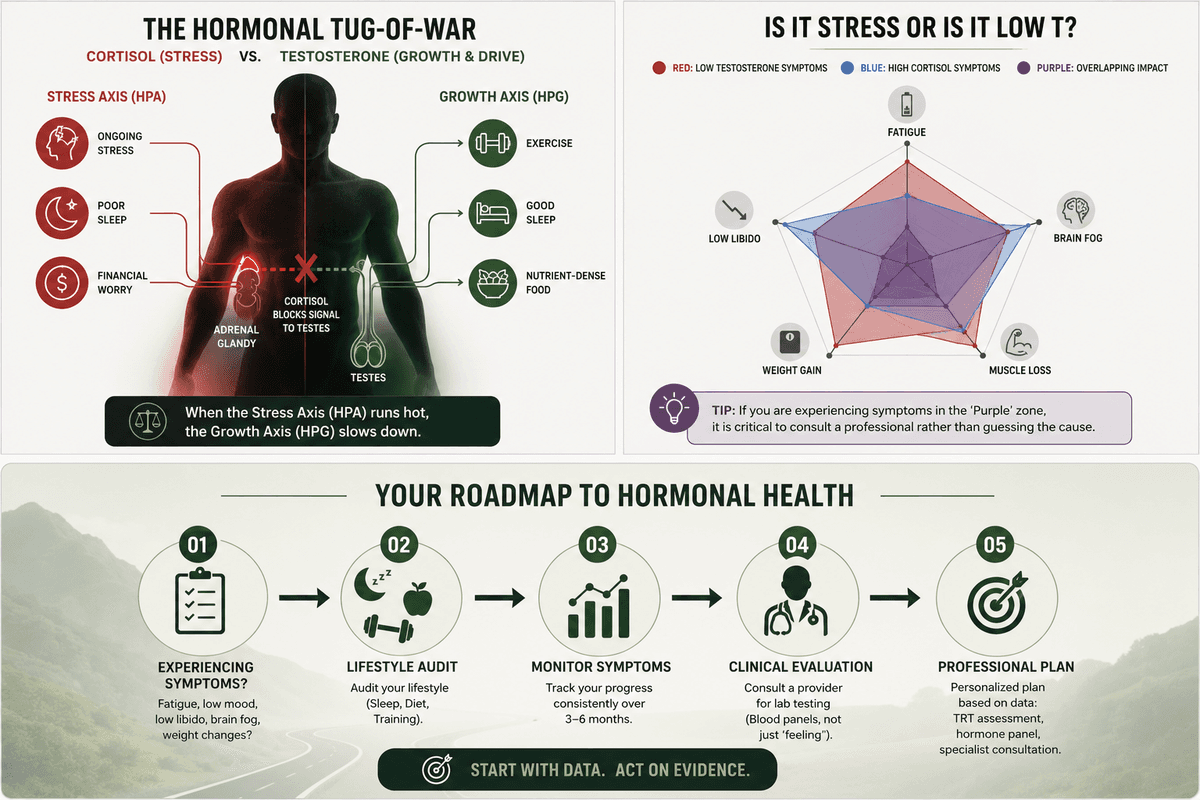
Lifestyle changes help a lot of men. But they are not always enough. Some hormone imbalances have underlying medical causes that diet, sleep, and training will not resolve.
If you have made consistent lifestyle changes and still feel like something is off, a licensed provider can assess whether medical intervention makes sense. Potential options include:
Testosterone Replacement Therapy (TRT)
This is a supervised medical treatment for confirmed hypogonadism. It requires lab-confirmed low testosterone alongside real symptoms and is not appropriate based on stress levels alone. It carries risks including effects on fertility, elevated hematocrit, and estrogen conversion, which a provider will monitor over time. Treatment should be customized by a healthcare professional based on labs, symptoms, fertility goals, and monitoring needs.
Cortisol-Modulating Treatments
These exist for specific medical conditions. Cushing's syndrome causes chronically elevated cortisol levels, while Addison's disease causes insufficient cortisol. Both are diagnosable conditions, not the same as everyday work stress.
Surgical Intervention
This may be needed when hormone-producing tumors are driving the imbalance.
Supplements
Certain options show early promise. Ashwagandha has been studied for cortisol reduction and testosterone support in small trials, though the data is limited and inconsistent. No supplement has FDA approval for treating hypogonadism.
Any medical decision should be based on lab results and a provider's evaluation of the full picture. Symptom lists are a starting point, not a diagnosis.
How Testosterone and Cortisol Levels Are Properly Measured
Both hormones need to be tested through a blood draw ordered by a licensed provider. At-home kits and single saliva tests do not give enough clinical information for a real diagnosis.
DHEA-S (Dehydroepiandrosterone Sulfate): Produced by the adrenal glands and a precursor to both testosterone and estrogen, DHEA-S levels decline with chronic stress and aging. Some providers include it as part of a complete hormonal panel alongside total testosterone, free testosterone, LH, FSH, and cortisol particularly when adrenal health is suspected as a contributing factor to low testosterone symptoms.
For testosterone, morning testing is standard. Levels are highest early in the day. The table below shows general reference ranges used in US clinical practice, measured in ng/dL. Ranges vary by laboratory and testing method.
| Age Range | General Reference Range (ng/dL) |
| 20–29 | 400–1,080 |
| 30–39 | 350–1,000 |
| 40–49 | 300–890 |
| 50–59 | 250–800 |
| 60–69 | 200–700 |
| 70+ | 190–650 |
Most US guidelines use 300 ng/dL as the threshold for low testosterone. But the number alone does not tell the full story. A man at 290 ng/dL with no symptoms is in a different situation than a man at 290 ng/dL who is struggling daily.
Free testosterone matters too. Total testosterone includes a hormone bound to SHBG, which the body cannot use. When total levels are borderline or symptoms persist despite a normal result, free testosterone gives a more complete picture. A licensed provider interprets all of this alongside your symptoms and full clinical history.
For cortisol, one reading is rarely enough. Levels peak within 30 to 45 minutes of waking and drop through the day. A meaningful evaluation usually involves multiple measurements or a stimulation test.
As noted earlier, perceived stress is not a substitute for lab results. Numbers matter more than how a man feels on a given day.
FAQ
Does high cortisol directly cause low testosterone?
High cortisol can suppress testosterone through the HPA-HPG axis. But it does not reliably cause clinical hypogonadism in otherwise healthy men. The relationship is real but not a straight line.
What is the dual-hormone hypothesis?
It proposes that testosterone's effects on dominant, status-seeking, and status-related behaviors only show up when cortisol is low. A meta-analysis of 33 studies found support for the idea, though the effect size was small.
Can reducing stress raise testosterone levels?
It may help. Lower stress means lower cortisol, which gives testosterone more room to work. The effect is modest, and how much it matters differs from person to person.
Does acute stress always lower testosterone?
Not always. Short competitive stressors may briefly raise testosterone in some men. Chronic high cortisol over time is more consistently linked to lower testosterone levels.
Is elevated cortisol the same as adrenal fatigue?
No. Adrenal fatigue is not a recognized medical diagnosis. Conditions like Cushing's syndrome and Addison's disease involve real cortisol dysregulation and require clinical evaluation. They are not the same as daily life stress.
Should I test my cortisol if I have low testosterone symptoms?
A provider may include it as part of a broader workup. Testing cortisol on your own without clinical guidance rarely gives you enough context to act on the results.
Does cortisol block testosterone receptors?
Cortisol does not directly block the androgen receptor, but it reduces the sensitivity of the Leydig cells in the testes to LH stimulation meaning even when LH signal arrives, testosterone production is blunted. This Leydig cell insensitivity is a receptor-adjacent suppression mechanism distinct from the LH suppression and SHBG pathways.
How long does it take for cortisol to lower testosterone?
A 2023 analysis found cortisol spikes predict testosterone drops occurring approximately 0.5 to 3 days later. This delayed window explains why the hormonal effects of stressful events are often felt several days afterward rather than immediately.
Does working out raise cortisol and lower testosterone?
Resistance training acutely raises both cortisol and testosterone. Short, intense sessions produce a transient testosterone spike followed by cortisol elevation. In well-recovered men, the net hormonal effect is positive. Overtraining chronically insufficient recovery relative to training volume keeps cortisol elevated and suppresses testosterone over time. The testosterone-to-cortisol ratio drops in overtrained men, which is why the ratio is used as a marker of overtraining syndrome.
Can you have high cortisol and normal testosterone?
Yes. The cortisol-testosterone relationship is associative, not absolute. Many men under sustained stress maintain testosterone within the normal range. The hormonal system has compensatory mechanisms. Lab testing is the only way to confirm where your levels actually fall; perceived stress levels are not a reliable proxy.
Conclusion
Stress and testosterone are connected in ways that show up in real life. High cortisol suppresses testosterone production. It also blunts the drive and competitive edge that testosterone normally supports. When that balance breaks down over time, men feel it.
The physical effects are real. Muscle loss, low energy, depressive feelings, sexual difficulty, brain fog, weaker bones, and weight gain are all tied to long-term low testosterone. Stress is one part of that picture, but not the only one.
The most consistent evidence points to lifestyle. Sleep, body composition, training, and inflammation all shape the cortisol-testosterone balance in ways that perceived stress levels alone do not.
If you are experiencing these symptoms, a clinical evaluation is the right move. A provider can test your levels, look at the full hormonal picture, and discuss what options make sense for you.
References
Mbiydzenyuy NE, Qulu LA. Stress, hypothalamic-pituitary-adrenal axis, hypothalamic-pituitary-gonadal axis, and aggression. Metab Brain Dis. 2024;39(8):1613-1636. doi:10.1007/s11011-024-01393-w. PMID: 39083184. https://pubmed.ncbi.nlm.nih.gov/39083184/
Mondal S, Hathi DK, Bhattacharya S, Kalra S. The Testosterone: Cortisol Ratio - A Tool with Practical Use and Research Potential in Endocrinology. Indian J Endocrinol Metab. 2025;29(5):510-516. doi:10.4103/ijem.ijem_85_25. PMID: 41229716. PMCID: PMC12604835. https://pmc.ncbi.nlm.nih.gov/articles/PMC12604835/
Brownlee KK, Moore AW, Hackney AC. Relationship Between Circulating Cortisol and Testosterone: Influence of Physical Exercise. J Sports Sci Med. 2005;4(1):76-83. PMID: 24431964. PMCID: PMC3880087. https://pmc.ncbi.nlm.nih.gov/articles/PMC3880087/
Pletzer B, Poppelaars ES, Klackl J, Jonas E. The gonadal response to social stress and its relationship to cortisol. Stress. 2021;24(6):866-875. doi:10.1080/10253890.2021.1891220. PMID: 33709874. https://pubmed.ncbi.nlm.nih.gov/33709874/
Mehta PH, Josephs RA. Testosterone and cortisol jointly regulate dominance: evidence for a dual-hormone hypothesis. Horm Behav. 2010;58(5):898-906. doi:10.1016/j.yhbeh.2010.08.020. PMID: 20816841. https://pubmed.ncbi.nlm.nih.gov/20816841/
Dekkers TJ, van Rentergem JAA, Meijer B, Popma A, Wagemaker E, Huizenga HM. A meta-analytical evaluation of the dual-hormone hypothesis. Neurosci Biobehav Rev. 2019;96:250-271. doi:10.1016/j.neubiorev.2018.12.004. PMID: 30529754. https://pubmed.ncbi.nlm.nih.gov/30529754/
Pfattheicher S. Illuminating the dual-hormone hypothesis: About chronic dominance and the interaction of cortisol and testosterone. Aggress Behav. 2017;43(1):85-92. doi:10.1002/ab.21665. PMID: 27407048. https://pubmed.ncbi.nlm.nih.gov/27407048/
Czoty PW, Gould RW, Nader MA. Relationship between social rank and cortisol and testosterone concentrations in male cynomolgus monkeys. J Neuroendocrinol. 2009;21(1):68-76. doi:10.1111/j.1365-2826.2008.01800.x. PMID: 19094095. PMCID: PMC2709846. https://pubmed.ncbi.nlm.nih.gov/19094095/
Bassil N. Late-onset hypogonadism. Med Clin North Am. 2011;95(3):507-523. doi:10.1016/j.mcna.2011.03.001. PMID: 21549875. https://pubmed.ncbi.nlm.nih.gov/21549875/
Shelton JB, Rajfer J. Androgen deficiency in aging and metabolically challenged men. Urol Clin North Am. 2012;39(1):63-75. doi:10.1016/j.ucl.2011.09.007. PMID: 22118346. https://pubmed.ncbi.nlm.nih.gov/22118346/
Leproult R, Van Cauter E. Effect of 1 week of sleep restriction on testosterone levels in young healthy men. JAMA. 2011;305(21):2173-2174. doi:10.1001/jama.2011.710. PMID: 21632481. https://pubmed.ncbi.nlm.nih.gov/21632481/