Saunas do not reliably raise your testosterone levels, at least not in any lasting or clinically meaningful way. That is the honest answer, and it deserves to be the first thing you read.
You may have come across claims that sauna bathing raises testosterone or that heat therapy supports hormone production. Some of those claims are loosely based on real science. But when you look at the actual research, the picture is more complicated than a simple yes or no. The acute hormonal changes that occur during intense heat exposure are not the same as a sustained increase in testosterone production, confusing the two matters.
Understanding what sauna therapy actually does to your endocrine system matters because many men trying to address low testosterone symptoms are looking for lifestyle strategies that genuinely move the needle. Sauna benefits for cardiovascular health, stress relief, and muscle recovery are well-supported. The testosterone claim is not. Knowing the difference helps you make better decisions with your time, your health, and your conversations with your provider.
This article covers the biological mechanisms of heat stress on hormones, what published research actually shows about testosterone during and after sauna sessions, the real risks of frequent sauna use for reproductive health, and what sauna bathing is legitimately good for.
What Is Sauna Bathing and How Does It Work in the Body?
Sauna bathing means exposing your body to high environmental heat, typically between 80 and 100 degrees Celsius in a traditional Finnish sauna, for a short, controlled period.
Your body responds to this heat stress with a cascade of physiological changes. Your heart rate climbs, your blood vessels dilate, blood flow increases, and your core temperature rises. These are the same stress adaptation mechanisms that fire during intense exercise.
The endocrine system responds in parallel. Your body's primary stress hormone, cortisol, and the signaling molecule ACTH both shift during sauna exposure. Growth hormone and prolactin also respond significantly to heat. Testosterone, by contrast, behaves less predictably.
Heat shock proteins are produced by your cells during heat exposure as a cytoprotective response, helping prevent cellular damage under stress. This is one of the mechanisms researchers believe underlies some of the long-term health benefits of regular sauna use.
What Does Heat Stress Actually Do to Testosterone?
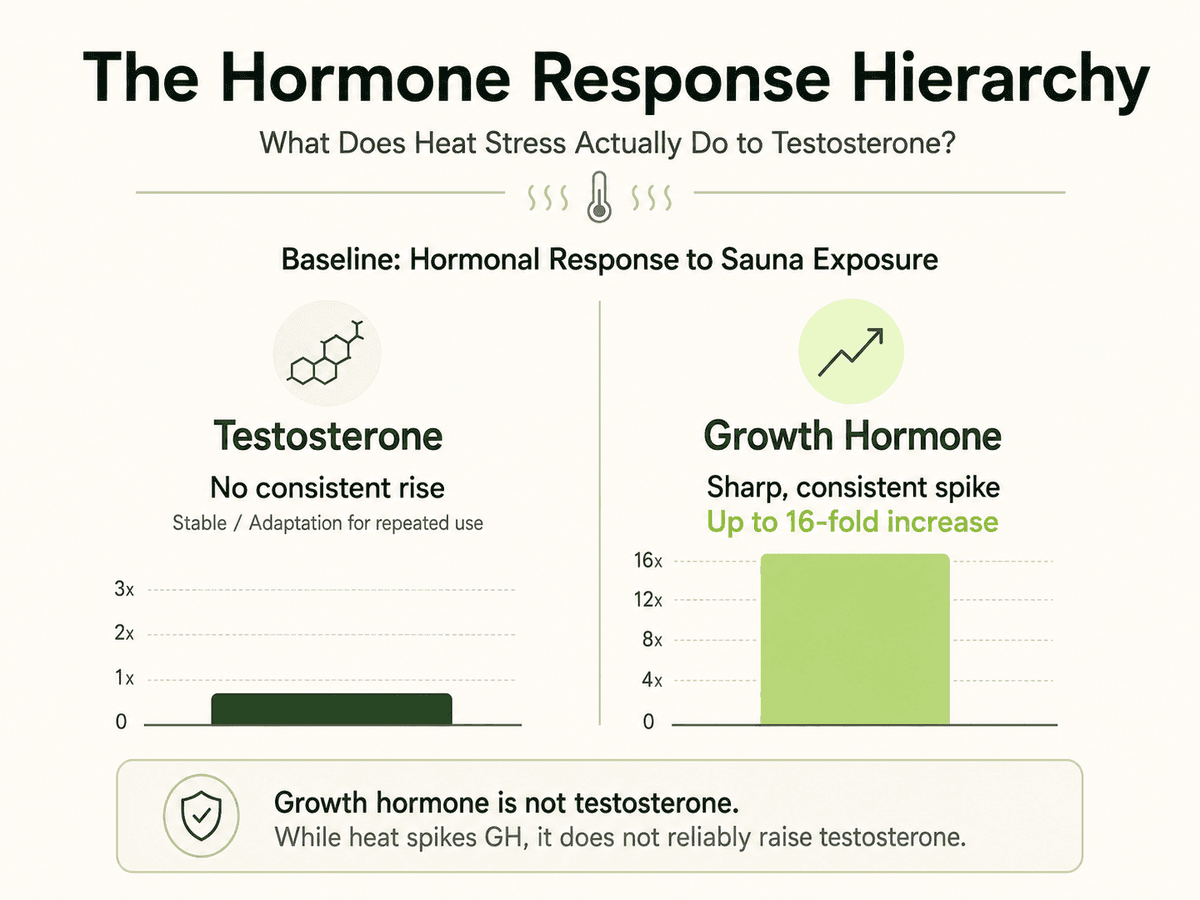
The relationship between heat stress and testosterone levels is inconsistent in the published literature, and the direction of the effect depends heavily on how intense the heat is and how long the exposure lasts.
The Acute Response: Short-Term Changes During a Sauna Session
A study published in the European Journal of Applied Physiology and Occupational Physiology examined eight healthy young men during three distinct sauna conditions of increasing intensity. Testosterone levels only rose measurably in the most extreme condition: 80 degrees Celsius with rising humidity to the point of subjective exhaustion. In the two less intense conditions, no significant rise in testosterone was observed. You may find this surprising if you've read general wellness content suggesting that "saunas raise testosterone" as a blanket statement, often framing sauna use as increasing testosterone, but the evidence is considerably more narrow than that and appeared only under those extreme conditions in the study.
That same study found that growth hormone levels rose significantly at the higher heat intensity and that prolactin increased two- to tenfold depending on heat intensity. Cortisol, interestingly, decreased in the less intense conditions. These findings suggest that sauna exposure triggers a broad stress response but testosterone is not reliably part of it unless conditions become extreme.
What Happens With Repeated Sauna Use?
A study in Acta Physiologica Scandinavica exposed ten healthy men to Finnish sauna heat twice daily for seven consecutive days and found no statistically significant changes in testosterone, luteinizing hormone, or FSH. Growth hormone surged 16-fold, and cortisol declined slightly but testosterone did not move. You might expect repeated heat exposure to compound any acute testosterone effect, but the body simply adapted. The kind of consistent sauna usage most people actually do does not appear to produce any sustained change in testosterone production.
Why the Testosterone-Sauna Claim Persists
The claim persists for several reasons, and you can recognize them when you see them.
- First, some sources conflate the growth hormone response with a testosterone response. Both are anabolic hormones, but growth hormone rises sharply and consistently during sauna bathing. Testosterone does not follow the same pattern. Conflating the two produces misleading takeaways.
- Second, some content cites the extreme-condition result from the Kukkonen-Harjula study without noting the context: the testosterone rise only appeared under the most physiologically stressful sauna condition tested, one that pushed men to subjective exhaustion in a progressively humid 80-degree environment. That is not a typical sauna session.
- Third, the cortisol-testosterone relationship is real, and sauna bathing does appear to reduce cortisol with regular use. Since elevated cortisol can suppress testosterone production, some argue that lowering cortisol through stress reduction indirectly supports testosterone. This is plausible, but it is speculative. The studies on repeated sauna exposure did not observe a corresponding rise in testosterone even as cortisol declined.
You should approach claims about sauna therapy and testosterone with the same skepticism you would apply to any supplement or lifestyle intervention: look for what the research actually measured, in whom, and under what conditions.
The Risks of Sauna Use You Need to Know
Before reviewing the benefits, these risks are worth your attention. Two of them are directly relevant to hormonal and reproductive health in men.
Heat Can Affect Your Sperm and Fertility
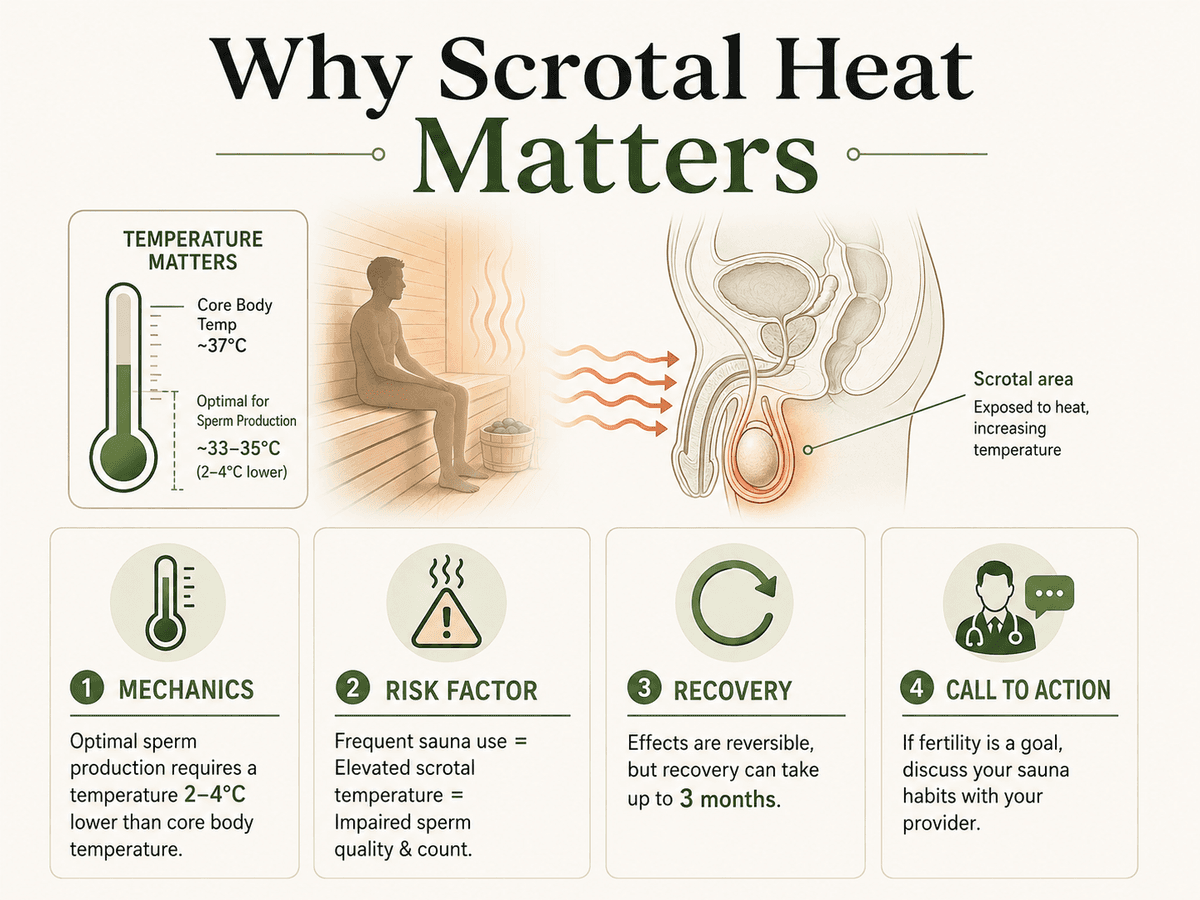
This is the most direct risk of sauna bathing for men who care about their reproductive function. Sperm development requires a scrotal temperature roughly 2 to 4 degrees Celsius below core body temperature. Sauna bathing elevates core temperature significantly, and scrotal temperature rises with it.
Repeated sauna use has been associated with reductions in sperm quality, sperm count, and sperm production. Research on bulls with induced scrotal heat stress documented decreases in testosterone and corresponding rises in LH during periods of severe testicular degeneration, as described in a study in Acta Veterinaria Scandinavica. The mechanism is instructive: when testicular function is compromised by heat, the pituitary signals harder by raising LH, but testosterone still declines. You may not notice this happening in your body, which is why it matters if fertility is a goal for you.
Elevated testicle temperatures from sauna exposure can impair sperm viability for up to 3 months, though the effect is typically reversible.
If you are trying to conceive, frequent sauna bathing is something to discuss with your provider before continuing.
Sweating Too Much Can Strain Your Heart
Sauna sessions produce significant fluid loss through sweating. Dehydration affects blood pressure and blood flow and can impair cardiovascular efficiency. The growth hormone and prolactin rises observed in the Kukkonen-Harjula study were partly attributed to heat-induced dehydration. Entering a sauna while already dehydrated, or combining a sauna session with alcohol, creates meaningful cardiovascular risk.
Extreme Heat Can Work Against Your Hormones
Extreme heat stress significantly activates ACTH, noradrenaline, and cortisol in certain conditions. While brief cortisol suppression has been observed with moderate repeated sauna use, acute cortisol activation during extreme sauna conditions means that very intense sessions may temporarily work against hormonal balance rather than supporting it.
Saunas Are Not Safe for Everyone
Sauna bathing carries meaningful risk for people with uncontrolled high blood pressure, active cardiovascular disease, or certain medications that affect heart rate or blood pressure regulation. The cardiovascular strain of a sauna session is real, with heart rate rising 60 to 130 percent depending on session intensity. If you have any cardiovascular conditions, speak with your provider before using a sauna regularly.
[cta]
What Saunas Are Actually Good For
The research on sauna benefits outside of testosterone is considerably stronger. If you are incorporating sauna sessions into your wellness routine for these reasons, the evidence is on your side.
Cardiovascular Health
A comprehensive review published in Temperature (Austin) found that regular sauna bathing was associated with reduced risk of hypertension, cardiovascular disease, cardiovascular mortality, and better heart health. The mechanisms suggest regular sauna bathing may improve cardiovascular health through lower blood pressure, improved circulation, reduced arterial stiffness, and anti-inflammatory effects.
A review in Progress in Cardiovascular Diseases also found that regular sauna bathing was associated with substantially reduced risk of sudden cardiac death, and that combining regular physical activity with sauna use offered even greater risk reduction than either alone.
You may feel your heart beating harder in the sauna and wonder whether that is safe. For most healthy people, it reflects the same cardiac conditioning effect as moderate aerobic exercise: your heart is working, your blood vessels are dilating, and your cardiovascular efficiency is being challenged in a productive way.
Muscle Recovery and Stress Relief
Sauna bathing promotes blood flow to muscle tissue, which supports recovery after training. The significant rise in growth hormone during sauna sessions, up to 16-fold in the repeated sauna study, may contribute to tissue repair and recovery, though the practical magnitude of this effect in healthy men is unclear from current data.
Stress reduction is a well-recognized benefit. Regular sauna use appears to reduce cortisol over time, supports sleep quality, and activates the parasympathetic nervous system, which collectively can improve overall well-being.
Immune Function
The Laukkanen and Kunutsor review also found evidence suggesting regular sauna bathing may support immune function, with anti-inflammatory and cytoprotective properties linked partly to heat shock protein activation. White blood cell production and immune response patterns appear to shift with regular sauna exposure, though the clinical significance of these changes in otherwise healthy men is not yet fully characterized.
Infrared Sauna Therapy: Is It Different?
Infrared saunas use radiant heat rather than convection and typically operate at lower temperatures, around 45 to 60 degrees Celsius. They are increasingly popular as an alternative to traditional Finnish saunas.
The research base for infrared sauna therapy is much smaller than for Finnish saunas. Most of what we know about sauna bathing and hormones comes from Finnish sauna studies. Evidence from those studies cannot be assumed to apply directly to infrared saunas, which deliver heat differently and to different depths in tissue.
Early research suggests infrared sauna therapy may share some cardiovascular and recovery benefits with traditional saunas, and it may also support insulin sensitivity, but data specifically on testosterone or broader hormonal effects remains limited. Some people prefer a steam room or a traditional sauna format, yet the hormonal evidence is still stronger for Finnish sauna research than for these alternatives. If you are choosing between the two for hormonal benefits, there is currently no strong evidence supporting either.
What Actually Supports Testosterone Production
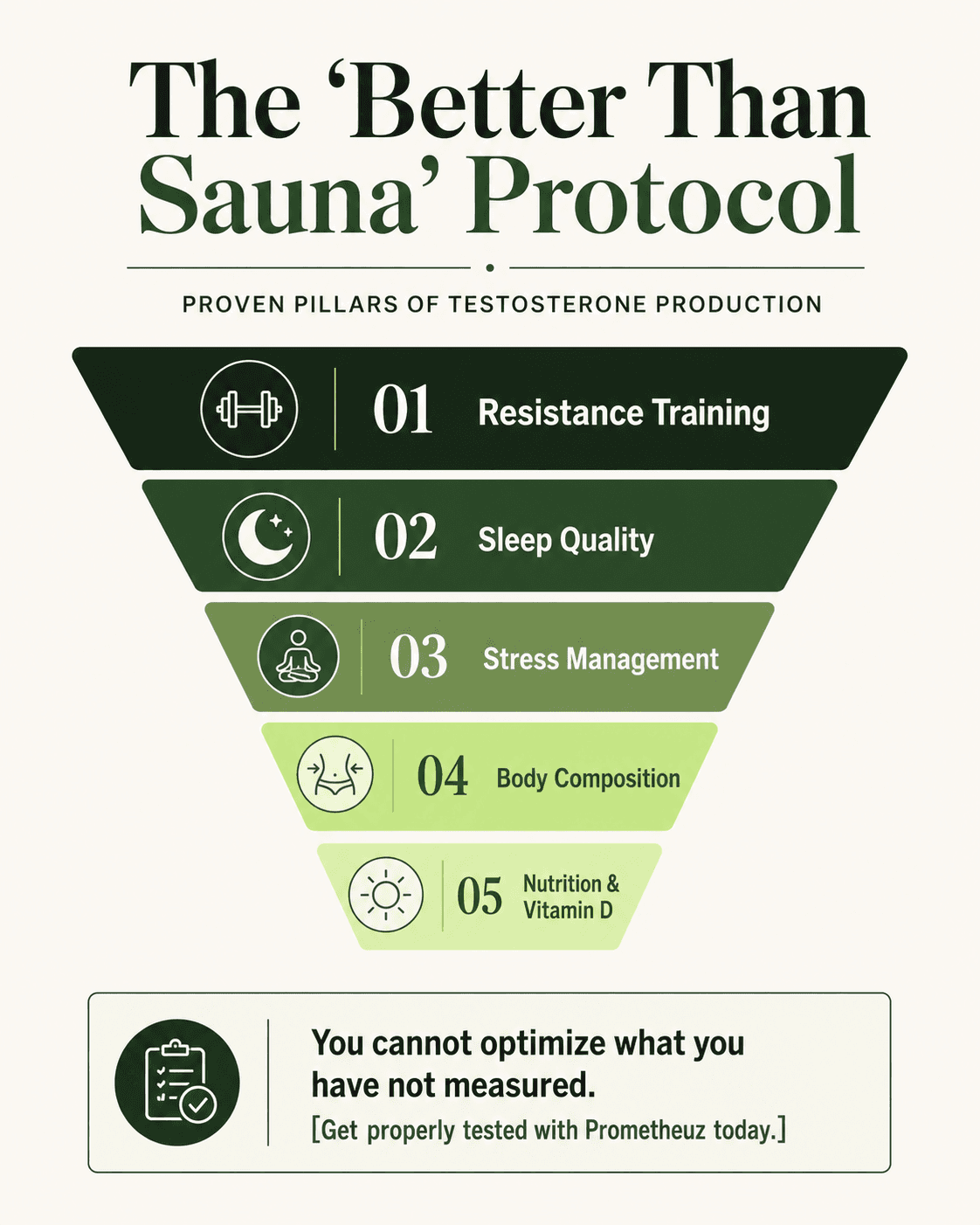
If your goal is to support testosterone levels, your time is better spent on interventions with stronger evidence.
Resistance training remains the most consistently supported lifestyle driver of testosterone. Published research shows that regular weightlifting produces acute and chronic hormonal adaptations, including testosterone responses that are far better characterized than anything observed in sauna studies. Testosterone is also well known for its role in muscle growth. Men who are physically active also tend to maintain higher testosterone levels around sauna sessions than sedentary men, which may matter more than the sauna itself.
Sleep quality has a direct impact on testosterone production. Most testosterone secretion occurs during sleep, and sleep deprivation has been shown in multiple studies to lower morning testosterone levels within days. If you are sleeping fewer than seven hours consistently, that is likely affecting your hormone levels more than any sauna session could counteract.
Stress management matters because cortisol and testosterone work in opposition. When stress levels are chronically elevated, the body's primary stress hormone suppresses testosterone production. Sauna bathing may contribute to stress reduction but it is one tool, not a solution.
Proper nutrition and maintaining a healthy body composition are both associated with better testosterone levels. Adipose tissue converts testosterone to estrogen through a process called aromatization, and body composition also influences fat metabolism, which is one reason it matters for testosterone-related health. Reducing excess body fat is one of the more direct lifestyle levers available.
Vitamin D adequacy is associated with testosterone levels in observational studies, particularly in populations with insufficient sun exposure.
If you have made meaningful lifestyle changes across these areas and still experience symptoms of low testosterone, reduced capacity for energy production, reduced drive, depressive feelings, brain fog, or changes in body composition, clinical evaluation is the appropriate next step. A morning blood test measuring total and free testosterone, along with LH, FSH, and SHBG, will give you and your provider an accurate picture.
If Your Testosterone Is Actually Low, a Sauna Will Not Tell You
This is the point where many men stay stuck. They try lifestyle tools like sauna sessions, supplements, and sleep improvements, all of which have real value, but they never get an actual measurement of where their testosterone stands. You cannot optimize what you have not measured.
What Prometheuz Tests Before and During TRT
If your investigation into sauna use has led you here because you suspect your testosterone is genuinely low, the next step is proper testing, not more heat exposure. At Prometheuz, your initial hormone panel covers 9 markers at baseline: Total Testosterone, Free Testosterone, LH, Estradiol, ALT (liver function), Prolactin, PSA, Hematocrit, and SHBG. Most platforms test 4 to 6. If your total testosterone falls in the borderline range of 500 to 699 ng/dL, a second confirmation test follows the AUA diagnostic standard before any treatment decision is made.
If treatment is indicated, your quarterly panel tracks Testosterone, Free Testosterone, Estradiol, Hematocrit, LH, and SHBG every 3 months. When your dose changes or symptoms shift, an ad hoc panel covers Testosterone, PSA, Hematocrit, and ALT immediately.
How Testosterone Levels Are Properly Measured
Sauna sessions will not tell you whether your testosterone is low. That requires a blood test.
Standard evaluation includes a total testosterone measurement from a morning blood draw, since testosterone peaks in the early morning and declines across the day. If total testosterone is borderline or ambiguous, free testosterone provides additional context, as a significant portion of testosterone is protein-bound and biologically inactive.
LH and FSH levels help identify whether a low testosterone reading reflects a problem at the testicular level or a signaling problem originating from the pituitary or hypothalamus. SHBG levels matter because high SHBG can artificially lower free testosterone even when total testosterone appears normal.
One result is never enough. Laboratories confirm low testosterone with a repeat test, often on a separate day, before any clinical decision is made. All of this should be guided by a licensed healthcare provider, not interpreted from a wellness app or a single number.
FAQ
Does a sauna session raise testosterone?
Research suggests a brief rise may occur under extreme heat conditions, but this is not consistent across typical sauna sessions and does not persist with repeated use.
Will regular sauna bathing raise my testosterone over time?
Published data on repeated sauna bathing found no statistically significant changes in testosterone after daily sauna exposure for seven days. Your endocrine system adapts.
Does sauna use hurt testosterone?
Frequent sauna use can raise scrotal temperature enough to impair sperm quality and, under severe or prolonged heat stress, may suppress testosterone by affecting testicular function. This is a more documented risk than any benefit.
Is infrared sauna better for testosterone than Finnish sauna?
There is no good evidence that infrared sauna therapy affects testosterone in any direction. The research base for infrared saunas is substantially smaller than for traditional Finnish saunas.
What about growth hormone — does sauna raise that?
Yes. Research shows growth hormone rises significantly during sauna sessions up to 16-fold in some studies of repeated heat exposure. This is a much more consistent finding than anything observed with testosterone.
Should I use a sauna if I'm trying to conceive?
Frequent sauna bathing may reduce sperm quality and count due to elevated scrotal temperature. If fertility is a goal, discuss your sauna habits with your provider.
What actually raises testosterone in a meaningful way?
Resistance training, adequate sleep, stress management, proper nutrition, and maintaining healthy body fat are the lifestyle factors with the strongest evidence for supporting testosterone, an important male hormone tied to muscle growth, body composition, and hormone balance, and these habits also support mental health, which can indirectly reinforce hormonal health.
Conclusion
Sauna bathing does not reliably raise testosterone. The evidence is narrow: a testosterone response was observed in one study only under extreme heat conditions, and repeated sauna exposure over multiple days produced no significant change in testosterone or related hormones. Sauna use has real, well-documented benefits for cardiovascular health, stress relief, and muscle recovery, and those are worth pursuing. But if you are using the sauna specifically to address suspected low testosterone, you are working around a problem that needs to be measured and addressed directly.
Disclaimer
This content is for educational purposes only and does not replace medical advice. Testosterone therapy and hormone-related decisions should be guided by a licensed healthcare provider.
References
Kukkonen-Harjula K, Oja P, Laustiola K, Vuori I, Jolkkonen J, Siitonen S, Vapaatalo H. Haemodynamic and hormonal responses to heat exposure in a Finnish sauna bath. Eur J Appl Physiol Occup Physiol. 1989;58(5):543-50. doi:10.1007/BF02330710. PMID: 2759081. https://pubmed.ncbi.nlm.nih.gov/2759081/
Leppaluoto J, Huttunen P, Hirvonen J, Vaananen A, Tuominen M, Vuori J. Endocrine effects of repeated sauna bathing. Acta Physiol Scand. 1986;128(3):467-70. doi:10.1111/j.1748-1716.1986.tb08000.x. PMID: 3788622. https://pubmed.ncbi.nlm.nih.gov/3788622/
Sidibe M, Franco LA, Fredriksson G, Madej A, Malmgren L. Effects on testosterone, LH and cortisol concentrations, and on testicular ultrasonographic appearance of induced testicular degeneration in bulls. Acta Vet Scand. 1992;33(3):191-6. doi:10.1186/BF03547308. PMID: 1442365. https://pubmed.ncbi.nlm.nih.gov/1442365/
Laukkanen JA, Kunutsor SK. The multifaceted benefits of passive heat therapies for extending the healthspan: A comprehensive review with a focus on Finnish sauna. Temperature (Austin). 2024;11(1):27-51. doi:10.1080/23328940.2023.2300623. PMID: 38577299. PMCID: PMC10989710. https://pubmed.ncbi.nlm.nih.gov/38577299/
Laukkanen JA, Kunutsor SK. Is sauna bathing protective of sudden cardiac death? A review of the evidence. Prog Cardiovasc Dis. 2019;62(3):288-293. doi:10.1016/j.pcad.2019.05.001. PMID: 31102597. https://pubmed.ncbi.nlm.nih.gov/31102597/