Caffeine affects testosterone, but the effect is temporary, context-dependent, and far less significant than most men reading supplement headlines would expect. If you drink coffee before training and wonder whether it is helping or hurting your hormones, the honest answer is that it probably does both, briefly and modestly, and then stops mattering.
The more important question is what your caffeine consumption is doing to the lifestyle factors that actually drive testosterone levels over the long term. Sleep disruption from late caffeine intake suppresses testosterone more reliably than caffeine raises it acutely. Chronic stress and elevated cortisol from excessive caffeine intake can affect hormone balance over time. These indirect pathways matter more than the short-term testosterone bump that researchers have measured in exercise studies.
This article covers what the clinical research actually found about caffeine and testosterone, why the cortisol side of the equation matters just as much, what happens at different caffeine doses, and what you should actually pay attention to if hormone health is a priority.
What the Research Found: Caffeine Raises Testosterone Briefly, But Cortisol More
The most direct answer to whether caffeine affects testosterone comes from controlled exercise trials, and the findings are more complicated than most supplement content suggests.
At High Doses, Caffeine Raises Testosterone. It Raises Cortisol Even More.
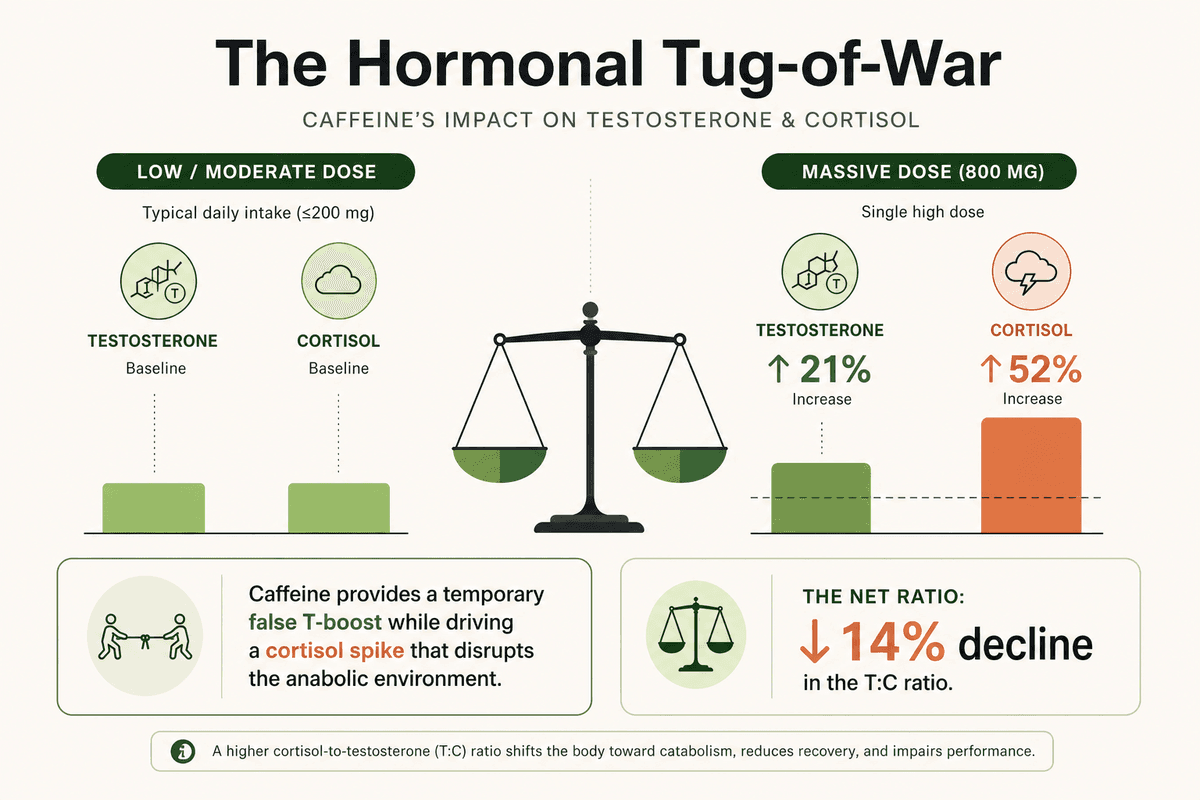
A double-blind crossover RCT published in the International Journal of Sport Nutrition and Exercise Metabolism studied 24 professional rugby players who ingested caffeine doses of 0, 200, 400, and 800 mg one hour before a resistance exercise session. Testosterone concentration showed a 15% increase during exercise with a placebo. Caffeine raised testosterone a further 21% at the highest 800 mg dose. However, the 800 mg dose also produced a 52% increase in cortisol. The net effect on the testosterone to cortisol ratio was a small decline of 14%. You may have seen the testosterone number cited widely without the cortisol result alongside it. The full picture tells a different story than either number alone.
The Effect Is Dose-Dependent. Low Doses Do Very Little.
A dose-response RCT published in the Journal of Sports Medicine and Physical Fitness enrolled 12 university men performing resistance exercise after ingesting 2, 4, or 6 mg per kilogram of body weight of caffeine or a placebo. Only the high dose of 6 mg/kg significantly increased testosterone and cortisol post-exercise. The medium and low doses did not produce a significant hormonal response. If your morning coffee contains 80 to 150 mg of caffeine and you weigh 80 kg, you are not approaching the doses used in these studies. You would need approximately 480 mg to reach the threshold where hormonal effects were observed.
Caffeine Added to Coffee Showed No Additional Testosterone Effect
An RCT published in the Journal of Sports Medicine and Physical Fitness investigated whether adding supplemental caffeine to coffee produced a greater testosterone response than coffee alone. Recreationally strength-trained men ingested 6 mg/kg body weight of caffeine via coffee supplemented with anhydrous caffeine, or decaffeinated coffee, before a combined cycling and resistance exercise session. Testosterone was elevated 20.5% post-exercise in both conditions, with no significant difference between the caffeinated and decaffeinated groups. The exercise itself drove the testosterone increase. Caffeine added to the coffee produced no additional hormonal benefit.
Your Genetics Determine How Much Caffeine Actually Affects Your Hormones
A double-blind crossover RCT published in Nutrients studied 30 resistance-trained men and found that caffeine's effect on testosterone and growth hormone after exercise was significantly modified by the ADORA2A gene polymorphism, which governs adenosine receptor sensitivity. Men with the TT genotype showed significantly greater increases in both testosterone and growth hormone after caffeine supplementation compared to C allele carriers. The TT genotype group also had higher resting testosterone levels at baseline. Your genetic makeup may determine whether caffeine produces any meaningful hormonal effect at all. Two men drinking the same dose of coffee before the same workout may have very different hormonal responses based on a polymorphism most men have never had tested.
The Cortisol Problem: Why High Caffeine Intake Can Work Against Hormone Balance
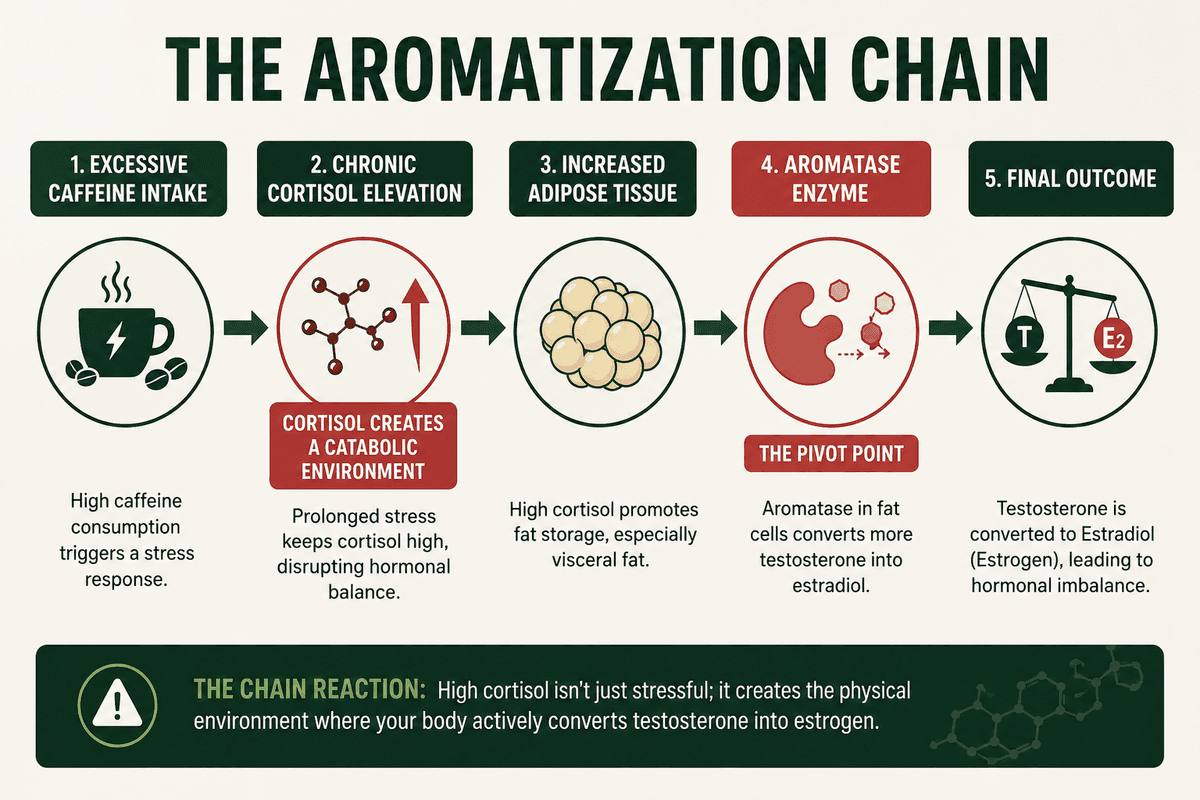
The testosterone side of the caffeine story gets the attention. The cortisol side is where the real concern lies for men thinking about long-term hormone health.
In men with elevated body fat, the cortisol rise from high caffeine intake has an additional indirect pathway: cortisol promotes fat retention, and adipose tissue converts testosterone to estrogen through aromatase activity. The caffeine → cortisol → adiposity → aromatization chain is more relevant for overweight men than for lean athletes. For men with significant abdominal fat, high caffeine consumption that chronically elevates cortisol may compound the aromatization-driven testosterone suppression already present from their body composition
Caffeine Stimulates Cortisol Secretion Through Adenosine Receptor Blockade
Caffeine works by blocking adenosine receptors in the brain, which suppresses fatigue signaling and increases alertness. This mechanism also stimulates the release of cortisol, particularly in the morning and after high doses. Cortisol and testosterone operate in opposition: elevated cortisol suppresses the hormonal axis that drives testosterone production. A small acute rise in testosterone from pre-exercise caffeine, followed by a larger and longer-lasting cortisol response, produces a net hormonal environment that is less favorable than the testosterone number alone suggests. The Beaven et al. RCT demonstrated this directly with a 52% cortisol increase alongside the 21% testosterone rise at 800 mg, resulting in a declining testosterone to cortisol ratio.
Excessive Caffeine Intake Late in the Day Suppresses Testosterone Through Sleep Disruption
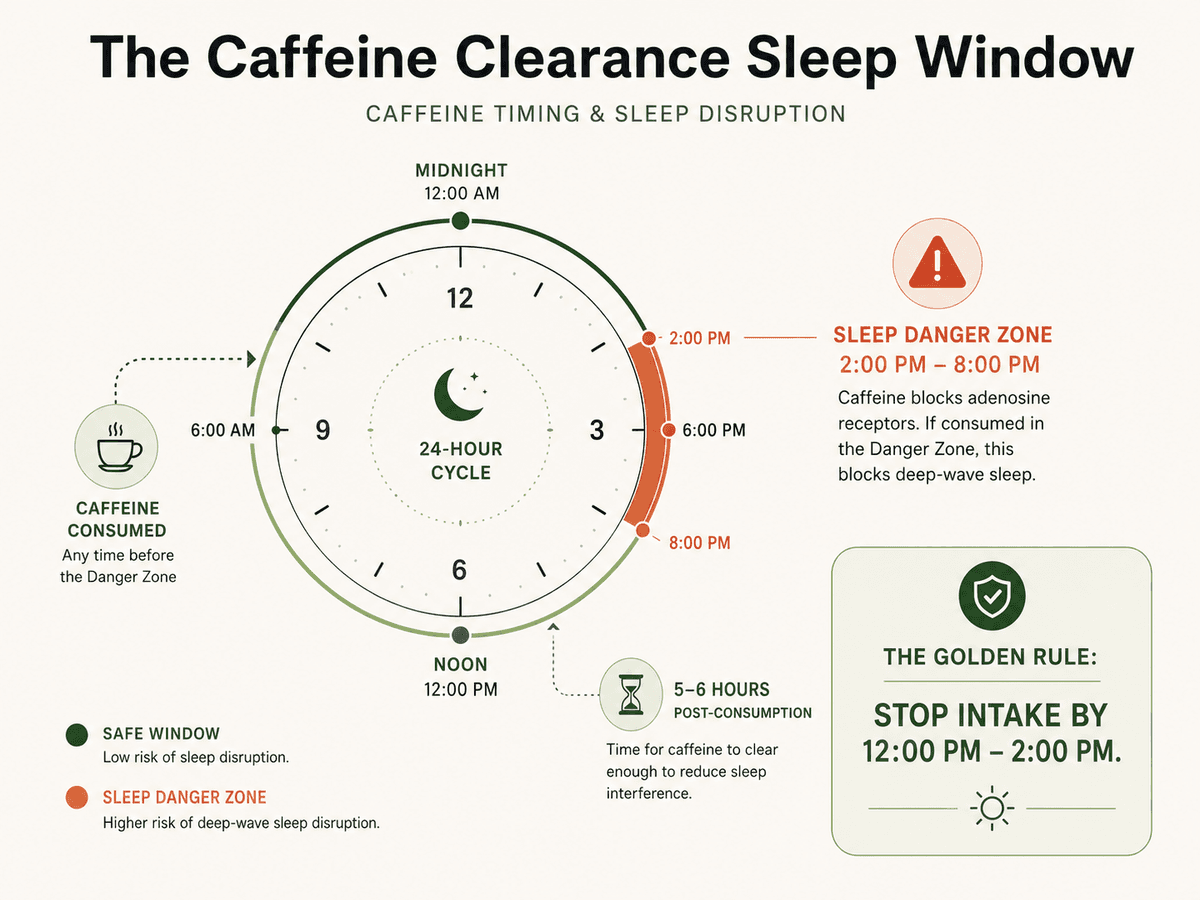
Caffeine has a half-life of approximately five to six hours in most adults. Men's sleep-disrupting window varies greatly due to the CYP1A2 genotype, which can shorten caffeine clearance to under two hours in fast metabolizers or over nine hours in slow metabolizers. Consuming caffeine in the afternoon or evening delays sleep onset, reduces slow-wave and REM sleep, and compresses total sleep duration. Testosterone production is concentrated during deep sleep, particularly REM. A study reviewed elsewhere in the Prometheuz content library confirmed that consistent sleep curtailment directly reduces circulating testosterone in healthy men. Excessive caffeine intake that chronically disrupts your sleep is suppressing your testosterone in a way that a pre-workout dose cannot compensate for. You may be raising your testosterone by 15% for an hour around your training session while suppressing it by a larger margin every night through disrupted sleep.
Sleep-Deprived Athletes Had Lower Baseline Testosterone. Caffeine Did Not Restore It.
A double-blind crossover RCT published in the International Journal of Sport Nutrition and Exercise Metabolism studied 16 professional rugby players under sleep-deprived and non-sleep-deprived conditions. Baseline testosterone was significantly higher in non-sleep-deprived athletes. Caffeine restored voluntary training load in sleep-deprived athletes to near non-sleep-deprived levels, but it did not restore baseline testosterone. The hormonal suppression from poor sleep was not reversed by caffeine. You may feel more capable of training after coffee when you are tired, but your testosterone levels are not recovering alongside your perceived energy.
What the Acute Testosterone Increase From Caffeine Actually Means Clinically
The measured testosterone increases from caffeine in exercise studies are statistically significant in some trials. Whether they matter clinically is a separate question.
The Hormone Spikes Are Short-Lived and Weakly Linked to Real Adaptations
A comprehensive review published in Sports Medicine examined the full body of evidence on caffeine and resistance exercise performance. The review confirmed that caffeine ingestion, compared with placebo, may lead to greater increases in testosterone and cortisol following resistance exercise. However, it also stated directly that given the acute changes in hormone levels appear to be weakly correlated with hallmark adaptations to resistance training such as hypertrophy and increased muscular strength, these findings are likely of questionable practical significance. A temporary increase in testosterone that does not translate into greater muscle mass or strength over time is not clinically meaningful for men managing their hormonal health. It is a laboratory measurement, not a therapeutic effect.
Caffeine's Performance Benefits Are Real. Its Testosterone Benefits Are Marginal.
Where caffeine earns its place in a training protocol is in its documented effects on physical performance: increased maximal strength, improved muscular endurance, reduced perceived exertion, and enhanced anaerobic performance. These are consistent, well-replicated findings. The testosterone story is much less consistent, dose-limited, and genetically variable. If you use caffeine before training, the reason to continue is performance. The hormonal rationale is weak.
[cta]
How Caffeine Consumption Habits Affect Long-Term Hormone Health
Beyond the acute exercise context, the way most men actually consume caffeine has different implications for testosterone levels over time.
Moderate Daily Caffeine Intake Is Unlikely to Harm Testosterone
The available human evidence does not support a conclusion that typical daily caffeine intake, three to four cups of coffee per day at standard strength, meaningfully suppresses testosterone in healthy men. The negative effects on reproductive hormones observed in animal studies used doses that are difficult to translate directly to typical human consumption patterns. A rat study published in Drug and Chemical Toxicology found that caffeine combined with alcohol reduced testosterone and luteinizing hormone levels dose-dependently in rats, but the doses and conditions differ substantially from human lifestyle caffeine use. The concern for most men is not that coffee is lowering testosterone. It is the habits surrounding caffeine use that are.
Timing, Total Dose, and Sleep Behavior Matter More Than the Caffeine Itself
You can protect your testosterone levels as a caffeine consumer by managing three things that are entirely within your control. Stop caffeine intake by early afternoon to protect sleep architecture. The FDA and major health organizations identify 400 mg of caffeine per day as the threshold for safe daily intake in healthy adults, approximately four standard 8-ounce cups of coffee. This is also the level above which hormonal and cardiovascular stress responses become more clinically relevant. Keep your total daily intake within this moderate range and avoid high-dose pre-workout supplements that deliver 300 to 400 mg in a single serving because they can push you to or beyond the daily limit before accounting for any additional caffeine from coffee, tea, or energy drinks. Finally, ensure you are getting seven to nine hours of sleep each night regardless of how alert caffeine makes you feel. These three adjustments address the most well-documented indirect pathway by which caffeine may suppress testosterone over time, which is sleep disruption, without requiring you to give up your morning coffee.
Frequently Asked Questions
Does caffeine increase testosterone?
Acutely and temporarily, yes, particularly at high doses before resistance exercise. But the effect is modest, dose-dependent, genetically variable, and offset by a simultaneous and proportionally larger cortisol increase. The net hormonal effect is not clearly beneficial.
Does coffee lower testosterone?
Standard moderate coffee consumption does not appear to meaningfully lower testosterone in healthy men based on available human evidence. The concern is indirect: caffeine consumed late in the day disrupts sleep, and poor sleep reliably suppresses testosterone over time.
How much caffeine does it take to affect testosterone?
The studies that found significant testosterone responses used doses of 6 mg per kilogram of body weight, equivalent to approximately 480 mg for an 80 kg man. This is substantially more than what most men consume in a typical morning coffee. Lower doses of 2 to 4 mg per kilogram showed minimal or no hormonal effect in controlled trials.
Does caffeine affect the testosterone to cortisol ratio?
Yes, negatively at high doses. The Beaven et al. study found that an 800 mg caffeine dose produced a net decline in the testosterone to cortisol ratio despite raising testosterone, because cortisol rose proportionally more. This ratio is considered a marker of anabolic versus catabolic hormonal balance by some researchers.
Can my genetics change how caffeine affects my testosterone?
Yes. A 2024 double-blind RCT found that the ADORA2A gene polymorphism significantly modified caffeine's effect on testosterone and growth hormone after exercise. Men with the TT genotype showed substantially greater hormonal responses to caffeine than C allele carriers.
Is decaffeinated coffee better for testosterone than regular coffee?
One RCT found no significant difference in testosterone response between caffeinated and decaffeinated coffee before a combined exercise session once the caffeine dose was matched. This suggests the exercise-driven testosterone increase occurs independently of the caffeine in the coffee.
Does caffeine affect testosterone in women?
Caffeine research on testosterone has been conducted predominantly in male subjects. In women, testosterone is produced in much smaller quantities and serves different physiological roles. The NIH has noted that caffeine consumption is linked to estrogen changes in women, with effects running in different directions depending on racial and dietary background. Women concerned about hormonal effects of caffeine should discuss this with their healthcare provider rather than applying male-focused research directly.
Does energy drink caffeine affect testosterone differently from coffee?
Coffee, energy drinks, pre-workout powder, and pills all give caffeine, but the hormonal response is the same. An RCT observed no testosterone difference between caffeinated coffee and anhydrous caffeine at equal dosages. Energy drinks often contain taurine, B vitamins, and sugar, which may affect hormones separately. Some energy drinks include 200–300 mg of caffeine per serving, which is more likely to cause cortisol-dominant reactions in study trials.
Does pre-workout caffeine raise testosterone?
At doses of 6 mg/kg body weight (approximately 480 mg for an 80 kg man), pre-workout caffeine produces a measurable but short-lived testosterone increase alongside a proportionally larger cortisol rise. Most pre-workout supplements contain 150–400 mg of caffeine per serving, placing them at or below the dose threshold where hormonal effects were consistently observed in controlled trials. The performance benefits of pre-workout caffeine are better documented and more consistent than its hormonal effects.
Does caffeine withdrawal affect testosterone?
Caffeine withdrawal causes temporary cortisol elevation through physiological stress, which may briefly suppress testosterone. This effect is transient and resolves as withdrawal symptoms subside
Does caffeine affect sperm or male fertility?
Available evidence does not show that moderate caffeine consumption significantly affects semen quality, sperm count, or sperm concentration in healthy men. The concern about fertility is more relevant for very high intake levels or specific conditions. For men actively trying to conceive, very high caffeine intake (above 400 mg daily) may be worth discussing with a provider, but typical daily coffee consumption at moderate levels is not established as a fertility risk in the published literature.
Conclusion
Caffeine affects testosterone, but not in a way that meaningfully changes your hormonal health over the long term. The acute testosterone increases measured in exercise studies are real, short-lived, dose-dependent, and partially cancelled out by a larger cortisol response. The practical significance of these transient fluctuations for men managing their testosterone is minimal.
What actually moves your testosterone over time is sleep quality, body composition, resistance training, stress management, and alcohol intake. Caffeine interacts with all of these indirectly. Late-day caffeine disrupts sleep. High-dose caffeine elevates cortisol. Caffeine before exercise supports the training quality that drives hormonal adaptations. Your morning cup is not the problem. The habits built around it are what actually matter.
Disclaimer
This content is for educational purposes only and does not replace medical advice. Testosterone therapy and hormone-related decisions should be guided by a licensed healthcare provider.
References
- Beaven CM, Hopkins WG, Hansen KT, Wood MR, Cronin JB, Lowe TE. Dose effect of caffeine on testosterone and cortisol responses to resistance exercise. Int J Sport Nutr Exerc Metab. 2008;18(2):131-141. doi:10.1123/ijsnem.18.2.131. PMID: 18458357. https://pubmed.ncbi.nlm.nih.gov/18458357/
- Wu BH. Dose effects of caffeine ingestion on acute hormonal responses to resistance exercise. J Sports Med Phys Fitness. 2014;55(10):1242-1251. PMID: 24867603. https://pubmed.ncbi.nlm.nih.gov/24867603/
- Landry TM, Saunders MJ, Akers JD, Womack CJ. Caffeine added to coffee does not alter the acute testosterone response to exercise in resistance trained males. J Sports Med Phys Fitness. 2019;59(9):1435-1441. doi:10.23736/S0022-4707.19.09183-7. PMID: 31610637. https://pubmed.ncbi.nlm.nih.gov/31610637/
- Rahimi MR, Semenova EA, John G, et al. Effect of ADORA2A gene polymorphism and acute caffeine supplementation on hormonal response to resistance exercise: a double-blind, crossover, placebo-controlled study. Nutrients. 2024;16(12):1803. doi:10.3390/nu16121803. PMID: 38931158. PMCID: PMC11206868. https://pmc.ncbi.nlm.nih.gov/articles/PMC11206868/
- Cook C, Beaven CM, Kilduff LP, Drawer S. Acute caffeine ingestion's increase of voluntarily chosen resistance-training load after limited sleep. Int J Sport Nutr Exerc Metab. 2012;22(3):157-164. doi:10.1123/ijsnem.22.3.157. PMID: 22349085. https://pubmed.ncbi.nlm.nih.gov/22349085/
- Grgic J, Mikulic P, Schoenfeld BJ, Bishop DJ, Pedisic Z. The influence of caffeine supplementation on resistance exercise: a review. Sports Med. 2019;49(1):17-30. doi:10.1007/s40279-018-0997-y. PMID: 30298476. https://pubmed.ncbi.nlm.nih.gov/30298476/