Enclomiphene does increase testosterone. The clinical trial evidence backs this up clearly, at least in men with secondary hypogonadism. What sets it apart from standard testosterone replacement therapy isn't the outcome. It's the mechanism.
Rather than adding synthetic testosterone, enclomiphene stimulates your hypothalamic-pituitary-gonadal axis to produce more on its own. That's why it draws interest from men who want higher testosterone without giving up fertility. It's a fundamentally different approach than TRT, even though both can raise your numbers.
Below, you'll see what the evidence actually shows. We'll cover how it compares to TRT. Then we'll look at its risks, who it suits, and what dosing and monitoring look like.
How Enclomiphene Boosts Testosterone Naturally, Without Replacing It
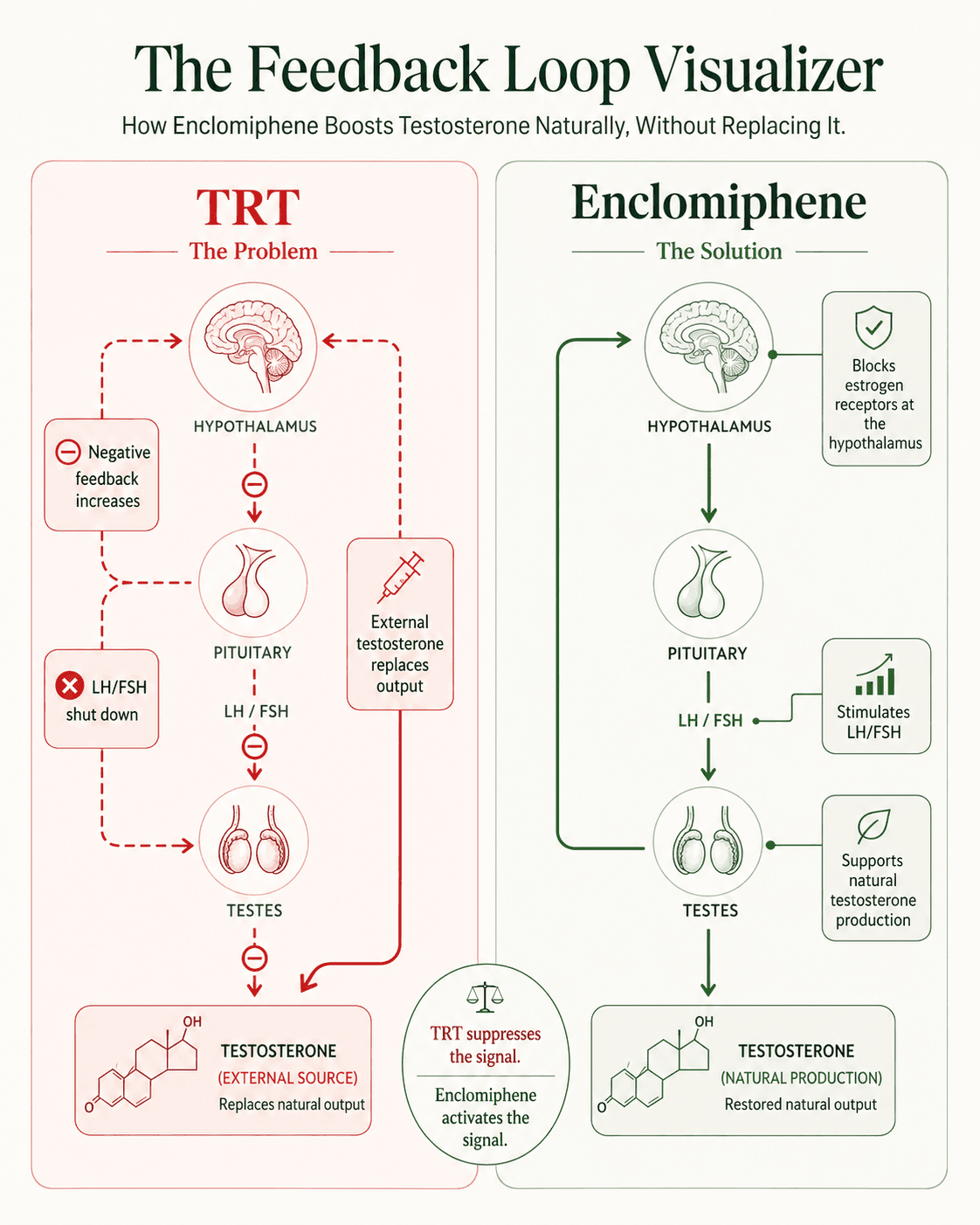
Enclomiphene works upstream. Instead of delivering testosterone directly, it removes the brake that's been keeping your own production suppressed.
Your Brain Has a Brake on Testosterone. Enclomiphene Releases It.
Your body regulates testosterone through a feedback system. When testosterone and estrogen are sufficient, your hypothalamus and pituitary gland sense it. They respond by reducing gonadotropin-releasing hormone, LH, and FSH. Less signal means the Leydig cells in your testes make less testosterone.
Enclomiphene blocks the estrogen receptor at the hypothalamus and pituitary. That interrupts the negative feedback loop. Your brain reads this as low estrogen, so it raises luteinizing hormone (LH) and follicle stimulating hormone (FSH) instead of lowering them. Those hormones then push your testes to produce more testosterone. As a selective estrogen receptor modulator, enclomiphene increases testosterone without using exogenous hormones and without suppressing testicular function or fertility.
Why Enclomiphene Beats the Clomiphene Citrate You May Have Tried Before
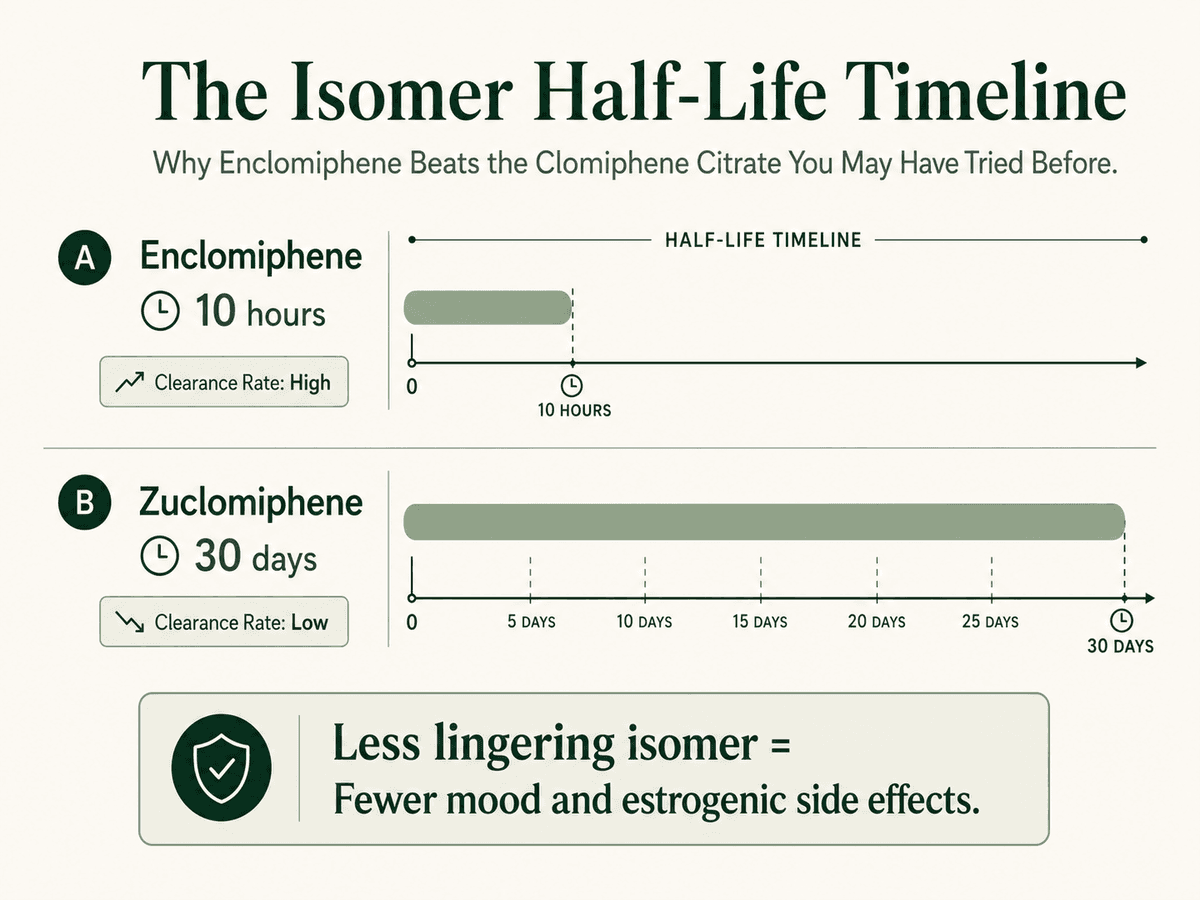
Unlike clomiphene citrate, enclomiphene citrate treatment uses only the active isomer rather than a mix of two isomers. Enclomiphene itself has a half-life of approximately 8 to 10 hours, the active piece doing most of the work. Zuclomiphene, the other isomer in clomiphene citrate, has a half-life of approximately 30 days, so it lingers in your body far longer while adding little benefit.
That difference in half-life shapes how each drug behaves in practice. Enclomiphene's short window is why dose adjustments are straightforward: if a dose needs changing, the previous one clears quickly. Zuclomiphene's month-long half-life means it accumulates with repeated dosing instead, which is why clomiphene citrate treatment tends to carry more estrogenic side effects over time, while enclomiphene tends to have fewer estrogenic side effects because it isolates the active isomer. That difference helps explain enclomiphene's potential benefits, including enhancing testosterone while maintaining fertility..
Does Enclomiphene Increase Testosterone as Much as TRT Does?
Yes, in head-to-head research, it raises testosterone levels to a similar degree as testosterone gel. But it gets there through a completely different route.
The Headline Number: A 273 ng/dL Testosterone Gain Without Replacement
According to PubMed, a 2025 meta-analysis in Archives of Endocrinology and Metabolism pooled data from randomized trials in hypogonadal patients. These compared enclomiphene and other active treatment groups against a placebo group, testosterone gel, and hCG. It found SERM therapy raised total testosterone by a mean of 273.76 ng/dL over placebo. LH and FSH both rose significantly too, showing meaningful shifts in hormone levels. Total testosterone showed no significant difference between SERM therapy and testosterone gel.
The foundational evidence behind those figures comes from the Phase III clinical trials, which specifically compared enclomiphene to testosterone gel in men with secondary hypogonadism. Both trials showed enclomiphene raised total testosterone into the normal range while LH and FSH rose simultaneously, the signature of HPG axis activation rather than suppression.
That's a large enough gain to raise testosterone significantly into the normal range of physiological testosterone levels. And it happens without shutting down the axis that produced it in the first place.
Real-World Data Backs It Up, With Fewer Side Effects Than Clomiphene
It's not just controlled trials. According to PubMed, a 2024 study in Translational Andrology and Urology followed 66 real-world male patients in a comparison of men switched between clomiphene and enclomiphene. It found enclomiphene raised testosterone with a smaller estradiol increase than clomiphene. Adverse effects, including decreased libido, reduced energy, mood changes, and erectile dysfunction, were all significantly less common with enclomiphene than in the clomiphene group; decreased libido occurred in only 8.6% of enclomiphene users, and side effects were generally mild.
This matters because trial results don't always hold up outside a research setting. Here, the real-world pattern matched what the trials predicted.
Sperm Counts Stay Intact, Unlike With TRT
According to PubMed, a 2023 study in Cureus compared clomiphene and enclomiphene directly. The men involved were being treated for infertility and hypogonadism. Both raised total testosterone significantly. But only enclomiphene preserved sperm production while increasing testosterone levels, with a significant increase in total motile sperm count. Semen volume and concentration held steady with both treatments, unlike what's typically seen with exogenous testosterone.
This is the core trade-off that separates enclomiphene from TRT. Traditional testosterone replacement therapy suppresses LH and FSH through that same feedback system. That shuts down natural testosterone production and sperm production together. Enclomiphene raises both gonadotropins instead, preserving sperm production and preserving fertility because it does not suppress testicular function.
Who Enclomiphene Therapy Actually Suits
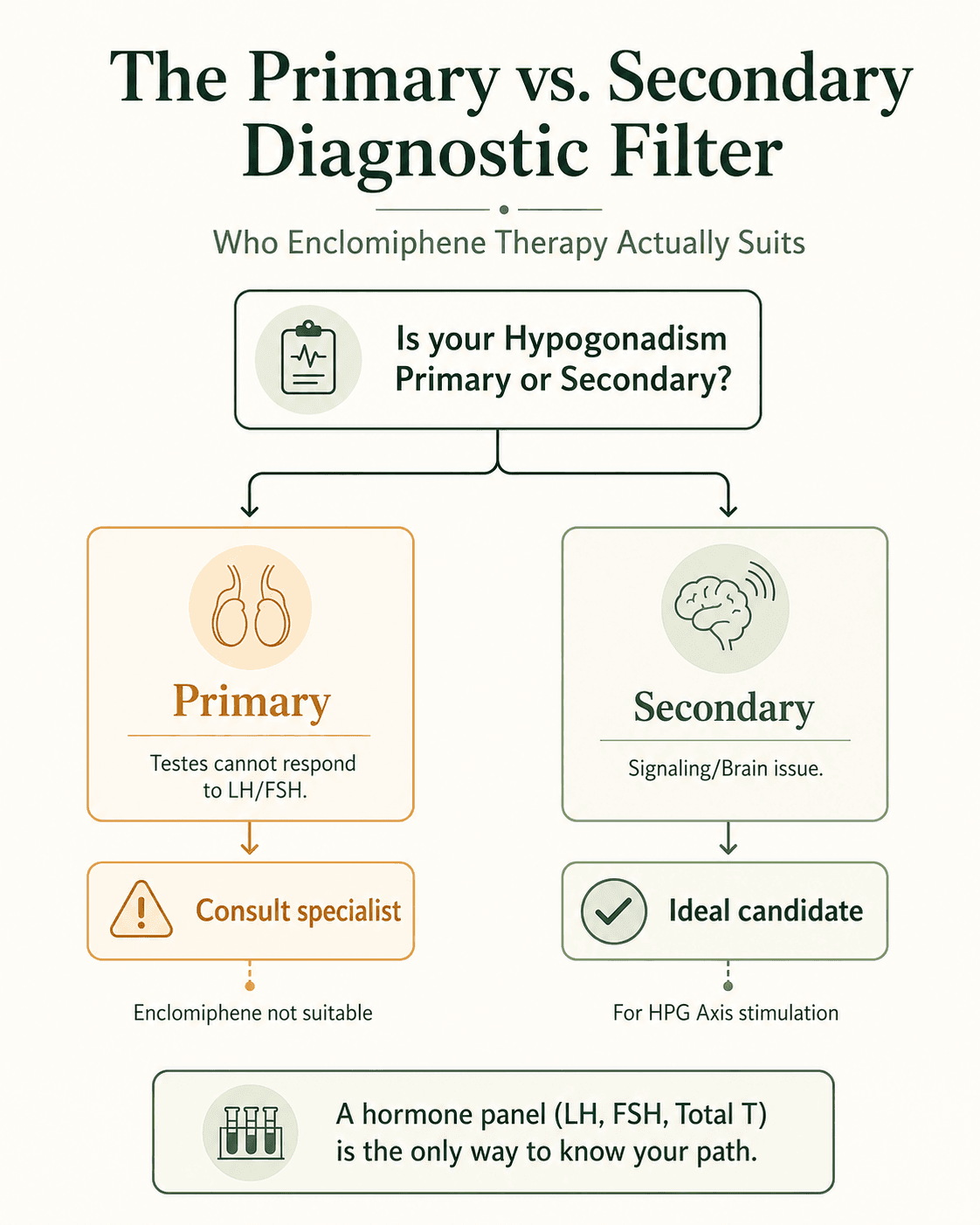
Enclomiphene isn't a universal alternative to TRT. It fits a specific clinical picture, and it's worth knowing where you land before considering it.
Men With Secondary Hypogonadism Who Want to Keep Their Fertility
This is the clearest use case. Enclomiphene is primarily used off-label to boost testosterone in men with secondary hypogonadism, so if your low testosterone comes from a signaling problem, it addresses that mechanism directly. That's the case when LH and FSH are low or inappropriately normal. If you also have fertility concerns or just haven't decided about kids yet, those particular situations matter here. The sperm-preserving profile makes it a reasonable first option over testosterone gel or injections. Men with clinical symptoms like decreased energy and low libido often notice improvement within four to six weeks, which is also relevant for healthcare providers selecting treatment for hypogonadal men who want to maintain fertility.
Men Transitioning Off Testosterone Replacement
Some men who've been on TRT want to restore natural production and fertility afterward. Enclomiphene has been used as part of that recovery process. This should happen under close supervision from a provider, not on your own.
Combination Use With TRT: An Emerging but Unproven Approach
Some providers use enclomiphene alongside low-dose TRT. This can suit men who want the direct testosterone boost TRT gives, but also want to protect the LH and FSH signaling that keeps fertility intact. It's not standard practice, and research on this combination is still limited.
Not a Fit: Primary Hypogonadism or No Confirmed Diagnosis
Enclomiphene only works if the testes can still respond to LH and FSH signals. In primary hypogonadism, the problem sits in the testes themselves, so enclomiphene won't produce a testosterone response, and these men usually need alternative treatments because the testes cannot respond adequately. Prescribing it without confirming which type you have is a real clinical error. That diagnosis requires blood tests measuring LH, FSH, and testosterone together, not just a symptom checklist, which also helps align treatment choice with American Urological Association guidance.
The Risks of Enclomiphene Therapy You Should Know
Enclomiphene tends to have a more favorable side effect profile than TRT. That doesn't mean it's risk-free.
It's Not FDA-Approved for Male Hypogonadism
Enclomiphene hasn't received FDA approval for treating low testosterone in men, despite supportive trial data. That has real practical implications:
- It's prescribed off-label, usually through compounding pharmacies
- It isn't subject to the same post-market monitoring as approved drugs
- Quality can vary by source, so ask your provider how they source it
Elevated Estrogen Is the Main Hormonal Risk
Blocking estrogen receptors can raise circulating estrogen. Your brain drives up testosterone production, and some of that extra testosterone gets converted to estrogen by aromatase. In some men, that shows up as the following:
- Mood changes
- Gynecomastia
- Reduced libido, the opposite of what you're going for
Estradiol should be checked at baseline and monitored throughout treatment.
Mood Changes and Vision Issues Are Rare but Reported
Clomiphene is generally linked to more side effects than enclomiphene, even though the two drugs work the same way:
- Overall adverse effects: roughly 47% with clomiphene versus about 14% with enclomiphene
- Decreased libido: about a third of clomiphene users versus under 10% of enclomiphene users
- Mood swings and, rarely, visual disturbances are specific risks tied to clomiphene
Report any vision changes to your provider right away, since blurred vision needs evaluation.
Testicular Response Can Change With Extended Use
Testicular desensitization with prolonged use: some clinicians note that sustained, continuous LH stimulation from enclomiphene may over time reduce Leydig cell sensitivity to gonadotropin signals, meaning the testosterone response can become variable or diminish with extended use. This is one reason some men's health providers avoid using enclomiphene as a sole long-term monotherapy without periodic reassessment.
[cta]
Enclomiphene vs Testosterone Replacement Therapy: Key Differences
These aren't interchangeable options. The right choice depends on your diagnosis, your fertility goals, and your specific numbers.
| Feature | Enclomiphene | Testosterone Replacement Therapy |
| Mechanism | Stimulates your own testes to produce testosterone | Supplies synthetic or exogenous testosterone directly |
| Effect on LH and FSH | Increases both | Suppresses both |
| Effect on sperm production | Preserves or improves | Suppresses significantly |
| Works for primary hypogonadism | No | Yes |
| Works for secondary hypogonadism | Yes | Yes |
| FDA-approved for male hypogonadism | No, off-label | Yes |
| Administration | Oral daily tablet | Injectable, gel, patch, or pellet |
| Estrogen management | Monitoring required, estrogen may rise | Aromatization occurs, an aromatase inhibitor is sometimes added |
| Fertility preservation | Generally maintains fertility | Can impair fertility |
| Long-term safety data | Still limited | Extensive, decades of use |
TRT's cardiovascular safety has been studied extensively, including the TRAVERSE trial, one of the largest testosterone safety studies to date, which found TRT did not increase the risk of major cardiovascular events compared to placebo in men with hypogonadism. No similarly large, long-term cardiovascular safety trial currently exists for enclomiphene.
Enclomiphene Dosage and What Monitoring Looks Like
Typical dosing runs from 12.5 mg to 25 mg daily, taken orally. That's the range used across most clinical trials. Your provider adjusts the dose based on symptoms and bloodwork. The goal is total testosterone in the normal physiological range, roughly 400 to 700 ng/dL, not higher; healthcare providers typically monitor testosterone levels with repeat blood tests and may account for the fact that increased total testosterone levels often persist for at least one week after stopping enclomiphene.
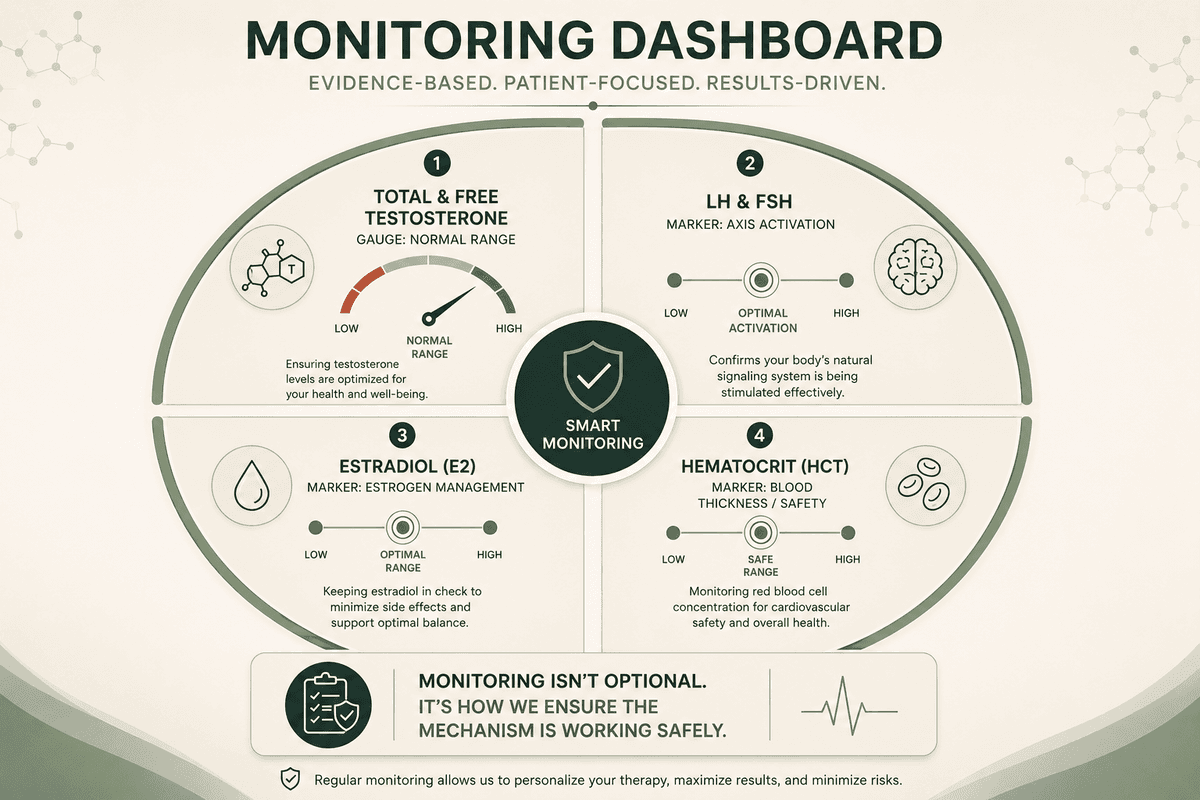
A drug that works through your hormonal axis requires that axis to be watched. Monitoring should include:
- Monitor testosterone levels, including total and free testosterone, four to six weeks after starting, then at regular intervals
- LH and FSH, to confirm the mechanism is actually working
- Estradiol, to catch excess estrogen conversion before it becomes a problem
- Hematocrit, checked periodically, since thicker blood is a known risk whenever testosterone rises, no matter how it's delivered
- Liver enzymes, especially with longer-term use, since enclomiphene is taken as a daily pill rather than absorbed through skin or muscle
Don't accept a prescription without at least testosterone and estradiol monitoring built in.
Frequently Asked Questions
How fast does enclomiphene start working?
Most men see measurable testosterone increases within four to eight weeks. Some clinics report earlier hormone shifts on bloodwork within two to three weeks. Symptom improvement, like better energy or libido, usually takes closer to four to six weeks.
Is enclomiphene basically the same as Clomid, so why not just take Clomid?
They share the same active ingredient. But Clomid also contains zuclomiphene, an isomer that lingers in your body and adds little benefit. That extra isomer is linked to more mood-related and estrogenic side effects. Enclomiphene isolates the more selective isomer, which is why it’s often preferred when it’s available and affordable and tends to cause fewer estrogenic side effects.
What happens to your testosterone if you stop taking enclomiphene?
Testosterone typically drops back toward your pre-treatment baseline once you stop. That's because the drug stimulates your own production instead of replacing it. This is different from TRT, where stopping can leave natural production suppressed for a period afterward. Talk to your provider before stopping either treatment.
How much does enclomiphene cost, and does insurance cover it?
Compounded enclomiphene typically runs $100 to $250 per month, and cost varies by pharmacy and dose. Because it's prescribed off-label and isn't FDA-approved for men, insurance usually doesn't cover it. Confirm pricing directly with your pharmacy before starting.
Can women take enclomiphene?
Enclomiphene itself isn't approved for women. Clomiphene citrate, the parent compound, is FDA-approved for female infertility from ovulatory dysfunction. That's a completely different use case than male hypogonadism. Don't confuse the two indications.
Can you combine enclomiphene with an aromatase inhibitor if your estrogen rises?
Some providers do add a low-dose aromatase inhibitor if estradiol climbs too high on enclomiphene alone. This isn't a default combination, though, and it adds its own monitoring requirements and risks. It should only happen under a provider's guidance, based on your actual bloodwork.
Conclusion
Enclomiphene does increase testosterone. It does so through a mechanism TRT can't replicate: preserving your own production system and your sperm count. For men with confirmed secondary hypogonadism who want that restorative approach, the trial evidence supports it as a legitimate option.
The limitations are real, though. It doesn't work for primary hypogonadism. It isn't FDA-approved. Long-term safety data is still thinner than what exists for TRT. And it requires a proper diagnosis first, not just a symptom checklist and a prescription.
If you're unsure whether enclomiphene or TRT fits you, start with one question: is your hypogonadism primary or secondary? That takes bloodwork, not guesswork.
Disclaimer
This content is for educational purposes only and does not replace medical advice. Testosterone therapy and hormone-related decisions should be guided by a licensed healthcare provider.
References
According to PubMed, the following sources informed this article:
- Hohl A, Chavez MP, Pasqualotto E, Ferreira ROM, Sande-Lee SV, Ronsoni MF. Clomiphene or enclomiphene citrate for the treatment of male hypogonadism: a systematic review and meta-analysis of randomized controlled trials. Arch Endocrinol Metab. 2025;69(5). doi:10.20945/2359-4292-2025-0093. PMID: 41066380. https://pubmed.ncbi.nlm.nih.gov/41066380/
- Saffati G, Kassab J, Orozco Rendon D, Hinojosa-Gonzalez DE, Kronstedt S, Lipshultz LI, Khera M. Safety and efficacy of enclomiphene and clomiphene for hypogonadal men. Transl Androl Urol. 2024;13(9):1984-1990. doi:10.21037/tau-24-238. PMID: 39434750. https://pubmed.ncbi.nlm.nih.gov/39434750/
- Thomas J, Suarez Arbelaez MC, Narasimman M, Weber AR, Blachman-Braun R, White JT, Ledesma B, Ghomeshi A, Jara-Palacios MA, Ramasamy R. Efficacy of Clomiphene Citrate Versus Enclomiphene Citrate for Male Infertility Treatment: A Retrospective Study. Cureus. 2023;15(7):e41476. doi:10.7759/cureus.41476. PMID: 37546076. https://pubmed.ncbi.nlm.nih.gov/37546076/
- Tienforti D, Castellini C, Di Giulio F, Totaro M, Dalmazio G, Spagnolo L, Muselli M, Corona G, Baroni MG, Barbonetti A. Selective modulation of estrogen receptor in obese men with androgen deficiency: A systematic review and meta-analysis. Andrology. 2023;11(6):1067-1076. doi:10.1111/andr.13373. PMID: 36604313. https://pubmed.ncbi.nlm.nih.gov/36604313/
- Joseph T, Gibbs LM, Pham K. Are SERMs safe and effective for the treatment of hypogonadism in men? J Fam Pract. 2022;71(1):E18-E21. doi:10.12788/jfp.0342. PMID: 35259334. https://pubmed.ncbi.nlm.nih.gov/35259334/