
Testosterone can raise blood clot risk. That is the direct answer. But the how, the who, and the how much are where most of the conversation needs to happen and where the FDA warning on testosterone products stops short of telling the full story.
The mechanism is specific. Testosterone stimulates the body to make more red blood cells. When that process goes too far, blood thickens, flow slows, and the conditions for clot formation improve. That is a real biological pathway, and it is the reason hematocrit monitoring is a non-negotiable part of responsible testosterone therapy. It is also why this risk is manageable, not inevitable.
What is less widely understood is that the randomized controlled trial data, pooled across thousands of men with confirmed testosterone deficiency in monitored clinical settings, does not show a statistically significant increase in deep vein thrombosis or pulmonary embolism compared to placebo. That is not the same as saying the risk does not exist. It means the risk is concentrated in specific subgroups, driven by specific factors, and largely preventable with the right clinical oversight, though ongoing research still leaves some concern and researchers are still working toward a fuller understanding of which men carry the highest potential risk.
This article covers exactly how testosterone affects blood clotting, what the large-scale trial evidence actually shows, who carries the highest risk, what symptoms demand immediate attention, and what proper monitoring during therapy looks like.
How Testosterone Affects Blood Clot Risk
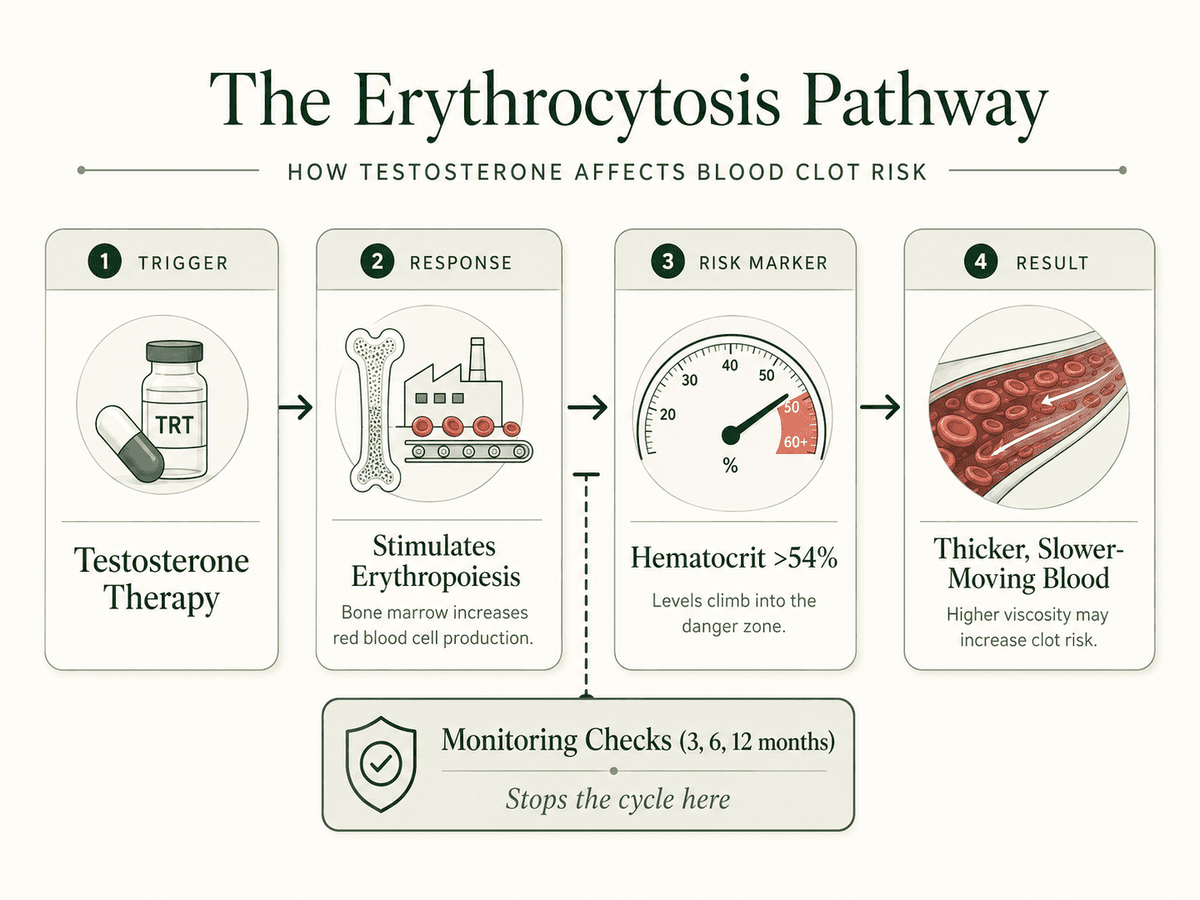
Testosterone does not directly cause blood clots in the way a platelet disorder or clotting factor deficiency would. The risk pathway is indirect, running primarily through red blood cell production.
Your Blood Gets Thicker. Here Is Why That Matters
Testosterone stimulates erythropoiesis, the process by which the body makes more red blood cells. In men with low testosterone, this stimulation restores red blood cell counts toward normal. In some men, however, testosterone therapy raises production beyond what is physiologically appropriate, resulting in a condition called erythrocytosis or secondary polycythemia.
A clinical review published in the American Journal of Hematology identified testosterone as one of the drugs known to cause acquired erythrocytosis. When hematocrit, the proportion of blood made up of red blood cells, climbs above normal thresholds, blood becomes significantly more viscous. Thicker blood moves more slowly through the veins. In areas of slow blood flow, particularly in the legs and deep veins, clot formation becomes more likely. This is the primary biological pathway connecting testosterone to blood clot risk.
Not Every Man on TRT Gets This. Here Is Who Does
Not every man on testosterone treatment develops elevated hematocrit. The risk is higher in men using injectable testosterone at longer intervals, where high levels from widely spaced injections are part of why risk rises in some men, followed by more significant drops between doses. Older men, men who smoke, men with sleep apnea, and men with chronic lung conditions such as COPD start with higher baseline red blood cell counts, meaning even modest increases from testosterone therapy can push them into the elevated range. You may fall into one or more of these categories without being aware that it increases your clot risk specifically.
A Real Case That Shows Exactly How the Risk Unfolds
A case report published in BMJ Case Reports described a 59-year-old man with COPD stage III who developed mesenteric vein thrombosis while using testosterone gel. His evaluation showed elevated hemoglobin and hematocrit, a clot visible on CT scan, and no evidence of the genetic mutation typically associated with polycythemia vera. The authors concluded that testosterone supplementation caused acquired secondary polycythemia, which in turn produced the thrombotic event. The pre-existing COPD was a contributing risk factor. This case does not mean testosterone causes mesenteric vein thrombosis in most men. It illustrates how the mechanism operates in a man who had multiple overlapping risk factors, and the clot was treated as a serious thrombotic event that shows the danger when those risks are missed.
Elevated Risk in the First 3–6 Months
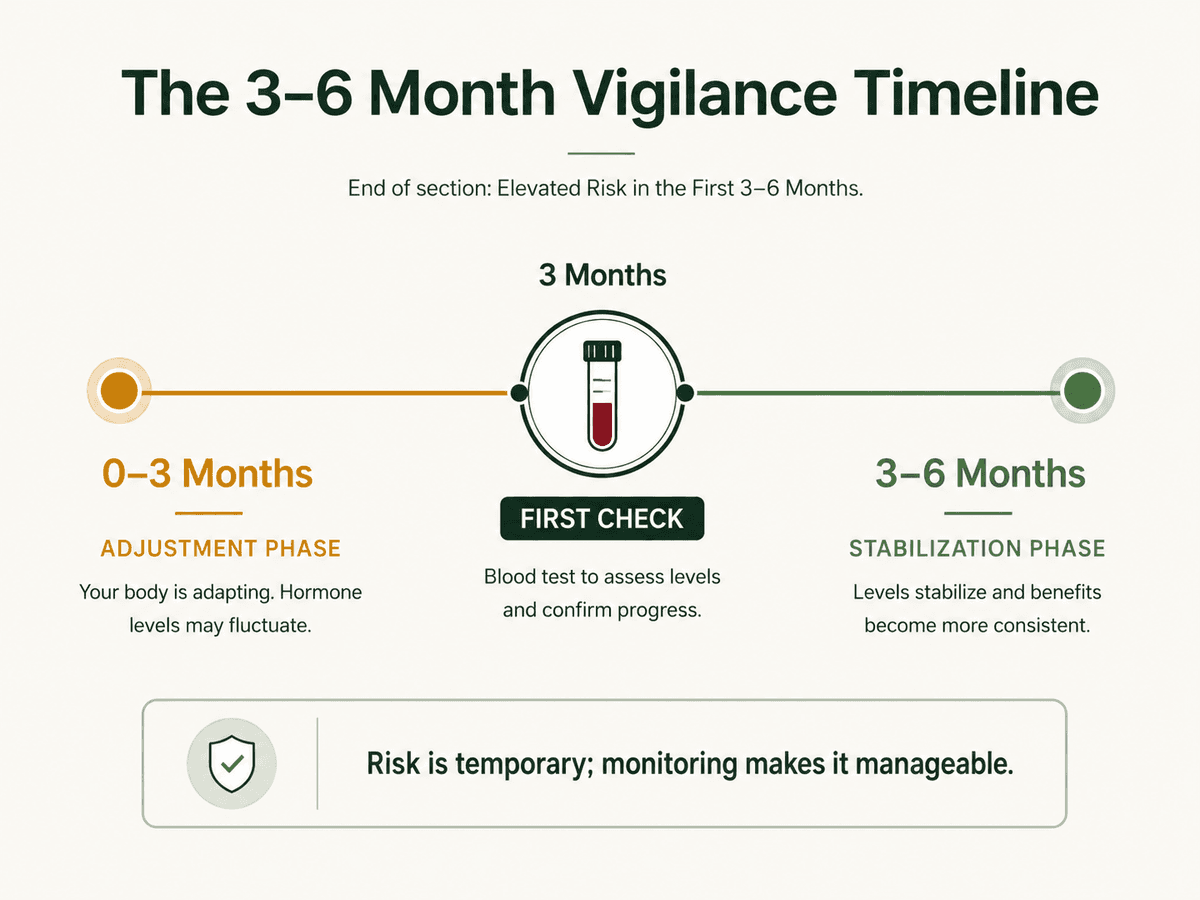
A large UK population-based case-control study found that the increased risk of blood clots was concentrated specifically in the first 3 to 6 months after starting testosterone therapy, after which the rate returned to baseline. This early-window risk occurred even in men without previously known risk factors, making the first months of therapy the period of highest vigilance for both patients and providers. Monitoring at 3 months is not optional; it corresponds to the period of greatest documented clot risk.
What the Clinical Trial Evidence Actually Shows
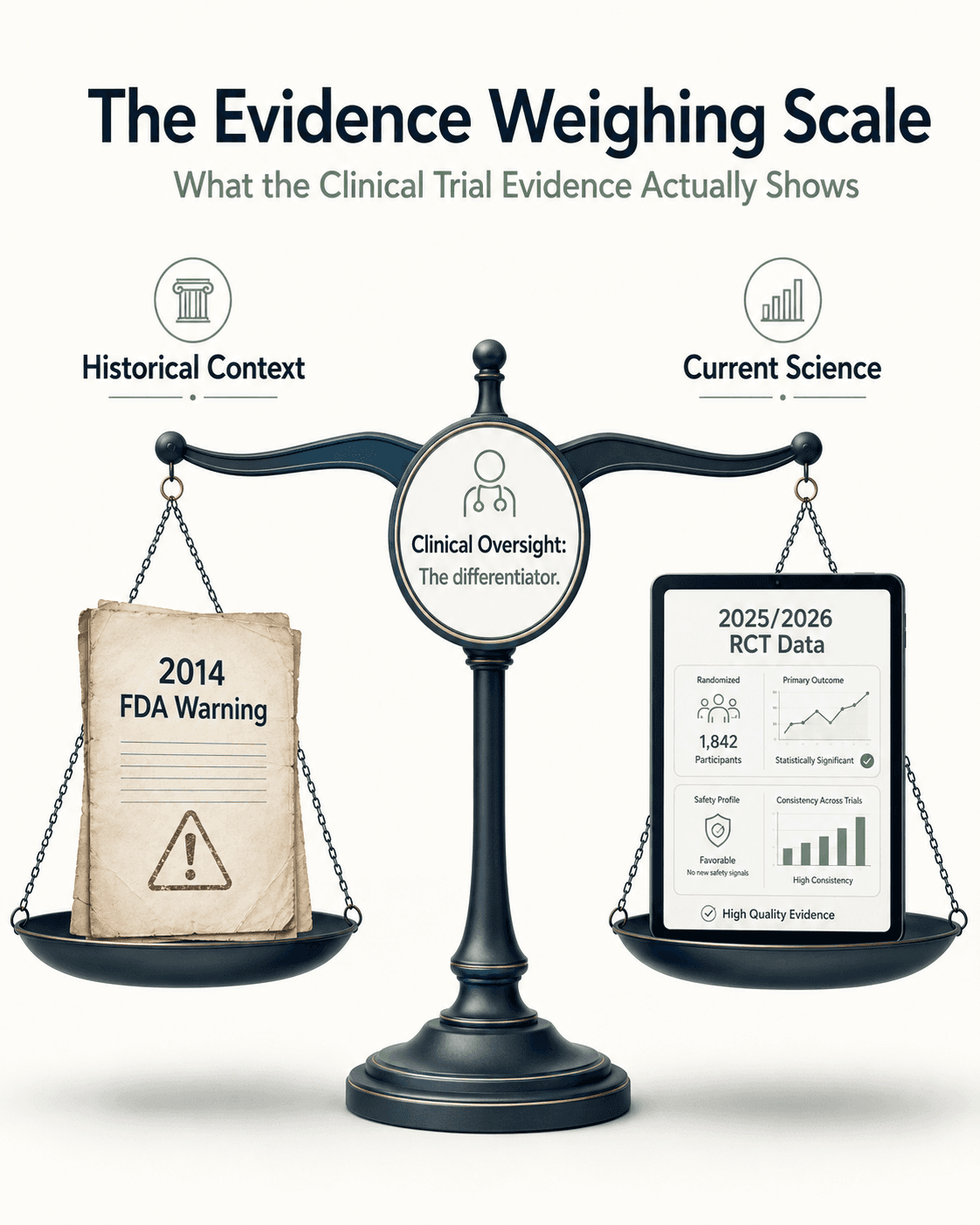
The FDA warning on testosterone products came before the large randomized controlled trial data that now exists. The picture from controlled trials is meaningfully different from what early observational studies suggested.
Men on TRT and Men on Placebo Had Nearly Identical Clot Rates
A systematic review and meta-analysis published in Thrombosis Research pooled data from 13 randomized controlled trials involving 5,050 men. Of these, 2,636 received testosterone and 2,414 received a placebo. The analysis found that testosterone therapy was not associated with venous thromboembolism compared to placebo, with a relative risk of 1.03 and a confidence interval of 0.49 to 2.14. Similar results were found for both deep vein thrombosis and pulmonary embolism when analyzed separately. The authors rated the overall quality of evidence as low, largely due to bias concerns and wide confidence intervals, and stated that a clinically important increased risk could not be ruled out, which is one reason doctors still screen higher-risk patients carefully despite the similar event rates.
Some Data Even Suggests TRT May Reduce Arterial Events, Not Raise Them
A systematic review published in the Asian Journal of Andrology analyzed 24 studies, including 14 RCTs and over 310,000 patients from observational data. Based on RCT-derived data specifically, TRT did not significantly influence the risk of arterial thrombosis, stroke, heart attack, venous thromboembolism, or pulmonary embolism in men with confirmed low testosterone. The authors noted that observational studies, which include more confounders, actually showed a reduction in arterial thrombotic events and mortality with TRT. They also flagged that data specifically on deep vein thrombosis remains limited due to the small number of DVT events captured in RCTs.
Stroke, Heart Attack, Blood Clots: No Significant Difference in Any of Them
A meta-analysis published in Endocrine Practice analyzed 26 RCTs involving 10,941 participants and assessed a range of cardiovascular outcomes including pulmonary embolism, venous thrombosis, stroke, heart attack, and all-cause mortality. No statistically significant differences were found between the TRT group and the control group for any of these outcomes. The authors noted that their meta-regression analysis found no significant associations between outcomes and common covariates, including age, diabetes, hypertension, and smoking.
You may find this data more reassuring than the warning label language suggests. But you should also note what these trials measured: men with confirmed low testosterone, in controlled trial settings, with monitoring. These results do not apply to men using testosterone without clinical oversight, without confirmed deficiency, or with unscreened pre-existing risk factors.
The FDA Warning History: 2014, 2025, and What TRAVERSE Changed
The FDA's 2014 decision to require clot-related labeling on testosterone products was a regulatory precaution based on post-market reports and observational data, not a confirmed clinical finding. The FDA acted because venous thromboembolism can be dangerous even before causality is proven.
The TRAVERSE trial changed that picture. As the largest randomized controlled trial of TRT ever conducted (5,204 men, 33-month median follow-up), it gave the FDA controlled data the 2014 warning lacked. On February 28, 2025, the FDA issued class-wide labeling updates based on its findings: an increased incidence of venous thromboembolism (including DVT and PE) in testosterone-treated men, and confirmed blood pressure increases, prompting a new hypertension warning. The trial did not, however, confirm a significant rise in major cardiovascular events, so the 2015 cardiovascular mortality warning was removed.
This means earlier meta-analyses showing no significant VTE risk from RCT data predate TRAVERSE and are now outdated. The current FDA position is that VTE risk is a documented, trial-confirmed concern with testosterone therapy.
The Blood Clot Risk: Who Is at Higher Risk
Clot risk during testosterone therapy is not evenly distributed. Certain pre-existing conditions and patient characteristics significantly affect likelihood.
Medical Conditions That Elevate Clot Risk
- Cardiovascular disease and high blood pressure. Men with existing cardiovascular disease or uncontrolled high blood pressure are at baseline at higher risk for thrombotic events. Testosterone therapy in this group requires careful evaluation and ongoing monitoring.
- Metabolic syndrome and obesity. Both conditions are independently associated with increased risk of blood clots, and both are common in men presenting with low testosterone. You may have all three conditions simultaneously, which compounds the assessment your provider needs to make, and excess weight is one of the modifiable factors that can further worsen overall clot risk.
- Prior clot history. A personal or family history of deep vein thrombosis or pulmonary embolism is a significant risk factor. Men with a known clotting disorder or prior VTE require specialist evaluation before considering testosterone therapy, and other medications should also be reviewed for additive clot risk or treatment interactions.
- Sleep apnea. Untreated obstructive sleep apnea raises red blood cell production independently of testosterone, increasing baseline hematocrit. Adding testosterone therapy without addressing sleep apnea raises the combined risk further.
- Chronic lung conditions. Conditions like COPD cause the body to produce more red blood cells in response to lower oxygen availability. Men with these conditions start at higher baseline hematocrit values, as the case described earlier demonstrates, and while testosterone deficiency can coexist with fatigue or sexual dysfunction, those symptoms do not come before clot-risk evaluation.
- Immobility. Prolonged immobility, whether from illness, recovery, or occupation, is a recognized clot risk factor independent of testosterone. Blood flow slows in the deep veins of the legs during extended periods of inactivity, and thicker blood from elevated hematocrit compounds that risk.
- Inherited Thrombophilia: Some men carry genetic clotting conditions including Factor V Leiden mutation, prothrombin gene mutation, or antiphospholipid syndrome that significantly amplify clot risk from any pro-thrombotic stimulus, including elevated hematocrit from testosterone. Some clinical guidance recommends thrombophilia screening before starting TRT in men with a personal or family history of unexplained or recurrent VTE. If you have a family history of blood clots at a young age, discuss thrombophilia testing with your provider before starting testosterone therapy.
[cta]
The Role of Testosterone Dose and Formulation
Injectable testosterone administered at longer intervals produces higher peak levels and larger fluctuations than gel and patches, which tend to raise testosterone more steadily. Higher peak testosterone levels drive greater red blood cell production spikes. Men on biweekly intramuscular injections are more likely to develop elevated hematocrit than men using daily subcutaneous injections of smaller doses or transdermal formulations, which produce lower and more stable peak levels. Dose and delivery method are modifiable factors in managing clot risk, and formulation choice matters because doctors try to avoid large peaks when clot risk is already a concern.
Symptoms of Blood Clots You Should Not Ignore
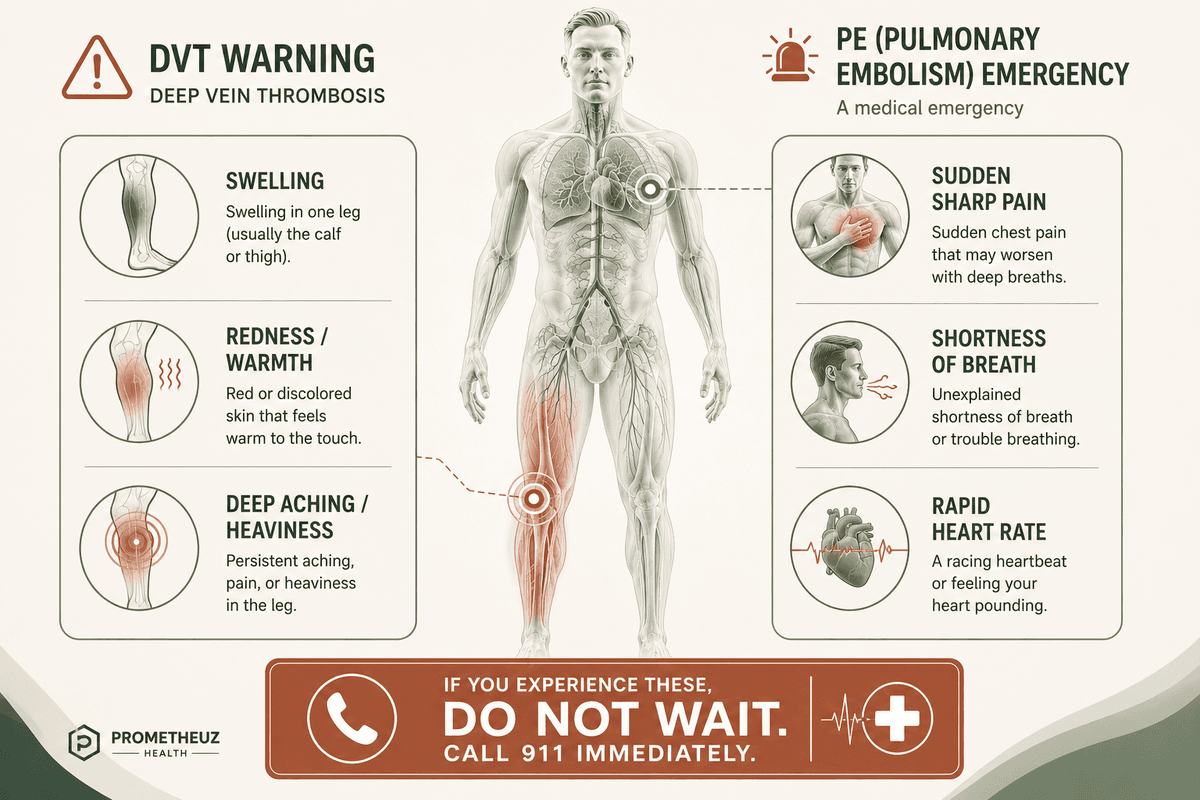
Blood clots can form silently, but they often produce warning signs. If you are on testosterone therapy and experience any of the following, seek immediate medical evaluation, as these symptoms can signal a medical emergency. These are potential signs of deep vein thrombosis or pulmonary embolism, both of which are medical emergencies.
Signs of deep vein thrombosis in the legs:
- Swelling in one leg, particularly in the calf or thigh, sometimes with changes in skin color or discoloration
- Leg pain or tenderness that feels different from normal muscle soreness
- Warmth or redness over the affected area
- A heaviness or aching sensation that does not resolve with rest
Signs of pulmonary embolism:
- Sudden chest pain, particularly with breathing
- Shortness of breath that comes on rapidly and without obvious cause
- A rapid or irregular heartbeat
- Coughing up blood
- Lightheadedness, dizziness, or fainting
Do not wait to see if these symptoms resolve on their own. A clot can travel to the lungs and become a pulmonary embolism, and in some cases it can affect the brain through stroke-related complications. Pulmonary embolism can be fatal within hours. If you experience these symptoms while on testosterone therapy or any other medication, call emergency services or go to the nearest emergency department immediately.
Monitoring Requirements During Testosterone Therapy
Preventing clot risk during testosterone therapy is largely a function of appropriate monitoring and dose management. This is why testosterone is a prescription medication requiring clinical oversight, not a supplement.
What Your Provider Should Monitor
- Hematocrit is the primary marker your doctors should monitor for erythrocytosis risk during therapy. It should be checked at baseline before starting therapy, at 3 months after starting, at 6 months, and then annually. The Endocrine Society recommends withholding or reducing testosterone if hematocrit exceeds 54%.
- Blood pressure should be assessed at baseline and at follow-up appointments. Uncontrolled high blood pressure combined with elevated hematocrit increases clot risk significantly.
- PSA is monitored in men over 40 to assess prostate health, which is separate from clot risk but required as part of comprehensive TRT monitoring.
- Symptom review at each visit should include a direct question about any leg swelling, chest pain, or shortness of breath, with an understanding of which symptoms require urgent action as part of safe monitoring. You should raise any of these symptoms immediately, not wait for a scheduled appointment.
What Happens If Hematocrit Rises Too High
If your hematocrit reaches or approaches the 54% threshold, your provider will typically reduce your dose, extend the interval between injections, or pause therapy temporarily. Some providers recommend therapeutic phlebotomy, essentially donating blood, to reduce red blood cell levels. The evidence on routine phlebotomy for testosterone-related erythrocytosis is not conclusive, and the right approach depends on your overall clinical picture. Your provider will assess the benefit against the disruption to your hormone levels.
Does Endogenous Testosterone Cause Blood Clots?
This is a separate and important question. Does having naturally high testosterone in your body, not from therapy, increase clot risk?
A prospective cohort study published in the Journal of Thrombosis and Haemostasis followed 4,673 men from the Copenhagen City Heart Study for 21 years. The study measured endogenous testosterone concentrations and tracked who developed deep vein thrombosis or pulmonary embolism over time. High endogenous testosterone levels were not associated with increased risk of VTE, DVT, or PE. The adjusted hazard ratio for men in the highest quartile of testosterone versus the lowest was 1.30 with a confidence interval of 0.62 to 2.73, which is statistically non-significant. You may find this data useful if you have been told that naturally high testosterone is dangerous. The evidence does not support that conclusion.
A Mendelian randomisation study published in Thrombosis Journal used genetic data to assess causal relationships between sex hormone levels and VTE. Genetically predicted increases in total testosterone were associated with modestly higher odds of VTE in initial analysis, but replication analyses did not confirm a genetic correlation between total testosterone and VTE. The authors concluded that the causal effect of testosterone levels on VTE requires further investigation. Sex hormone binding globulin, however, did show a consistent genetic association with VTE risk. This is a different biological pathway and relates to how testosterone is bound and available in the bloodstream rather than testosterone itself.
Frequently Asked Questions
Does testosterone therapy have a risk of blood clots?
Testosterone therapy can raise hematocrit, which thickens the blood and may increase clot risk in some men. However, randomized controlled trial data pooled across thousands of patients does not show a statistically significant increase in venous thromboembolism overall. The risk is real for specific subgroups and requires clinical monitoring.
What is the main way testosterone increases clot risk?
Testosterone stimulates red blood cell production. If hematocrit rises above normal thresholds, blood becomes more viscous and clot risk increases. This is why hematocrit monitoring is mandatory during testosterone therapy.
Who should not take testosterone therapy because of clot risk?
Men with a prior history of deep vein thrombosis or pulmonary embolism, known clotting disorders, uncontrolled high blood pressure, severe untreated sleep apnea, or certain cardiovascular conditions require specialist evaluation before any testosterone therapy is considered. These are not automatic disqualifiers, but they require careful clinical assessment.
What hematocrit level is considered unsafe during TRT?
Most clinical guidelines recommend pausing or reducing testosterone therapy if hematocrit exceeds 54%. Your provider should be checking this value at 3, 6, and 12 months after starting, and annually thereafter.
What are the warning signs of a blood clot I should watch for on TRT?
Leg swelling, calf pain, warmth or redness in one leg, sudden chest pain, shortness of breath, rapid heartbeat, or coughing up blood are all signs that require emergency evaluation. Do not wait if you experience these. Seek immediate medical attention.
Does having high natural testosterone cause blood clots?
A study published on over 4,600 men found that high endogenous testosterone was not associated with increased risk of VTE. The evidence does not support a clinically meaningful connection between naturally high testosterone and blood clot risk.
Can I reduce clot risk while on testosterone replacement therapy?
Yes, through a combination of appropriate dose and formulation selection; regular hematocrit monitoring; treatment of underlying conditions like sleep apnea; and lifestyle changes, including staying active, staying well hydrated, and maintaining healthy blood pressure. Your provider manages these factors with you as part of ongoing care.
Does testosterone cream or gel cause blood clots?
Transdermal formulations (cream and gel) produce lower and more stable testosterone levels than injectable testosterone at longer intervals. Because they generate lower peak concentrations, they produce less erythrocytosis than biweekly intramuscular injections, making hematocrit-driven clot risk somewhat lower with daily topical use. Monitoring is still required. No formulation eliminates the need for hematocrit surveillance.
Can testosterone cause blood clots in the legs?
Yes, via the erythrocytosis pathway. Elevated hematocrit slows blood flow in the deep veins of the legs, which is the primary anatomical site for deep vein thrombosis. The UK population-based case-control study found clot risk was highest in the first 3–6 months of therapy, and that includes leg DVT. Any new leg swelling, calf pain, or warmth during the first months of therapy requires urgent medical evaluation.
Does low testosterone itself cause blood clots?
There is no conclusive evidence that low testosterone directly causes blood clots. A 21-year prospective cohort study of 4,673 men found high endogenous testosterone was not associated with increased VTE. Some observational data suggests low testosterone is associated with worse metabolic health (obesity, insulin resistance) that independently raises clot risk but the testosterone deficiency itself is not established as a direct clot-causing mechanism.
How long does elevated clot risk last after stopping testosterone?
Once testosterone is discontinued, erythrocytosis gradually resolves as red blood cell production returns to baseline typically over weeks to months depending on how long therapy was used and the formulation. During the resolution period, elevated hematocrit may persist temporarily. If you stop testosterone therapy, your provider should continue to monitor hematocrit until it returns to the normal range.
Conclusion
Testosterone does not automatically cause blood clots. What it does is stimulate red blood cell production, and in some men, that stimulation pushes hematocrit high enough to raise clot risk meaningfully. That is a real mechanism; it is documented, and it is the reason hematocrit monitoring is a non-negotiable part of responsible testosterone therapy.
The randomized trial evidence, pooled across thousands of men in controlled conditions, does not show a statistically significant increase in deep vein thrombosis, pulmonary embolism, stroke, or heart attack in men with confirmed low testosterone receiving monitored therapy. That evidence is reassuring. It does not eliminate the need for evaluation and monitoring. It confirms that the risk is manageable with the right clinical oversight, not that the risk does not exist.
If you are considering testosterone therapy and have concerns about clot risk, the answer is not to avoid the conversation. It is to have a thorough evaluation that includes your baseline hematocrit, blood pressure, sleep apnea status, cardiovascular history, and any pre-existing clotting risk factors. Those findings determine your actual risk level, and your treatment plan should reflect them.
Note: If you are experiencing symptoms of a blood clot right now sudden chest pain, shortness of breath, leg swelling with pain do not book an assessment. Call 911 or go to the nearest emergency department immediately.
Disclaimer
This content is for educational purposes only and does not replace medical advice. Testosterone therapy and hormone-related decisions should be guided by a licensed healthcare provider.
References
- Ayele HT, Brunetti VC, Renoux C, Tagalakis V, Filion KB. Testosterone replacement therapy and the risk of venous thromboembolism: A systematic review and meta-analysis of randomized controlled trials. Thromb Res. 2021;199:123-131. doi:10.1016/j.thromres.2020.12.029. PMID: 33486321. https://pubmed.ncbi.nlm.nih.gov/33486321/
- Cannarella R, Gusmano C, Leanza C, et al. Testosterone replacement therapy and vascular thromboembolic events: a systematic review and meta-analysis. Asian J Androl. 2024;26(2):144-154. doi:10.4103/aja202352. PMID: 37921515. PMCID: PMC10919420. https://pmc.ncbi.nlm.nih.gov/articles/PMC10919420/
- Sood A, Hosseinpour A, Sood A, et al. Cardiovascular Outcomes of Hypogonadal Men Receiving Testosterone Replacement Therapy: A Meta-analysis of Randomized Controlled Trials. Endocr Pract. 2024;30(1):2-10. doi:10.1016/j.eprac.2023.09.012. PMID: 37797887. https://pubmed.ncbi.nlm.nih.gov/37797887/
- Gangat N, Szuber N, Tefferi A. JAK2 unmutated erythrocytosis: 2023 Update on diagnosis and management. Am J Hematol. 2023;98(6):965-981. doi:10.1002/ajh.26920. PMID: 36966432. https://pubmed.ncbi.nlm.nih.gov/36966432/
- Katz H, Popov E, Bray N, Berman B. Mesenteric vein thrombosis caused by secondary polycythaemia from AndroGel. BMJ Case Rep. 2014;2014. doi:10.1136/bcr-2014-206023. PMID: 25336553. PMCID: PMC4208124. https://pmc.ncbi.nlm.nih.gov/articles/PMC4208124/
- Holmegard HN, Nordestgaard BG, Schnohr P, Tybjaerg-Hansen A, Benn M. Endogenous sex hormones and risk of venous thromboembolism in women and men. J Thromb Haemost. 2014;12(3):297-305. doi:10.1111/jth.12484. PMID: 24329981. https://pubmed.ncbi.nlm.nih.gov/24329981/
- Wang S, Wang Y, Bai M, et al. Causal inference of sex hormone-binding globulin on venous thromboembolism: evidence from Mendelian randomisation. Thromb J. 2023;21(1):109. doi:10.1186/s12959-023-00553-9. PMID: 37880771. PMCID: PMC10599068. https://pmc.ncbi.nlm.nih.gov/articles/PMC10599068/