If you have been researching TRT, you have likely come across a wide range of opinions. Some lean heavily on the risks. Others share an overly optimistic picture.
The honest answer is that TRT is safe for many men when it is properly prescribed and monitored. The key phrase is "properly prescribed." Safety depends heavily on correct diagnosis, appropriate dosing, and regular follow-up with a licensed provider.
Some early concerns, particularly around cardiovascular risk, came from studies that larger and more rigorous trials have since walked back. The science has moved forward.
This article covers what current research shows about TRT safety, which risks are real and manageable, which are overstated, and who qualifies as an appropriate candidate. The goal is to give you a clear, evidence-based picture so you can have a more informed conversation with your doctor.
What Is TRT and Who Is It For
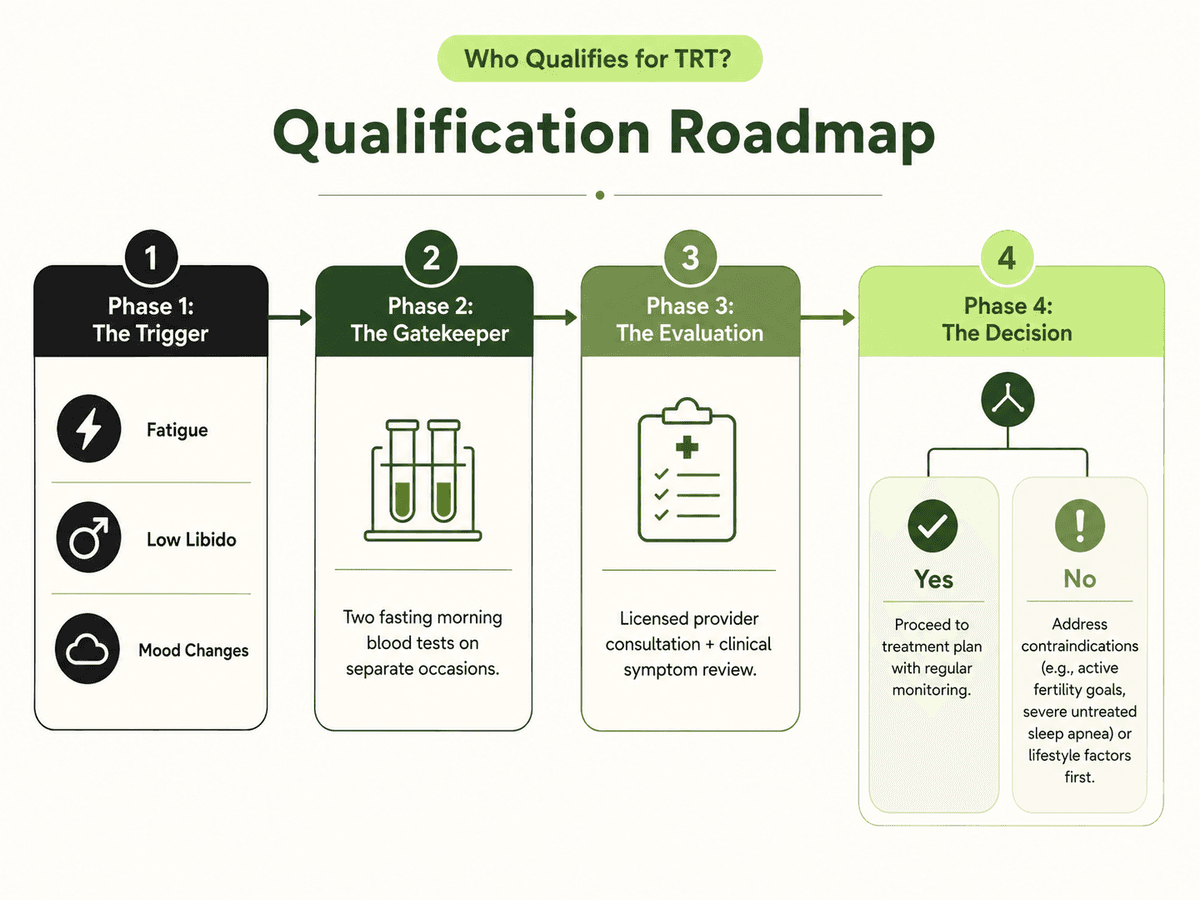
Testosterone replacement therapy is a prescription treatment for men with male hypogonadism, a condition in which the body does not produce enough testosterone. This can result from problems affecting the testicles, the pituitary gland, or signaling pathways in the brain.
The FDA approves TRT only for men with a medical diagnosis supported by symptoms and confirmed testosterone deficiency through repeated blood testing. It is not approved for age-related testosterone decline alone, nor for general fatigue, body composition goals, or performance enhancement.
FDA-approved delivery methods include injections, transdermal gels, patches, nasal gels, buccal systems, and subdermal pellets. Your provider will consider your health profile, lifestyle, and preference when recommending a formulation.
Symptoms of Low Testosterone That May Prompt Testing
You may recognize some of these in yourself. Men with testosterone deficiency often report a range of symptoms before seeking evaluation:
- Persistent fatigue and low energy
- Low libido or low sex drive
- Fewer spontaneous erections or erectile dysfunction
- Loss of muscle mass and increased body fat
- Reduced bone density
- Irritability, depressive feelings, or reduced motivation
- Poor sleep quality
These symptoms alone do not confirm low T. If you are experiencing several of these, a morning blood test measuring total testosterone is the appropriate first step. It is typically repeated on a second occasion before any diagnosis is made.
The Risks of TRT: What You Should Know Before Starting
Understanding the risks first is the right place to start. Many men who ask, "Is TRT safe?" are really asking whether the risks are worth the potential benefits for their situation. The answer depends on your health history, your testosterone levels, and how treatment is managed.
Elevated Red Blood Cell Count
TRT stimulates red blood cell production by suppressing hepcidin, a hormone that regulates iron availability. This raises hematocrit, the proportion of red blood cells in the blood. If hematocrit climbs too high, blood becomes thicker, which may increase the risk of blood clots and, in theory, events like pulmonary embolism.
The TRAVERSE trial, published in the New England Journal of Medicine, which enrolled over 5,200 men with hypogonadism, did find a modestly higher incidence of pulmonary embolism in the testosterone group compared to placebo. This was a secondary finding, not the primary outcome, but it is clinically relevant. If you have a history of clotting disorders, your provider needs to know this before treatment begins.
How it is managed: Your provider should monitor hematocrit through regular blood testing. A 2025 review in the International Brazilian Journal of Urology noted that therapeutic phlebotomy is indicated if hematocrit exceeds 52%. A dose adjustment or change in delivery method may also reduce the response.
Fertility Suppression and Sperm Production
TRT signals to the body that it already has enough testosterone. This suppresses signals from the pituitary gland that drive natural sperm production. If you want to father children, this is one of the most important considerations before starting.
The suppression is typically reversible after stopping TRT, but recovery time varies. The Endocrine Society's clinical practice guideline, published in the Journal of Clinical Endocrinology and Metabolism, recommends against starting testosterone therapy in men planning fertility in the near term. Alternatives such as human chorionic gonadotropin or selective estrogen receptor modulators may be considered instead.
Worsening Sleep Apnea
TRT may worsen obstructive sleep apnea in men who already have it. The mechanism is not fully understood, but evidence suggests testosterone may alter upper airway muscle tone and breathing regulation during sleep. You may not even know you have sleep apnea before starting TRT, which is why screening matters.
Current clinical guidelines recommend screening for sleep apnea before starting TRT and monitoring for symptoms throughout treatment. If you already have untreated severe obstructive sleep apnea, TRT should not begin until it is addressed.
Prostate Health and PSA Changes
There has long been concern that TRT might increase the risk of prostate cancer. This concern has a historical basis but is not well-supported by current evidence.
A randomized trial published in JAMA Network Open, drawn from the same 5,246-man TRAVERSE cohort, found no statistically significant difference in the incidence of high-grade or any prostate cancer between men receiving TRT and those receiving placebo. Men with elevated prostate-specific antigen above 3.0 ng/mL were excluded from enrollment, which reflects real-world clinical screening practice.
TRT does cause a modest rise in PSA in some men. This is why your provider should check baseline PSA before starting and continue monitoring prostate health during treatment. The Endocrine Society guideline recommends against starting TRT in men with active prostate cancer or a PSA above 4.0 ng/mL without further urological evaluation.
Swollen or Tender Breasts
Some testosterone converts to estradiol through a process called aromatization. In some men, rising estrogen levels can cause breast tenderness or swollen or tender breasts, a condition called gynecomastia. The 2025 adverse effects review notes this is typically managed with aromatase inhibitors or tamoxifen when clinically necessary. If you notice chest sensitivity early in treatment, raise it with your provider promptly.
Skin Reactions and Acne
TRT increases androgenic activity, which can stimulate oil glands and contribute to acne or oily skin. Skin reactions at the application site are also possible with topical formulations. These effects are generally mild. You may find they improve with a dose adjustment or a switch to a different delivery method.
What the Research Shows: Cardiovascular Safety

The biggest historical concern about testosterone treatment was cardiovascular disease risk. Several observational studies published around 2013 to 2014 raised alarms about heart attack and stroke risk. Those studies had significant methodological limitations, including failure to account for pre-existing cardiovascular disease.
The TRAVERSE trial, published in the New England Journal of Medicine in 2023, addressed this directly. In this multicenter, double-blind, placebo-controlled trial, over 5,200 men aged 45 to 80 with hypogonadism and existing or high-risk cardiovascular disease were randomized to testosterone gel or placebo. The primary endpoint was a composite of cardiovascular death, nonfatal heart attack, or nonfatal stroke.
TRT was found to be non-inferior to placebo. The event rate was 7.0% in the testosterone group and 7.3% in the placebo group. If you have been told that testosterone is dangerous for the heart, this is the study your conversation with your doctor should be referencing.
The EMAS position statement on TRT in older men, published in Maturitas, recommends against TRT in men who have had a myocardial infarction or stroke within the last four months or those with severe decompensated heart disease. These remain important contraindications. But for appropriately selected and monitored men, current evidence does not support a significant increase in cardiovascular risk from TRT.
The Safety Profile of TRT With Proper Monitoring
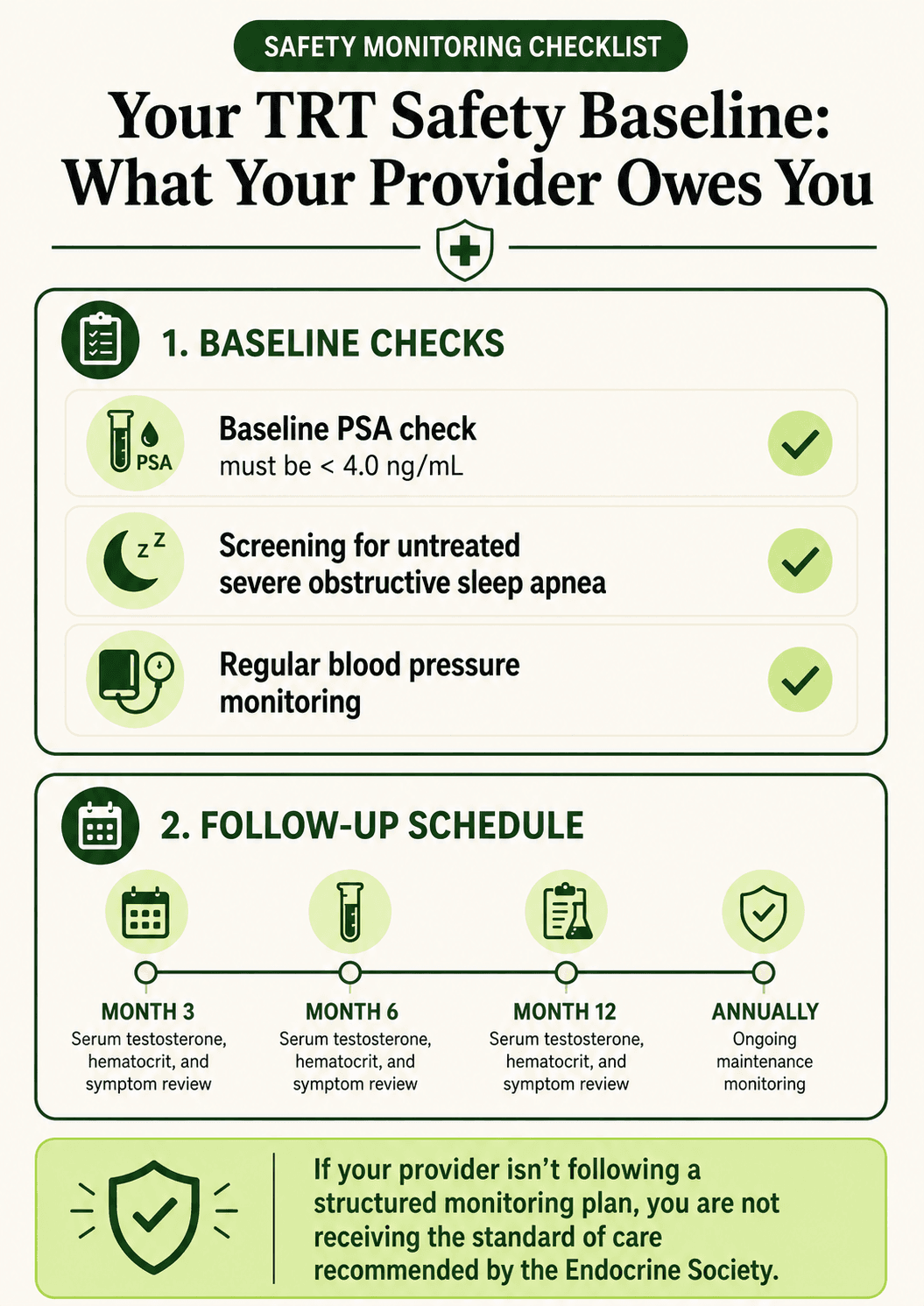
Safety with TRT is not a one-time decision. It is an ongoing process that depends on proper diagnosis, appropriate dosing, and structured follow-up. Here is what that should look like for you.
The Endocrine Society clinical guideline recommends a standardized monitoring plan that includes:
- Evaluating your symptoms and any adverse effects at each visit
- Measuring serum testosterone and hematocrit at 3 and 6 months, then annually
- Assessing prostate cancer risk through PSA in your first year of treatment
- Monitoring blood pressure and cardiovascular symptoms throughout
The EMAS consensus statement in Maturitas adds that monitoring should occur at 3, 6, and 12 months after starting and at least yearly after that. Bone density assessment may also be relevant depending on your baseline risk.
If your provider is following this kind of structured plan, that is a sign they are taking your health seriously. Most of the risks tied to TRT are gradual changes that show up in lab results before they become problems. A provider who checks in consistently is one who catches things early and adjusts accordingly. That is what genuine care looks like in practice.
Who Should Consider TRT and Who Should Not
Men Who May Be Appropriate Candidates
[cta]TRT may be appropriate for you if you have all of the following:
- Confirmed low testosterone levels on two separate fasting morning blood tests
- Clinical symptoms consistent with testosterone deficiency that meaningfully affect your quality of life
- No active contraindications
- Willingness to undergo ongoing monitoring and follow-up
The European Academy of Andrology guidelines in Andrology note that lifestyle modification and weight loss should be the first approach in overweight and obese men, as excess body fat contributes to testosterone suppression. If your symptoms persist after meaningful lifestyle changes, clinical evaluation is the appropriate next step.
Men Who Should Not Start TRT or Need Extra Caution
The Endocrine Society guideline lists contraindications that include the following:
- Active or recent prostate cancer
- PSA above 4.0 ng/mL without further evaluation
- Elevated hematocrit
- Untreated severe obstructive sleep apnea
- Active fertility goals
- Uncontrolled heart failure
- Myocardial infarction or stroke within the last six months
- Thrombophilia
These are not arbitrary restrictions. They reflect the situations where the risk picture changes substantially. If any of these apply to you, that does not necessarily mean TRT is off the table permanently. It means the conversation with your provider needs to happen first.
Lifestyle Factors That Affect Your Testosterone Levels
Before TRT becomes part of the conversation, several lifestyle factors significantly influence natural testosterone levels and should be addressed first.
Resistance training: has a well-documented relationship with testosterone. If you are not currently doing regular weight-bearing exercise, this is one of the most accessible ways to support your hormonal health. Sleep quality: also matters directly. Testosterone is produced primarily during sleep, and chronic sleep deprivation reduces testosterone output. You may find that addressing sleep alone shifts how you feel.
Stress management: is relevant because elevated cortisol suppresses testosterone production. Chronic stress creates a hormonal environment that works against normal testosterone levels. Body weight plays a direct role as well. Excess fat tissue converts testosterone to estrogen through aromatase activity, meaning losing weight in overweight men often raises testosterone without any treatment.
Vitamin D deficiency: has also been associated with lower testosterone in observational studies, though causation has not been firmly established.
Resistance Training (Supports hormonal health).
- Sleep Hygiene (Testosterone production peaks during sleep).
- Stress Management (Cortisol suppresses testosterone).
- Weight Loss (Fat tissue increases aromatase activity, converting testosterone to estrogen).
- Requires confirmed medical diagnosis (hypogonadism).
- Requires ongoing, lifelong monitoring.
- FDA-approved for deficiency, not for "general optimization."
If your symptoms persist after consistent attention to these factors, and a blood test still confirms low testosterone levels, a licensed provider can evaluate whether TRT is appropriate for you.
How Testosterone Levels Are Properly Measured
Diagnosing testosterone deficiency requires more than a single reading.
A fasting morning blood test measuring total testosterone is the starting point. Testosterone peaks in the morning, so if you test later in the day, results can read lower than your actual baseline. The test should be repeated on a second occasion before any diagnosis is made. If your total testosterone falls near the lower normal range, free testosterone measurement may provide additional information, particularly if you have conditions that affect sex hormone-binding globulin.
A diagnosis of male hypogonadism requires both consistently low laboratory results and symptoms consistent with testosterone deficiency. Low numbers alone, without clinical symptoms, do not mean treatment is warranted. Your doctor will also evaluate LH and FSH levels to distinguish between types of hypogonadism, which shapes the treatment approach.
FAQ
Is testosterone therapy safe for the heart?
Current evidence suggests TRT does not significantly increase the risk of major cardiac events in correctly selected men. The TRAVERSE trial, the largest randomized controlled trial on this question, found no significant difference in heart attack or stroke rates between men receiving testosterone and those receiving a placebo.
Does TRT cause prostate cancer?
Current research does not support a direct causal link between TRT and prostate cancer. The TRAVERSE prostate safety analysis found no statistically significant increase in prostate cancer incidence in men receiving TRT versus placebo. Routine monitoring of PSA and prostate health remains standard practice regardless.
Can I stop TRT once I start?
Yes, you can stop TRT. When you stop, your body's natural testosterone production may resume over time, though recovery varies. If your condition is permanent, symptoms of testosterone deficiency may return. The decision to stop should always be made in consultation with your provider.
Will testosterone replacement therapy affect my fertility?
TRT suppresses sperm production by reducing the hormonal signals the testes need. If you want to father children in the near term, discuss this with your provider before starting. Fertility often, but not always, recovers after stopping TRT.
What does a proper TRT evaluation involve?
A proper evaluation includes a clinical interview to assess your symptoms; two fasting morning blood tests confirming low testosterone; a review of your full health history, including cardiovascular disease, prostate health, and sleep; and a discussion of the potential risks and possible benefits specific to your situation.
How long does it take to notice changes on TRT?
Research suggests that some men notice changes in libido and sexual function within weeks, while effects on mood, body composition, and bone density develop over several months. Your individual response will depend on the degree of deficiency and the delivery method used.
Is oral testosterone safe?
Older oral forms carried liver concerns. Newer oral testosterone formulations are considered safer. The 2025 adverse effects review notes that transdermal preparations and newer oral forms are generally preferred for men with a history of liver disease. Your provider can advise on which formulation suits your situation.
Conclusion
TRT is not risk-free. Elevated hematocrit, fertility suppression, potential worsening of sleep apnea, and modest PSA changes are real effects that require monitoring. But the framing that TRT is broadly dangerous is not well-supported by current evidence, particularly for men who are correctly diagnosed, properly dosed, and consistently followed up.
The cardiovascular narrative has shifted substantially since 2013. The TRAVERSE trial, involving over 5,200 men at high cardiovascular risk, found no significant difference in major cardiac events between testosterone and placebo. The prostate cancer concern, similarly, is not confirmed by randomized data in appropriately screened men.
What the evidence consistently supports is that safety and outcomes are process-dependent. The men most likely to benefit and least likely to experience harm are those who receive a confirmed diagnosis through blood testing, begin treatment with realistic expectations, and stay engaged in monitoring throughout.
If you are experiencing symptoms consistent with low testosterone, the right first step is a conversation with a licensed healthcare provider. The risks and benefits of TRT can only be weighed accurately in the context of your specific health history, your lab results, and your goals.
References
Lincoff AM, Bhasin S, Flevaris P, et al. Cardiovascular Safety of Testosterone-Replacement Therapy. N Engl J Med. 2023;389(2):107-117. doi:10.1056/NEJMoa2215025. PMID: 37326322. https://pubmed.ncbi.nlm.nih.gov/37326322/
Bhasin S, Travison TG, Pencina KM, et al. Prostate Safety Events During Testosterone Replacement Therapy in Men With Hypogonadism: A Randomized Clinical Trial. JAMA Netw Open. 2023;6(12):e2348692. doi:10.1001/jamanetworkopen.2023.48692. PMID: 38150256. https://pubmed.ncbi.nlm.nih.gov/38150256/
Bhasin S, Brito JP, Cunningham GR, et al. Testosterone Therapy in Men With Hypogonadism: An Endocrine Society Clinical Practice Guideline. J Clin Endocrinol Metab. 2018;103(5):1715-1744. doi:10.1210/jc.2018-00229. PMID: 29562364. https://pubmed.ncbi.nlm.nih.gov/29562364/
Corona G, Goulis DG, Huhtaniemi I, et al. European Academy of Andrology (EAA) guidelines on investigation, treatment, and monitoring of functional hypogonadism in males. Andrology. 2020;8(5):970-987. doi:10.1111/andr.12770. PMID: 32026626. https://pubmed.ncbi.nlm.nih.gov/32026626/
Kanakis GA, Pofi R, Goulis DG, et al. EMAS position statement: Testosterone replacement therapy in older men. Maturitas. 2023;178:107854. doi:10.1016/j.maturitas.2023.107854. PMID: 37845136. https://pubmed.ncbi.nlm.nih.gov/37845136/
Basheer B, Ila V, Barros R, et al. Management of Adverse Effects in Testosterone Replacement Therapy. Int Braz J Urol. 2025;51(3). doi:10.1590/S1677-5538.IBJU.2025.9904. PMID: 39908204. https://pubmed.ncbi.nlm.nih.gov/39908204/
Barone B, Napolitano L, Abate M, et al. The Role of Testosterone in the Elderly: What Do We Know? Int J Mol Sci. 2022;23(7):3535. doi:10.3390/ijms23073535. PMID: 35408895. https://pubmed.ncbi.nlm.nih.gov/35408895/