Yes, low testosterone can cause depression symptoms like tiredness, lack of enthusiasm, anger, trouble concentrating, and a lower sex drive. But there are numerous things that can induce depression, and low testosterone is just one of them. To make a diagnosis, you need to have blood tests and a medical exam.
People commonly mix up low testosterone with depression since they can seem the same. Some of the most typical things that happen are feeling tired, not wanting to do anything, having difficulties concentrating, and having a reduced sex drive or sexual desire. These are also regarded as signs, such as mood swings and feeling down.
Just because two things are the same doesn't mean that one causes the other. If there isn't enough produce testosterone, the body might not be able to use energy as well, emotions could not be as stable, and sexual function might not work as well. Sometimes, these signs can look like being depressed.
What Low Testosterone Actually Means
A testosterone deficiency occurs when the body doesn't create enough of the hormone to maintain normal testosterone levels needed for proper functioning. It is talked about more often in men, although it can happen to women as well.
Typical signs of low testosterone include:
- Low energy
- Less sexual desire or less sex drive
- Decreased muscle strength
- Reduced muscle mass
- Irritability
- Poor focus
- Low confidence
- Sleep problems
- Changes in mood that could be signs of depression
Can having low testosterone make you depressed?
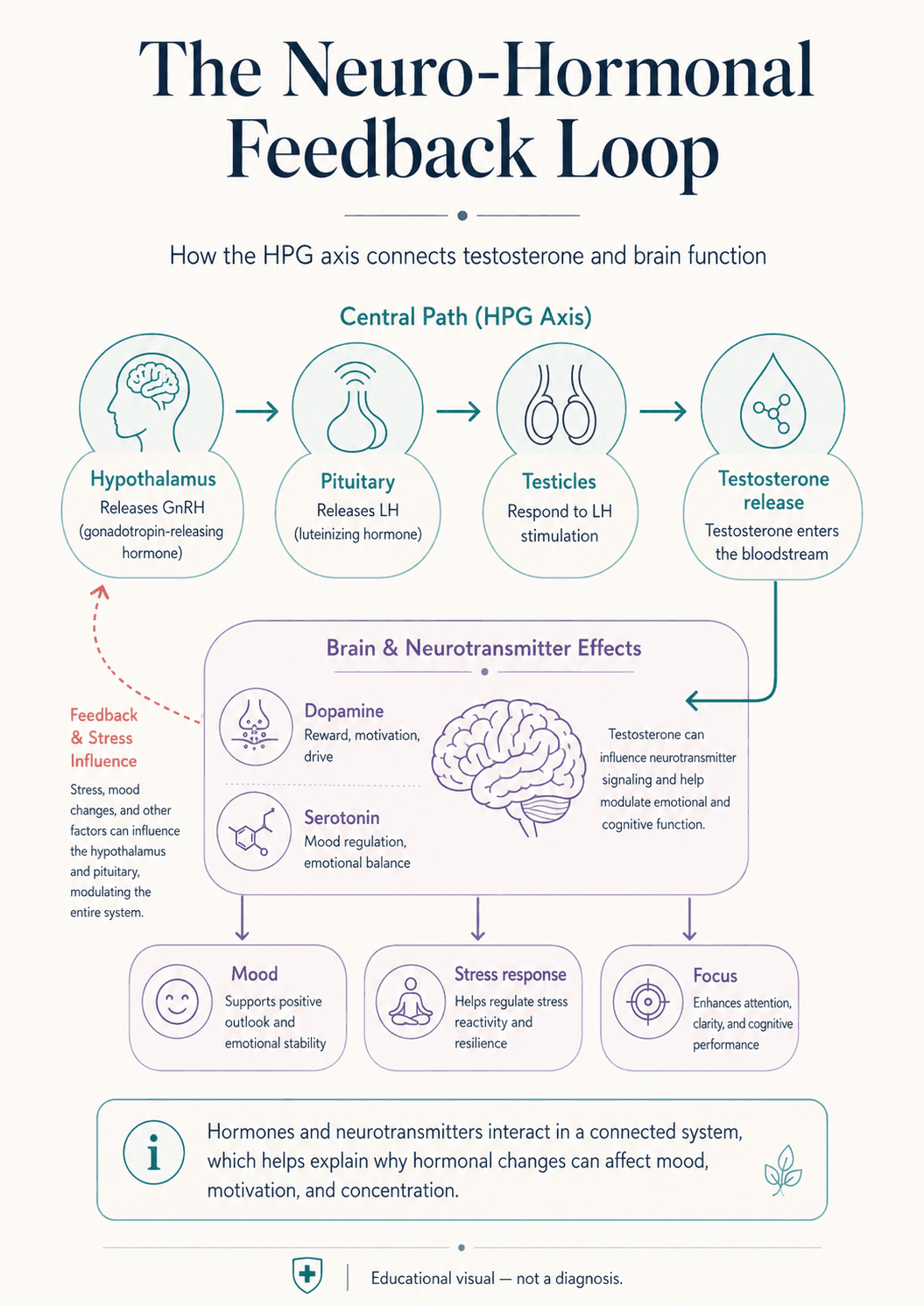
A meta-analysis in the Journal of Psychiatric Practice, combined with research from the Journal of Psychopharmacology, indicates that low testosterone may correlate with depressive symptoms in certain individuals. Testosterone plays a role in controlling important neurotransmitter systems that affect motivation, stress response, and emotional equilibrium. These pathways are very crucial for mental health in general.
But the relationship is not simple, and multiple overlapping factors can complicate matters. In clinical environments and endocrinology research, published data indicates the following:
- Not everyone with lower levels of testosterone experiences depression.
- Not everyone who is depressed is imbalanced in their hormones.
- Factors like substance abuse, sleep quality, and lifestyle are all factors that play a role and may place some individuals at greater risk.
Thus, hormonal imbalances may be one contributing factor, but rarely the sole cause.
Why Symptoms Often Overlap

Low testosterone and depression can induce the same symptoms because they both influence the same regions of the body that control mood, energy, and drive.
Testosterone affects dopamine, serotonin, and how the brain handles stress. Depression is connected to changes in these neurotransmitter systems. This means that both events can influence how a person thinks, feels, and acts. Both conditions can present similar symptoms, and other symptoms may also overlap, including:
- Low energy
- Brain fog
- Problems with sleep
- Reduced sexual desire or sexual activity
- Low confidence
- Loss of interest in activities
- Reduced muscle strength and muscle mass
- Social withdrawal
Clinical assessment is needed since low testosterone and depressive symptoms coincide.
Low Testosterone Levels vs. Depression
Based on research from the Journal of Psychopharmacology and psychiatry studies, this table highlights the key differences between low testosterone and depression. Since symptoms may overlap, medical evaluation is important for proper identification.
| Category | Low Testosterone | Depression |
| Cause | Hormone problem (low testosterone) | Mental health condition |
| Main issue in the body | Low testosterone levels affect energy and body functions | Brain chemicals affect mood and thinking |
| Mood | May feel low mood, but not always | Ongoing sadness and emotional symptoms is a main sign |
| Energy | Often feels tired or low energy | Often feels tired even without physical cause |
| Sexual health | Often lower sex drive/ low libido / sexual dysfunction like erectile dysfunction | May be lower, but not always |
| Muscle strength | May lose muscle mass and muscle strength | Usually not directly affected |
| Focus | Mild trouble focusing | Common trouble with focus and thinking |
| Testing | Blood test shows low hormone levels | No hormone test needed; based on symptoms |
| Main diagnosis | Hormone imbalance | Mental health evaluation |
| Link between them | Can affect mood in some people | Not caused by hormone levels alone |
Low testosterone and depression are not the same thing. Low testosterone production is mostly a hormone issue, while depression is mostly a mental health issue. The chart shows that they can have comparable symptoms that can be frequently overlooked. Not everyone with low testosterone levels gets depressed, and not everyone with depression has a hormone imbalance. This is why proper testing and evaluation are important for understanding the real cause.
How Doctors Evaluate the Problem
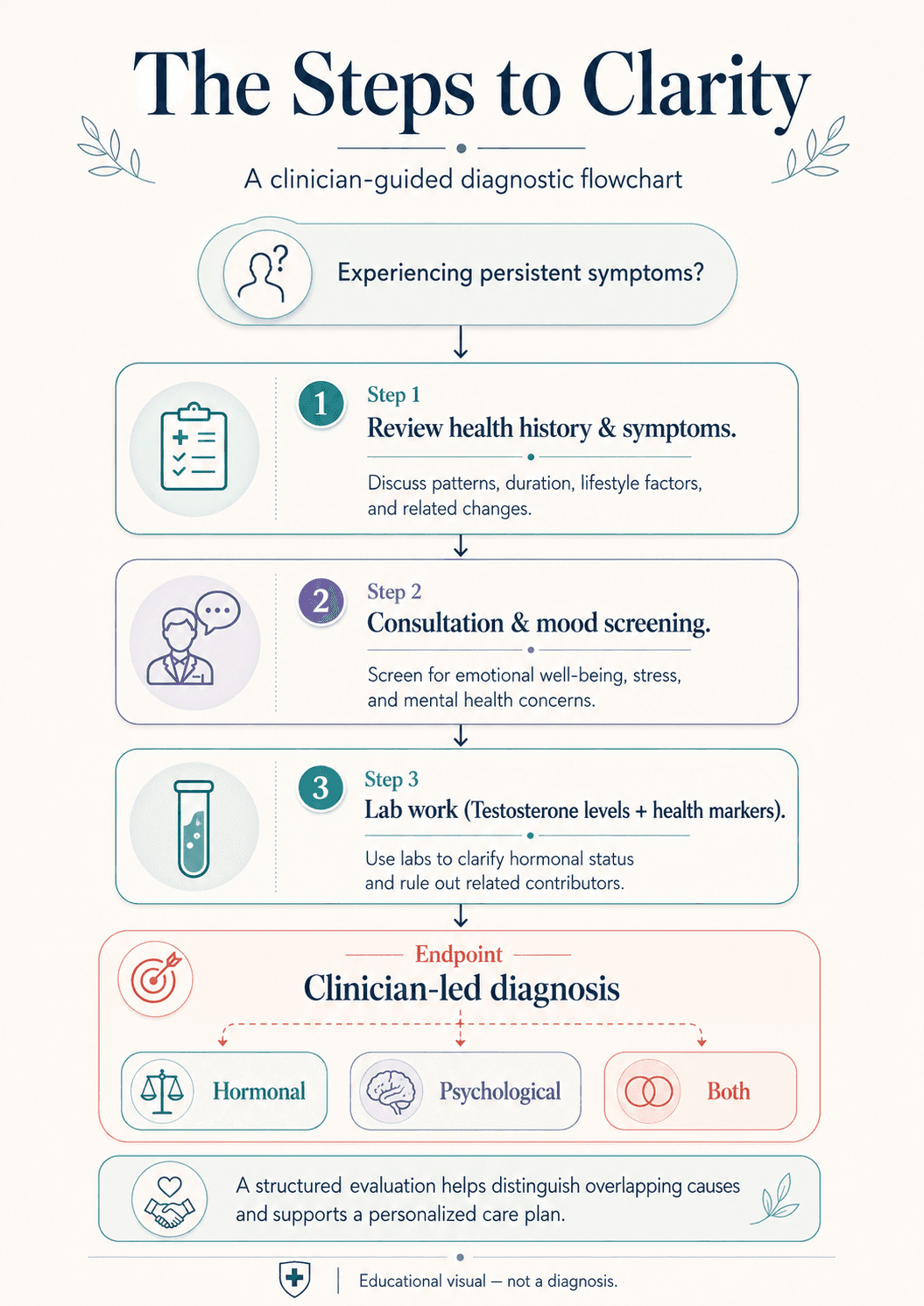
Clinicians assess both mental health and hormone function together.
[cta]A typical evaluation may include:
- Health history review
- Mood screening for symptoms of depression
- Sleep assessment
- Medication and substance abuse review
- Blood testing for hormone levels and levels of free testosterone
- Lifestyle and physical activity assessment
What Research Says About Testosterone Replacement Therapy
Clinical research on testosterone treatment has yielded inconclusive results. Some clinical research indicates enhancements in energy levels, mental clarity, mood-related symptoms, and sexual function among patients with verified low testosterone.
But:
- It is not a universal remedy for depression or anxiety.
- People respond differently.
- It is still necessary to find the root reasons.
Risks and Limitations of Hormone Therapy
Testosterone therapy requires careful monitoring. Possible considerations include:
- Changes in blood parameters
- Effects on fertility
- Skin changes
- Fluid balance changes
- Sleep-related changes
- Cardiovascular considerations in some cases
Medical supervision is important before any hormone-based intervention.
Natural Ways to Support Mood and Hormone Health
Lifestyle strategies, particularly avoiding a sedentary lifestyle, may support both mental health and hormone balance:
- Regular physical activity
- Resistance training to support muscle mass and muscle strength
- Balanced nutrition
- Stress management
- Limiting substance abuse
- Improving sleep quality
These can support both mood and hormone levels naturally.
When to Seek Help
Consider evaluation if:
- Symptoms of low testosterone persist
- You experience symptoms of depression together with low energy or reduced sexual desire
- Daily functioning is affected
A doctor can diagnose testosterone deficiencies, depression (e.g., major depressive disorder), or both in female and male patients.
Frequently Asked Questions
Can low testosterone affect mental health?
Yes. It may influence mental health, particularly when hormone levels are low.
Is low sex drive always hormonal in male patients?
No. Reduced sex drive or sexual desire can result from many other factors that lead to hormonal or psychological changes. Such factors include stress, sleep, and emotional health.
Do men and women experience testosterone issues the same way?
Both men and women produce free testosterone, but physical symptoms and effects may differ.
Is testosterone therapy used for depression?
It is not a primary treatment for depression. It is considered only in confirmed testosterone deficiency cases.
What are normal testosterone levels for male sexual health?
Normal testosterone levels typically range from 300 to 1,000 ng/dL in adult men, though optimal levels vary with aging. Male sexual health is closely tied to testosterone production by Leydig cells in the testes, as the hormone regulates sexual desire, erectile function, and overall sexual performance.
Conclusion
Low testosterone and depression may exhibit common characteristics. This is why it is important to have checkups to test free testosterone levels and check mental health.
A structured assessment can help figure it out. These will know if the problem is caused by hormonal imbalances, psychological factors, or both.
Disclaimer
This content is for educational purposes only and does not replace medical advice. Testosterone therapy and hormone-related decisions should be guided by a licensed healthcare provider.
References
- Indirli R, Lanzi V, Arosio M, Mantovani G and Ferrante E (2023) The association of hypogonadism with depression and its treatments. Front. Endocrinol. 14:1198437. doi: 10.3389/fendo.2023.1198437 https://pubmed.ncbi.nlm.nih.gov/37635965/
- Määttänen I, Gluschkoff K, Komulainen K, Airaksinen J, Savelieva K, García-Velázquez R, Jokela M. Testosterone and specific symptoms of depression: Evidence from NHANES 2011-2016. Compr Psychoneuroendocrinol. 2021 Mar 10;6:100044. doi: 10.1016/j.cpnec.2021.100044. PMID: 35757365; PMCID: PMC9216439. https://pubmed.ncbi.nlm.nih.gov/35757365/
- Cleveland Clinic. Low testosterone and mental health. https://health.clevelandclinic.org/low-testosterone-and-mental-health
- Zarrouf FA, Artz S, Griffith J, Sirbu C, Kommor M. Testosterone and depression: systematic review and meta-analysis. J Psychiatr Pract. 2009 Jul;15(4):289-305. doi: 10.1097/01.pra.0000358315.88931.fc. PMID: 19625884. https://pubmed.ncbi.nlm.nih.gov/19625884/
- Ebinger M, Sievers C, Ivan D, Schneider HJ, Stalla GK. Is there neuroendocrinological rationale for testosterone as a therapeutic option in depression? J Psychopharmacol. 2009 Sep;23(7):841-53. doi: 10.1177/0269881108092337. Epub 2008 Jun 18. PMID: 18562400. https://pubmed.ncbi.nlm.nih.gov/18562400/