Sermorelin and testosterone therapy are not interchangeable versions of the same treatment. Testosterone replacement therapy (TRT) directly replaces deficient testosterone and is appropriate for men with lab-confirmed, clinically low testosterone, while sermorelin is a prescription peptide, a synthetic version of growth hormone-releasing hormone made from short chains of amino acids, that signals the pituitary to produce more growth hormone naturally. They act on different hormone levels, target different deficiencies, and are chosen based on symptoms, labs, and health goals.
Men usually compare them because the symptoms can overlap: low energy, muscle loss, reduced libido, poor sleep, mood changes, and shifts in body composition can show up with both low testosterone and age-related decline in growth hormone signaling. If you are trying to choose sermorelin or TRT because you want to improve energy, support muscle growth, help with fat loss and fat metabolism, or restore overall vitality, the key is knowing which hormonal axis is actually impaired. Some men with borderline hormone levels or a focus on natural growth hormone support may choose sermorelin, while TRT is used to bring testosterone back into a healthy range when testosterone is truly deficient.
This comparison is for men noticing signs of hormonal decline and trying to understand which treatment fits their labs and goals. Below, we break down how each therapy works biologically, when clinicians prescribe it, the benefits and risks, the monitoring each requires, how long it may take to see the full benefits, and when combining TRT with sermorelin may be considered. Neither is a general wellness product: both are prescription treatments that require a licensed provider, proper diagnosis, and follow-up to make safe, effective decisions.
What Sermorelin is and How Sermorelin Works to Stimulate Growth Hormone
Sermorelin is the 29-amino acid N-terminal fragment of endogenous human growth hormone-releasing hormone. It is the shortest synthetic peptide that retains the full biological activity of GHRH.
Sermorelin Targets the Signal, Not the Hormone
A comprehensive review published in BioDrugs confirmed that sermorelin specifically stimulates growth hormone secretion from the anterior pituitary by binding to GHRH receptors on somatotroph cells. This is the mechanism that makes it distinct from direct HGH supplementation. When you inject sermorelin, you are telling your pituitary to release growth hormone. Your pituitary then responds according to its own feedback regulation, which means the release is pulsatile and self-limiting rather than continuous. You do not override your body's natural production rhythm the way exogenous HGH does.
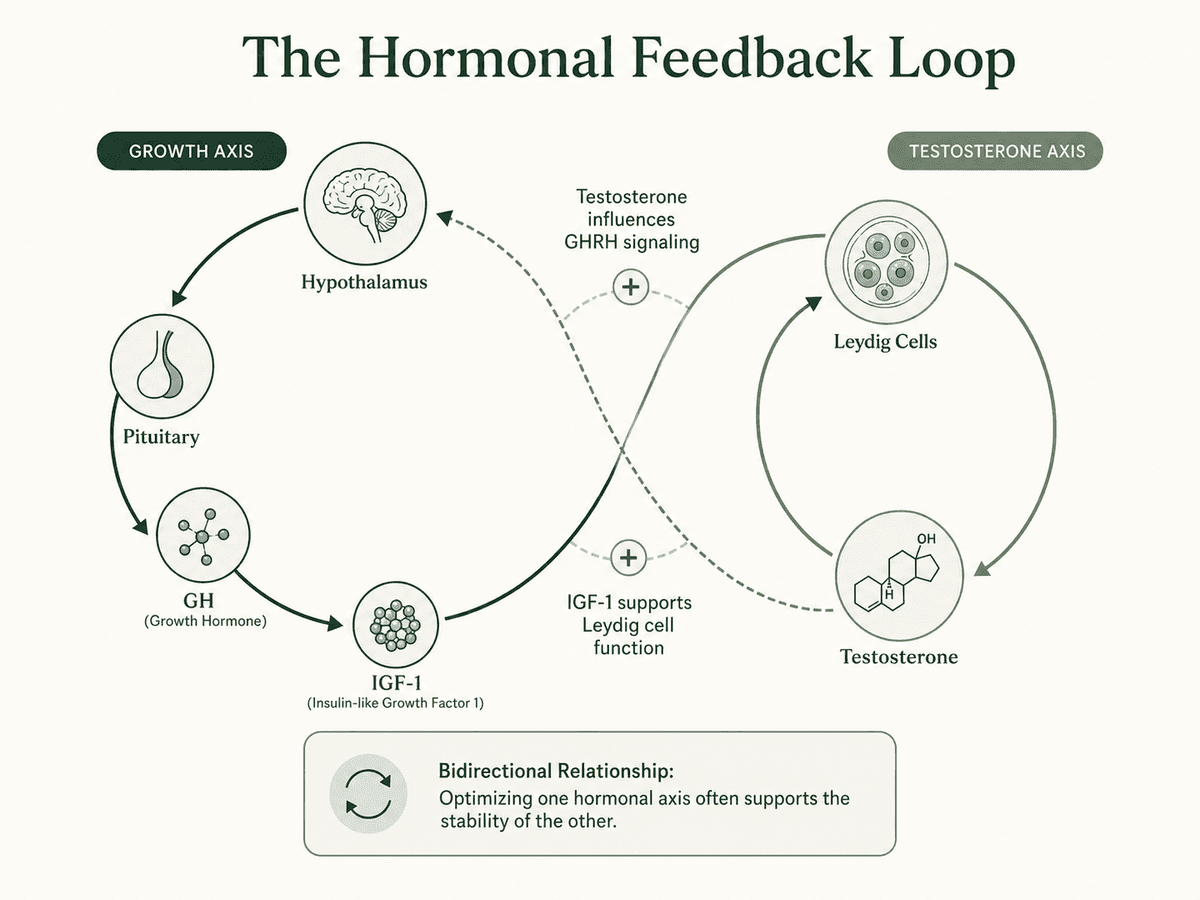
Growth hormone and testosterone are also closely interconnected through several overlapping physiological pathways. GH and IGF-1 help support Leydig cell function, the testicular cells responsible for producing testosterone. In men with a significantly suppressed GH axis, low IGF-1 may reduce Leydig cell responsiveness to luteinizing hormone (LH), contributing to suboptimal testosterone production. The relationship also works in the opposite direction. Testosterone influences GHRH signaling and growth hormone pulse amplitude, which helps explain why men with testosterone deficiency often have blunted nocturnal GH secretion. This bidirectional relationship explains why some men receiving TRT continue to experience fatigue, poor recovery, or unfavorable body composition despite normalized testosterone levels. Their GH axis may remain impaired independently, making GH secretagogues such as sermorelin a potential consideration when clinically appropriate.
A review in Pituitary described how growth hormone release and IGF-1 synthesis decrease progressively with age due to changes in GHRH signaling, increased somatostatin tone, and shifts in body composition, exercise patterns, diet, and sleep. The physiological changes this produces, including disrupted fat metabolism, increased fat mass, reduced muscle mass, reduced exercise tolerance, and impaired quality of life, help explain why sermorelin is used to support fat reduction and overall wellness in people with age-related decline. You may recognize this pattern in yourself if you are over 40 and have noticed that your body composition is shifting, your recovery is slower, and your sleep feels less restorative despite nothing obvious changing in your lifestyle.
Older Men Got Leaner, Stronger, and More Energetic on GHRH
A randomized placebo-controlled trial published in the Journal of Clinical Endocrinology and Metabolism treated 19 age-advanced men and women with a GHRH analog at 10 mcg/kg nightly for 16 weeks. In men, the treatment produced significant increases in nocturnal GH levels, IGF-1, IGF binding protein-3, lean body mass, insulin sensitivity, general well-being, and libido. Skin thickness increased in both sexes. That helps explain why some patients report better skin elasticity and hair quality over time. The only adverse effect observed was transient hyperlipidemia that resolved by the end of the study. You may notice that libido and well-being improved in this trial despite the treatment targeting growth hormone rather than testosterone. This is the practical overlap between the two hormonal systems: when one improves, the other often follows.
Note: A GHRH analog structurally identical to sermorelin (the 29-amino acid N-terminal portion of GHRH) was employed in this trial. Though no similar study has used sermorelin by name, the findings confirm its putative mechanism.
A clinical trial published in Metabolism treated 11 healthy elderly men with nightly subcutaneous GHRH injections for six weeks. GH release increased significantly. Two of six measures of muscle strength improved, along with one measure of muscle endurance. Body composition, muscle histology, and metabolic markers were unchanged over the shorter treatment period. You may find the mixed results here instructive. GHRH stimulation produces real hormonal effects, but body composition changes take longer to appear than strength changes, and the full benefits likely require months of treatment rather than six weeks.
What Testosterone Replacement Therapy Is and How It Works
Testosterone replacement therapy directly supplements the testosterone your body is not producing in adequate quantities due to confirmed primary or secondary hypogonadism.
TRT Works, But the Diagnostic Bar Is Non-Negotiable
The Endocrine Society clinical practice guideline published in the Journal of Clinical Endocrinology and Metabolism is explicit: TRT should only be initiated in men with symptoms consistent with testosterone deficiency and clinically low testosterone confirmed on two separate fasting morning measurements. Symptoms alone are insufficient for diagnosis. A low number alone without matching symptoms is also insufficient. Both must be present. If you have been told you qualify for TRT based on a single blood test or symptoms alone, a second opinion from an endocrinologist or urologist is warranted.
A narrative review published in Andrology described TRT's documented benefits in confirmed hypogonadal men as including improvements in libido, erectile function, depressed mood, lean body mass, reversal of muscle loss, bone density, and red blood cell production. These effects are dose-dependent and delivery-method dependent, and they require ongoing monitoring to manage risks, including elevated hematocrit, PSA changes, and potential cardiovascular considerations, while aiming to restore testosterone to a healthy range and track hormone levels so treatment stays within that range. The benefits are real and well-documented. So are the risks.
Key Differences: Sermorelin vs Testosterone Side by Side
These two treatments operate through different axes, carry different risks, and suit different clinical profiles.
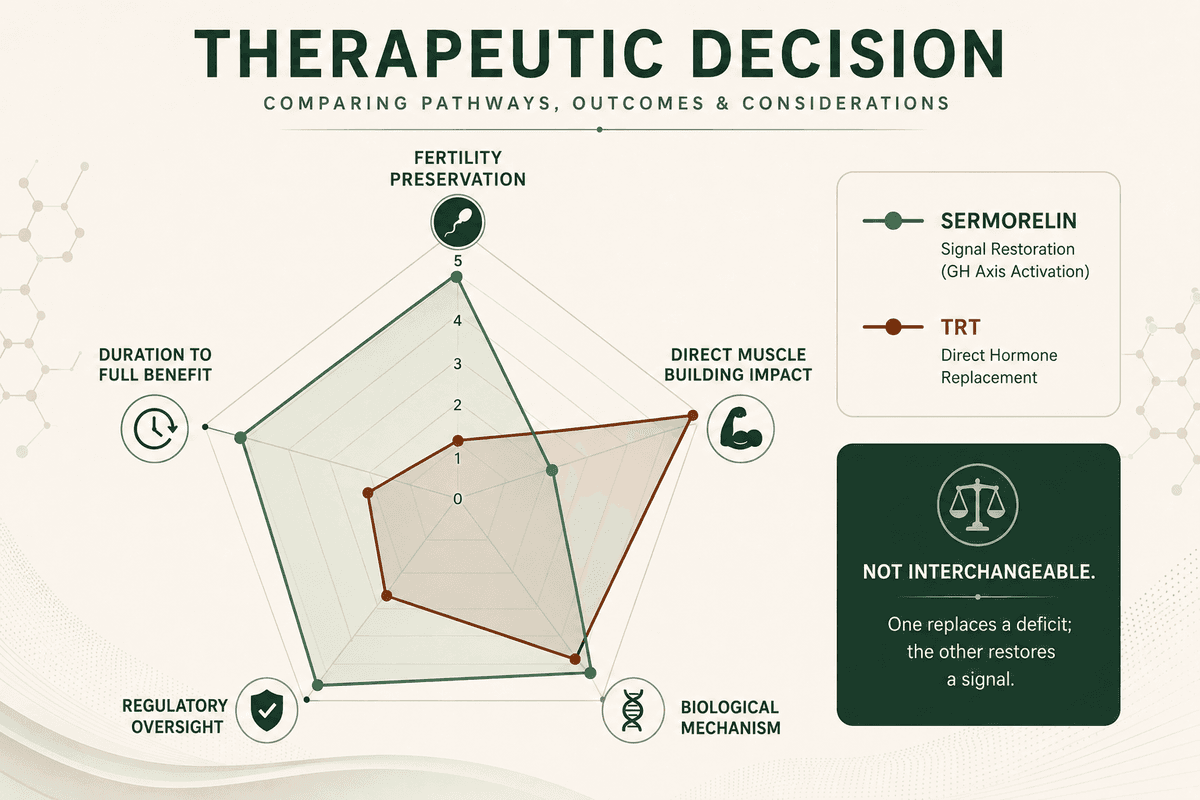
| Feature | Sermorelin | Testosterone (TRT) |
| Mechanism | Stimulates pituitary to produce GH naturally | Directly replaces testosterone |
| Hormone targeted | Growth hormone / IGF-1 axis | Testosterone |
| Preserves natural production | Yes, pituitary feedback intact | No, suppresses endogenous production |
| FDA-approved indication | Pediatric GH deficiency diagnosis and treatment | Male hypogonadism |
| Fertility impact | Does not suppress sperm production | Suppresses spermatogenesis significantly |
| Regulatory status | Compounded, off-label in most adult use | Approved Schedule III controlled substance |
| Injection frequency | Nightly subcutaneous injection | Weekly to biweekly intramuscular or subcutaneous |
| Monitoring requirements | IGF-1, glucose, lipids | Testosterone, hematocrit, PSA |
| Common side effects | Injection site reactions, flushing, transient hyperlipidemia | Elevated hematocrit, fertility suppression, skin reactions |
| Cost | $150 to $400 per month (compounded, varies by pharmacy and dose) | $30 to $200 per month for injectable testosterone; $200 to $500 per month for gels or pellets; insertion procedures for pellets billed separately |
| Best suited for | Men with declining GH axis and age-related body composition changes | Men with confirmed symptomatic low testosterone |
Risks of Sermorelin Therapy
Sermorelin Is Not FDA Approved for Adult Use
Sermorelin was originally marketed under the brand name Geref®, which is now discontinued. Its FDA approval covered only the diagnosis and treatment of growth hormone deficiency in children. Adult prescriptions are filled through compounding pharmacies, meaning there is no FDA-approved finished drug product for adult use regardless of the brand name on the label. Most sermorelin prescribed to adults for anti-aging, body composition, or vitality purposes is therefore off-label and not subject to the same manufacturing oversight as approved drugs. Quality, potency, and sterility can vary between compounding pharmacies. You should ask your provider specifically where the sermorelin is sourced and what quality assurance the pharmacy maintains.
Injection Site Reactions and Transient Flushing
The BioDrugs review of sermorelin documented transient facial flushing and pain at the injection site as the most commonly reported adverse events in clinical use. These are generally mild and self-limiting. The GHRH analog trial in age-advanced adults documented transient hyperlipidemia that resolved by the end of the study period. You should have a fasting lipid panel before starting sermorelin and repeat it during treatment.
Elevated IGF-1 and Potential Cancer Risk Signal Requires Monitoring
The Pituitary review noted that while the phenotypic similarities between aging and GH deficiency have prompted interest in GH secretagogue use in older adults, there is some evidence associating elevated GH/IGF-1 with risk of neoplasia. This does not mean sermorelin causes cancer, but it means IGF-1 levels require monitoring, particularly in men with a history of or elevated risk for certain cancers. Sermorelin should not be used in active malignancy. Your provider should assess your baseline IGF-1 before starting and monitor it throughout treatment.
Glucose Metabolism Requires Attention
Growth hormone is known to increase insulin resistance in some individuals. Men with type 2 diabetes, pre-diabetes, or metabolic syndrome require close monitoring of fasting glucose and insulin sensitivity during sermorelin therapy. The GHRH analog RCT noted improved insulin sensitivity in men after 16 weeks, but individual responses vary, and this effect is not guaranteed.
[cta]
Risks of Testosterone Replacement Therapy
TRT Suppresses Sperm Production and Natural Testosterone Output
A literature review published in Translational Andrology and Urology confirmed that exogenous testosterone suppresses intratesticular testosterone production, which is an absolute prerequisite for normal spermatogenesis. Most men recover normal sperm production within one year of stopping TRT, but recovery is not guaranteed and can take longer. If you have any plans for biological children, this must be discussed with your provider before starting TRT. Sermorelin does not carry this risk, which makes it a relevant consideration for younger men interested in growth hormone support.
Elevated Hematocrit Is the Primary Safety Monitoring Concern
Testosterone stimulates red blood cell production. When hematocrit rises above 54%, the risk of blood clots, deep vein thrombosis, and pulmonary embolism increases. The Endocrine Society guideline recommends checking hematocrit at 3, 6, and 12 months after starting TRT and then annually. Men with pre-existing sleep apnea, COPD, or other conditions that already elevate hematocrit require particularly careful monitoring.
Confirmed Contraindications That Rule Out TRT
The Endocrine Society guideline specifies that TRT should not be started in men with active or suspected prostate cancer, a PSA above 4 ng/mL without urological evaluation, untreated severe sleep apnea, uncontrolled heart failure, myocardial infarction or stroke within the last six months, or thrombophilia. These are not relative cautions. They are firm contraindications. You may look at this list and not see yourself in any category, but some of these conditions, particularly sleep apnea, can be present without a formal diagnosis. A proper pre-treatment workup addresses this.
Can Sermorelin and TRT Be Combined?
Some men use both sermorelin and testosterone therapy simultaneously, combining TRT to target both the growth hormone axis and the testosterone axis at the same time. This is not a standard protocol and is not supported by the same body of evidence that backs either treatment individually. However, it is physiologically logical in men who have confirmed low testosterone alongside age-related GH decline. The two hormonal systems are distinct, their treatments do not directly interfere with each other, and some providers use them together under close monitoring. In selected men, sermorelin may support muscle growth, recovery, and fat loss when combined with TRT.
If you are already on TRT with well-managed testosterone levels but still experiencing low energy, poor body composition, and sleep issues, the focus should stay on persistent problems despite normalized testosterone and on whether your broader health goals remain unmet. That is a clinical conversation worth having with your provider, not a reason to self-prescribe a second hormone treatment.
Who Sermorelin May Suit
Sermorelin is most commonly prescribed for men who have age-related decline in growth hormone secretion rather than confirmed GH deficiency by pituitary testing, and who want to address body composition, recovery, sleep quality, and vitality through stimulating their own natural hormone production rather than replacing a hormone directly. Men may choose Sermorelin when they want a less direct way to raise HGH levels by prompting the pituitary to produce more growth hormone naturally.
Before starting sermorelin, a baseline IGF-1 level is the primary laboratory marker used to evaluate growth hormone axis status. IGF-1 naturally declines with age and helps determine whether the GH axis is meaningfully suppressed. A borderline or low IGF-1 level, together with appropriate symptoms, provides the laboratory basis for considering sermorelin therapy. This differs from the diagnostic pathway for testosterone replacement therapy, which requires two separate fasting morning total testosterone measurements along with matching clinical symptoms before treatment is considered.
The evidence from the JCEM randomized controlled trial showing improvements in lean body mass, insulin sensitivity, and libido in age-advanced men supports this rationale, with the important caveat that the adult indication is off-label. Many patients remain on therapy for several months, with laboratory monitoring, before evaluating whether meaningful benefits have been achieved.
Sermorelin may also suit younger men who want to preserve fertility while supporting hormonal health, since it does not suppress spermatogenesis the way TRT does. Some also use it to improve energy and support overall vitality when testosterone levels are not clearly deficient.
Who Testosterone Therapy Suits
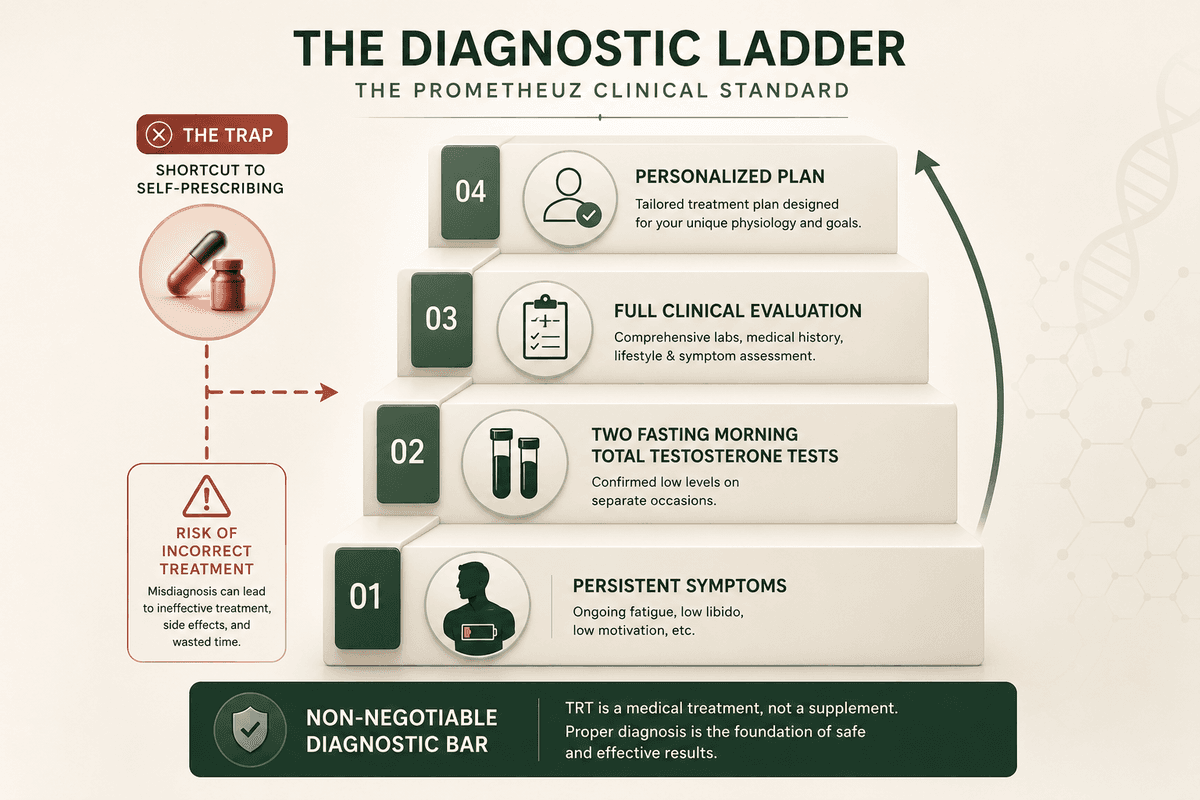
TRT is appropriate for men with confirmed symptomatic hypogonadism: two fasting morning blood tests showing consistently low total testosterone, alongside symptoms that match androgen deficiency including low libido, erectile dysfunction, significant fatigue, loss of muscle mass, or depressive mood. The diagnosis requires a licensed provider, a full evaluation including LH, FSH, and prolactin to identify the underlying cause, and a personalized treatment plan that includes ongoing monitoring.
TRT is not appropriate for men with borderline testosterone levels and only mild symptoms, men who want a performance edge rather than a clinical correction, or men who have the contraindications listed above.
Frequently Asked Questions
What is the main difference between sermorelin and testosterone?
Sermorelin stimulates your pituitary gland to release growth hormone naturally by mimicking the signal your hypothalamus sends. Testosterone replacement therapy directly restores testosterone your body is not producing in sufficient quantities. They target different hormonal axes and address different deficiencies.
Can sermorelin increase testosterone levels?
Not directly. Sermorelin acts on the GH/IGF-1 axis, not the hypothalamic-pituitary-gonadal axis that governs testosterone. However, improvements in overall hormonal balance, body composition, and sleep quality from sermorelin may indirectly support a healthier testosterone environment.
Does sermorelin preserve fertility while testosterone does not?
Yes. Sermorelin does not suppress sperm production because it does not interfere with the LH and FSH signals that drive spermatogenesis. TRT suppresses those signals, which significantly reduces sperm production in most men.
Is sermorelin FDA-approved for adults?
No. Sermorelin is FDA-approved for diagnosing and treating growth hormone deficiency in children. Its use in adult men for age-related GH decline is off-label, and most adult prescriptions come from compounding pharmacies.
How long does it take to see results from sermorelin?
The JCEM RCT showed increases in IGF-1 within two weeks of starting GHRH analog administration. Lean body mass changes appeared by 16 weeks. Body composition improvements from growth hormone stimulation generally take several months of consistent nightly injections.
Which treatment is better for muscle mass?
Testosterone has a more directly documented effect on muscle mass in confirmed hypogonadal men. Sermorelin may improve lean body mass over longer treatment periods through GH/IGF-1 effects on protein metabolism, but the evidence base is smaller and mostly from GHRH analog trials rather than sermorelin-specific studies.
Do I need a prescription for Sermorelin?
Yes. Sermorelin and TRT are prescription treatments that require licensed supervision, a clinical evaluation, and lab monitoring, regardless of whether Sermorelin is FDA-approved for your specific indication.
What lab tests do I need before starting Sermorelin or TRT?
For TRT: two fasting morning total testosterone measurements, plus LH, FSH, and prolactin to identify the underlying cause of deficiency. PSA in men over 40. Hematocrit at baseline. For sermorelin: IGF-1 at baseline, plus fasting glucose, lipid panel, and thyroid function, since thyroid and insulin status affect GH axis response. Your provider will determine which tests are relevant based on your symptoms and health history.
How long do results from sermorelin take vs TRT?
Most men with low testosterone see energy, libido, and mood improvements in 2–4 weeks on TRT. Body composition changes take 3–6 months. Sermorelin takes longer at every level. IGF-1 levels rise within 2 weeks, but lean body mass and body composition changes need 3–6 months of nightly injections to manifest.
Can sermorelin help if TRT stops working or plateaus?
Some men on TRT observe that fatigue, poor body composition, and recovery issues continue even after testosterone levels have returned to normal. Sermorelin may address the GH axis, a second hormonal axis that TRT does not target, if IGF-1 is assessed and determined to be inadequate in this situation. This is a clinical question requiring lab testing, not self-treatment.
Does sermorelin affect estrogen levels?
No direct estrogen effect from sermorelin. Improved body composition after GH stimulation, especially visceral fat loss, can indirectly reduce aromatase activity, which converts testosterone to estrogen. This body composition route may have minor estrogen effects on men receiving TRT and sermorelin.
Is sermorelin or TRT better for sleep?
Both may help sleep through distinct channels. Sermorelin's pulsatile and focused GH stimulation during deep sleep addresses a GH-slow-wave sleep architecture feedback loop. Reduced night sweats, exhaustion, and mood disturbance from testosterone shortage may enhance sleep indirectly. Not a primary sleep therapy. Before either therapy, sleep apnea must be diagnosed and treated.
Conclusion
Sermorelin and testosterone therapy address different hormonal problems through different mechanisms. TRT is the appropriate treatment for confirmed, symptomatic hypogonadism with a clear diagnostic pathway and decades of clinical evidence behind it. Sermorelin is an off-label but biologically plausible approach to age-related growth hormone decline, with clinical trial support from GHRH analog studies and a preservation of natural hormonal feedback that direct HGH does not offer.
The decision between them, or whether to use both, is not one you should make based on online content. It is one that requires your blood work, your symptom history, your fertility goals, and your provider's clinical judgment applied to your specific situation.
Disclaimer
This content is for educational purposes only and does not replace medical advice. Testosterone therapy and hormone-related decisions should be guided by a licensed healthcare provider.
References
- Prakash A, Goa KL. Sermorelin: a review of its use in the diagnosis and treatment of children with idiopathic growth hormone deficiency. BioDrugs. 1999;12(2):139-157. doi:10.2165/00063030-199912020-00007. PMID: 18031173. https://pubmed.ncbi.nlm.nih.gov/18031173/
- Khorram O, Laughlin GA, Yen SS. Endocrine and metabolic effects of long-term administration of [Nle27]growth hormone-releasing hormone-(1-29)-NH2 in age-advanced men and women. J Clin Endocrinol Metab. 1997;82(5):1472-1479. doi:10.1210/jcem.82.5.3943. PMID: 9141536. https://pubmed.ncbi.nlm.nih.gov/9141536/
- Vittone J, Blackman MR, Busby-Whitehead J, Tsiao C, Stewart KJ, Tobin J, Stevens T, Bellantoni MF, Rogers MA, Baumann G, Roth J, Harman SM, Spencer RG. Effects of single nightly injections of growth hormone-releasing hormone (GHRH 1-29) in healthy elderly men. Metabolism. 1997;46(1):89-96. doi:10.1016/s0026-0495(97)90174-8. PMID: 9005976. https://pubmed.ncbi.nlm.nih.gov/9005976/
- Di Somma C, Brunelli V, Savanelli MC, Scarano E, Savastano S, Lombardi G, Colao A. Somatopause: state of the art. Minerva Endocrinol. 2011;36(3):243-255. PMID: 22019753. https://pubmed.ncbi.nlm.nih.gov/22019753/
- Sherlock M, Toogood AA. Aging and the growth hormone/insulin like growth factor-I axis. Pituitary. 2007;10(2):189-203. doi:10.1007/s11102-007-0039-5. PMID: 17492509. https://pubmed.ncbi.nlm.nih.gov/17492509/
- Bhasin S, Brito JP, Cunningham GR, Hayes FJ, Hodis HN, Matsumoto AM, Snyder PJ, Swerdloff RS, Wu FC, Yialamas MA. Testosterone therapy in men with hypogonadism: an Endocrine Society clinical practice guideline. J Clin Endocrinol Metab. 2018;103(5):1715-1744. doi:10.1210/jc.2018-00229. PMID: 29562364. https://pubmed.ncbi.nlm.nih.gov/29562364/
- Barbonetti A, D'Andrea S, Francavilla S. Testosterone replacement therapy. Andrology. 2020;8(6):1551-1566. doi:10.1111/andr.12774. PMID: 32068334. https://pubmed.ncbi.nlm.nih.gov/32068334/
- Crosnoe LE, Grober E, Ohl D, Kim ED. Exogenous testosterone: a preventable cause of male infertility. Transl Androl Urol. 2013;2(2):106-113. doi:10.3978/j.issn.2223-4683.2013.06.01. PMID: 26813847. https://pubmed.ncbi.nlm.nih.gov/26813847/