If you're on testosterone replacement therapy and something feels off, high estrogen could be part of the picture. TRT is prescribed to treat confirmed testosterone deficiency. But the same treatment that raises testosterone also converts testosterone into estrogen along the way. The most common symptoms of high estrogen are breast tissue growth or tenderness, puffiness from water retention, mood swings, and erectile dysfunction that shows up despite good testosterone numbers. Not every man on TRT deals with this. But when it happens, catching it early makes it far easier to manage.
Why Estrogen Rises When You Start TRT
Testosterone and estrogen aren't separate systems working in isolation. Your body converts some testosterone into estrogen constantly, and TRT gives it more raw material to work with.
The Aromatase Enzyme Turns Testosterone Into Estrogen
An enzyme called aromatase does this conversion. It's found in fat tissue, muscle, and other places throughout the human body. When you start TRT, your total testosterone rises. So does the amount available for aromatase to convert. That's a normal, expected part of how TRT works in the male body, not a sign something has gone wrong.
Body Fat Increases How Much Testosterone Converts
Men with more body fat tend to have more aromatase activity. That's because fat tissue is one of the main sites where the enzyme aromatase operates. Higher body fat means more of your testosterone gets converted to estrogen. Carrying excess fat is one reason body composition matters so much on TRT, beyond just how you look.
Alcohol and Genetics Play a Role Too
Body fat isn't the only thing driving this conversion.
- Alcohol raises aromatase activity and makes it harder for your liver to clear excess estrogen, so heavy or frequent drinking can push estradiol up independent of your TRT dose
- Genetic variation in the gene that builds the aromatase enzyme, called CYP19A1, means some men convert testosterone to estrogen at a higher rate than others, regardless of body fat
If your estradiol runs high despite a lean frame and moderate drinking, this is one reason your provider may look beyond dose and body composition alone.
What Are the Signs of High Estrogen on TRT?
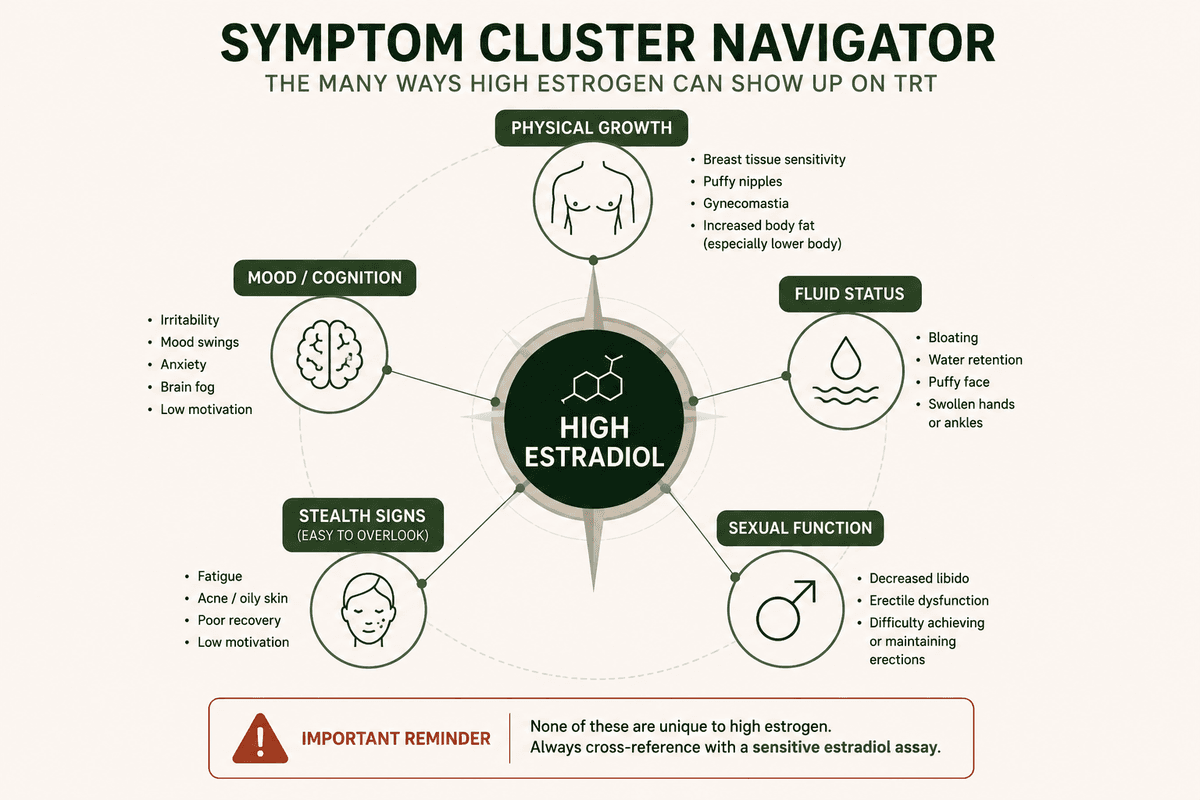
High estrogen symptoms tend to cluster around a few specific areas. Here's what to watch for.
What Does "High" Estradiol Actually Mean?
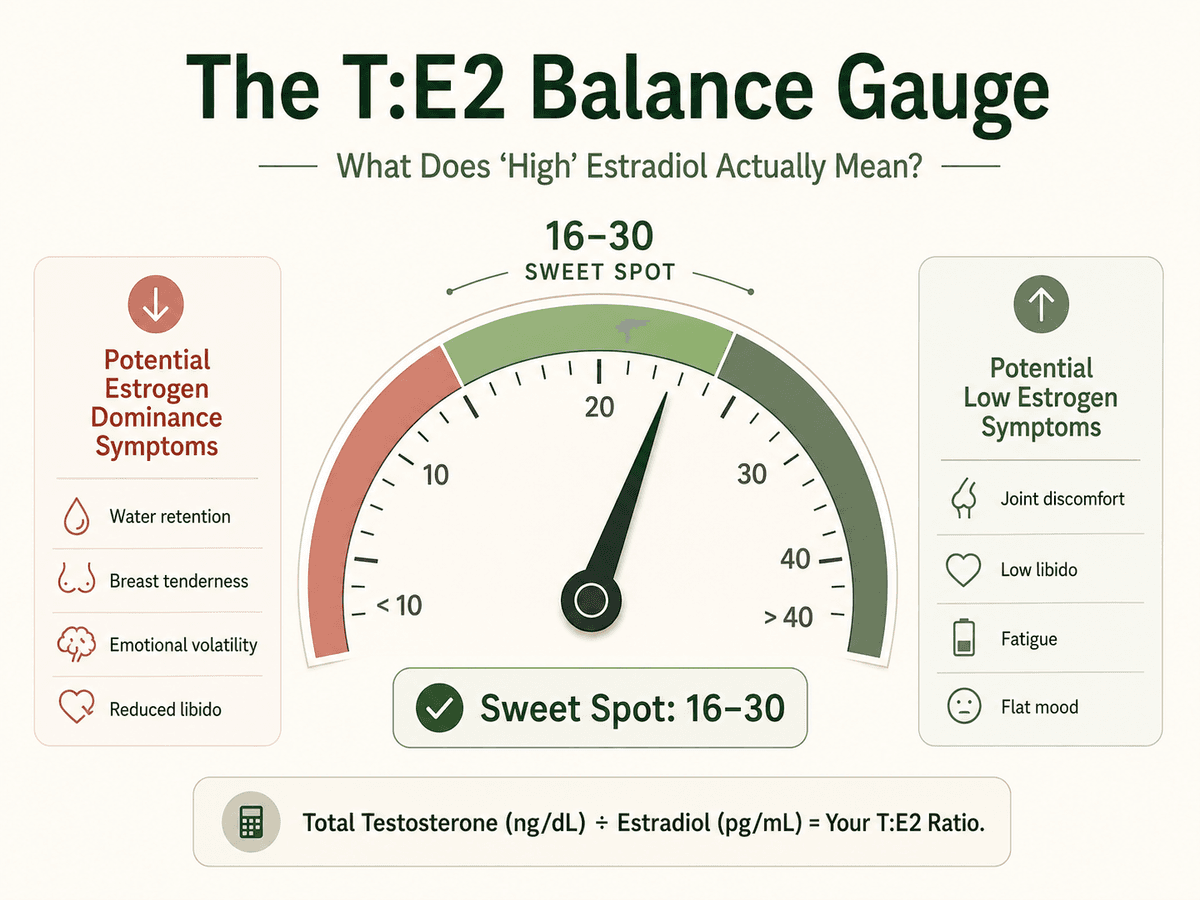
Before going through the symptom list, it helps to know the actual numbers behind the word "high." On a sensitive assay, a typical reference range for men runs roughly 10 to 40 pg/mL, with providers generally considering treatment above about 42 to 50 pg/mL when it comes with matching symptoms. The number alone isn't the whole story, though. A testosterone-to-estradiol ratio, often written as T:E2, in the range of roughly 16 to 30 (total testosterone in ng/dL divided by estradiol in pg/mL) is a useful reference point too, since it puts your estradiol number in context against your testosterone rather than judging it in isolation. Timing relative to your last injection and your SHBG level matter as well. That's why a single estradiol number, without that context, rarely tells the full story on its own.
Breast Tissue Growth and Nipple Sensitivity Are the Most Recognizable Signs
Estrogen can stimulate breast tissue the same way it does in female physiology. This can show up as swelling, tenderness, or nipple sensitivity. In more established cases, it becomes visible breast tissue growth, sometimes called gynecomastia. Catching it early, while it's just tenderness, makes it far more reversible.
Water Retention Can Look Like Sudden Weight Gain
Rising estradiol shifts how your body handles sodium and water. Many men notice puffiness in the hands, ankles, or face. It can look like fat gain on the scale, but it's often just fluid. This is one of the more confusing high estrogen symptoms, since it mimics something else entirely.
Mood Swings Show Up Alongside the Physical Symptoms
Estrogen plays a role in mood regulation, not just physical traits. When levels climb too high, some men notice irritability, anxiety, or a flatter emotional baseline. These mood swings often get blamed on stress or work, when hormone imbalance is actually driving them.
Erectile Dysfunction Ties to Estrogen, Not Just Testosterone
This is the symptom most men don't expect. A 2022 systematic review and meta-analysis in Andrologia found a clear association between high estradiol levels and erectile dysfunction. You've probably heard low testosterone blamed for every sexual health complaint on TRT. But estrogen imbalance can drive the same symptom, even when testosterone levels look fine.
Fatigue and Acne Are Worth Watching For Too
Two more signs are easy to miss because they get blamed on other things.
- Fatigue: high estrogen can blunt the energizing effect of testosterone, leaving some men persistently tired even when their testosterone numbers look adequate
- Acne: hormonal shifts from elevated estradiol can also trigger or worsen breakouts, particularly on the back, chest, and shoulders
Neither symptom is unique to high estrogen, which is exactly why they're easy to overlook. They're worth mentioning to your provider alongside anything else on this list.
Estrogen Isn't Just a "Too High" Problem
Here's where a lot of TRT advice oversimplifies things. Estradiol plays a crucial role in male health, and estrogen matters well beyond reproduction, including for bone and cardiovascular health. In men, it also matters for:
- Bone density
- Cardiovascular function
- Joint health
- Sleep quality
It works alongside related hormones like LH and FSH that also govern sperm production.
That means the goal isn't crushing estrogen to the floor. It's keeping testosterone and estrogen in a healthy balance, together, not treating one as the enemy of the other. Real hormonal health depends on that hormone balance being right, not on chasing the lowest possible estrogen number. Men focused on preserving fertility or worried about male infertility have even more reason to get this balance right, not just to control symptoms.
The Real Risks of High Estrogen, and of Fixing It Wrong
This section matters more than the benefits below it, and for good reason.
Untreated High Estrogen May Carry Long-Term Health Effects
Chronic excess estrogen in men has been loosely linked to added strain on metabolic health and, in some research, to prostate-related concerns. Elevated blood pressure is another marker worth watching, since it's one of the cardiovascular signals sometimes tied to estrogen imbalance on TRT. TRT itself can also raise hematocrit, or red blood cell concentration, which is part of why routine bloodwork covers more than testosterone and estradiol alone. The evidence connecting these longer-term effects to estrogen specifically is still developing, not settled. Still, it's part of why unaddressed high estrogen symptoms are worth a real conversation with a healthcare provider, not something to just wait out.
Aromatase Inhibitors Can Overcorrect and Crash Estrogen Too Low
Aromatase inhibitors, like anastrozole, are prescription medications that block the aromatase enzyme directly. They were originally developed for breast cancer treatment. Later, they were adopted off-label by anabolic steroids users trying to control hormone levels at much higher doses than standard TRT. A 2025 narrative review in the International Braz J Urol found these medications are typically effective at managing elevated estrogen levels and gynecomastia, particularly those with clear symptoms despite appropriate TRT dosing. But there's a catch worth knowing. Treatment for high estradiol should be based on symptoms plus lab results, not lab values alone.
Push estrogen too low, and men can develop a different set of problems:
- Joint pain
- Low libido
- Fatigue
- Reduced bone density
Older studies on aromatase inhibitors in men also raised concerns about bone health with long-term use. This is why careful monitoring matters more than guessing at a dose.
Most Men on TRT Don't Actually Need an Aromatase Inhibitor
A 2021 study in the journal Sexual Medicine reviewed over 1,700 men on testosterone therapy. Only about 3% ever required anastrozole for elevated estradiol. That's a much smaller number than TRT forums and anecdotes might suggest.
So if a provider isn't rushing to add a second prescription on day one, that's not neglect. It's consistent with what the actual data shows about how often this problem shows up.
[cta]
Getting Your Estrogen Balance Right Restores What TRT Promised
When estrogen and testosterone sit in a healthy range together, the benefits of TRT tend to show up as intended.
Men typically see a steadier mood, better sexual function, and continued gains in muscle mass and bone density. Getting more testosterone into circulation only helps you gain muscle and recover well when estrogen isn't working against it. Emotional well being tends to improve too, once the water retention and breast tenderness resolve. None of this requires driving estrogen down to near zero. It just requires both hormones working in proportion, which is the foundation of good male health on TRT overall.
Managing Estrogen on TRT Starts With the Right Blood Test
Estrogen management on TRT starts before any medication decision. Before assuming you have high estrogen, or reaching for a fix, get an accurate estradiol level checked through proper blood tests.
A Standard Estrogen Test Often Isn't Sensitive Enough
Many routine lab panels use an assay built for female hormone ranges. It doesn't reliably distinguish between estradiol levels in the male range. Ask specifically for a sensitive or ultrasensitive estradiol test. This single request prevents a lot of confusion around normal range and symptoms that don't match a lab report.
Your Provider Has More Than One Lever to Pull
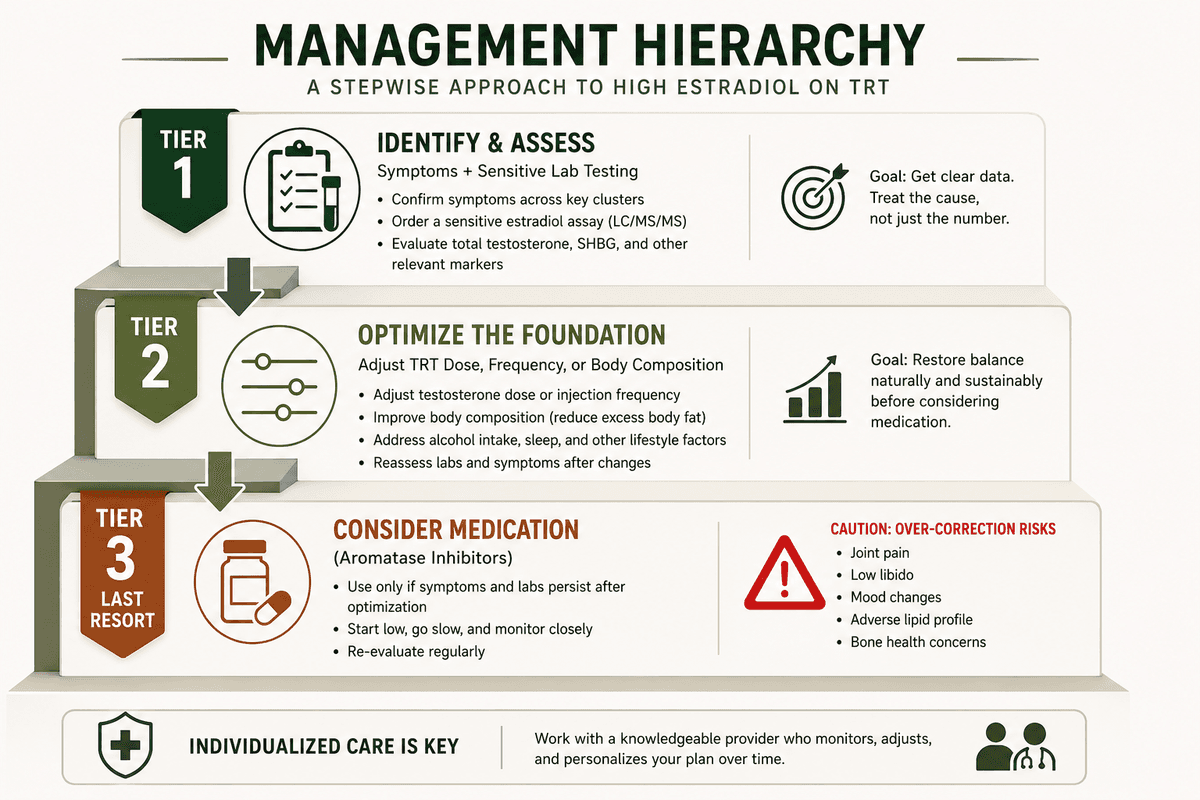
If estradiol comes back elevated with matching symptoms, an aromatase inhibitor isn't the only option. A few adjustments can help manage estrogen and shift the testosterone to estrogen ratio:
- Adjusting your TRT dose, since less circulating testosterone means less for the aromatase enzyme to convert
- Switching injection frequency, since smaller, more frequent doses tend to smooth out estradiol spikes compared to large infrequent ones
- Addressing body fat, since fat tissue is a major site of aromatase activity
A provider who checks free testosterone, total testosterone, and estradiol together can see the full hormonal profile, not just one number in isolation. That full picture is what actually restores hormonal balance.
Frequently Asked Questions
Does everyone on TRT eventually develop high estrogen?
No. Real-world data on men taking testosterone therapy found that only a small fraction, around 3%, ever needed treatment for elevated estradiol. Most men maintain a healthy balance without any additional medication.
Can an aromatase inhibitor make my estrogen too low?
Yes. Overusing anastrozole or a similar aromatase inhibitor can push estradiol below what's healthy. Low estrogen in men can cause joint pain, low libido, fatigue, and reduced bone density, symptoms that overlap confusingly with low testosterone itself.
Should I start an aromatase inhibitor at the same time as TRT, just in case?
Most guidelines advise against this. Aromatase inhibitors work best when used to treat confirmed, symptomatic high estrogen, not as a routine add-on from day one. Starting one without a documented need risks swinging you into low estrogen territory instead.
My estradiol test came back normal, but I still have symptoms. What's going on?
Standard estradiol tests aren't always sensitive enough to catch the male reference range accurately. Ask your provider for a sensitive or ultrasensitive estradiol assay. It's also worth checking whether another related hormone, like SHBG or free testosterone, is driving your symptoms instead.
Can I fix high estrogen just by lowering my testosterone dose?
Sometimes. Since less circulating testosterone means less substrate for the aromatase enzyme to convert, a dose adjustment can bring estradiol down without adding a second medication. This won't work for every man, and it can bring testosterone-related symptoms back if the dose drops too far.
Does high estrogen on TRT increase my risk of breast cancer?
Male breast cancer tied specifically to TRT-related estrogen is rare, and the research connecting the two remains limited. That said, persistent breast tissue growth or a new lump should always be evaluated directly by a healthcare provider, not assumed to be routine gynecomastia.
Disclaimer
This content is for educational purposes only and does not replace medical advice. Testosterone therapy and hormone-related decisions should be guided by a licensed healthcare provider.
References
Wu X, Liu G, Zhang Y, Zhang W, Huang H, Jiang H, Zhang X. High estradiol level is associated with erectile dysfunction: a systematic review and meta-analysis. Andrologia. 2022;54(7):e14432. doi:10.1111/and.14432. PMID: 35415900. https://pubmed.ncbi.nlm.nih.gov/35415900/
Basheer B, Ila V, Barros R, Mesquita F, Lopes LS, Lima VFN, Favorito LA, Ramasamy R. Management of adverse effects in testosterone replacement therapy. Int Braz J Urol. 2025;51(3):e20259904. doi:10.1590/S1677-5538.IBJU.2025.9904. PMID: 39908204. https://pubmed.ncbi.nlm.nih.gov/39908204/
Punjani N, Bernie H, Salter C, Flores J, Benfante N, Mulhall JP. The utilization and impact of aromatase inhibitor therapy in men with elevated estradiol levels on testosterone therapy. Sex Med. 2021;9(4):100378. doi:10.1016/j.esxm.2021.100378. PMID: 34090245. https://pubmed.ncbi.nlm.nih.gov/34090245/