
Are you a man in your 40s, 50s, or 60s with low testosterone? You've probably already searched "TRT vs lifestyle changes." Two very different camps show up online.
One side says testosterone therapy is the only real fix. The other says you just need to lose weight, lift weights, and sleep more. Neither camp has the full picture.
This guide compares what TRT and lifestyle changes actually do. We cover TRT's real benefits and its limits. We also cover how sleep, weight loss, exercise, and other habits affect testosterone levels.
You'll see where the two approaches work together. You'll also see TRT's real risks and how diagnosis usually happens. The right approach depends on why your testosterone is low. Getting it wrong can delay relief or lead you toward treatment you don't need.
The Highlights Before the Deep Dive
Here's the short version, backed by the research below. Testosterone therapy works well for men with a diagnosed deficiency. It produces real, lasting improvements in sexual desire, muscle mass, and blood sugar control.
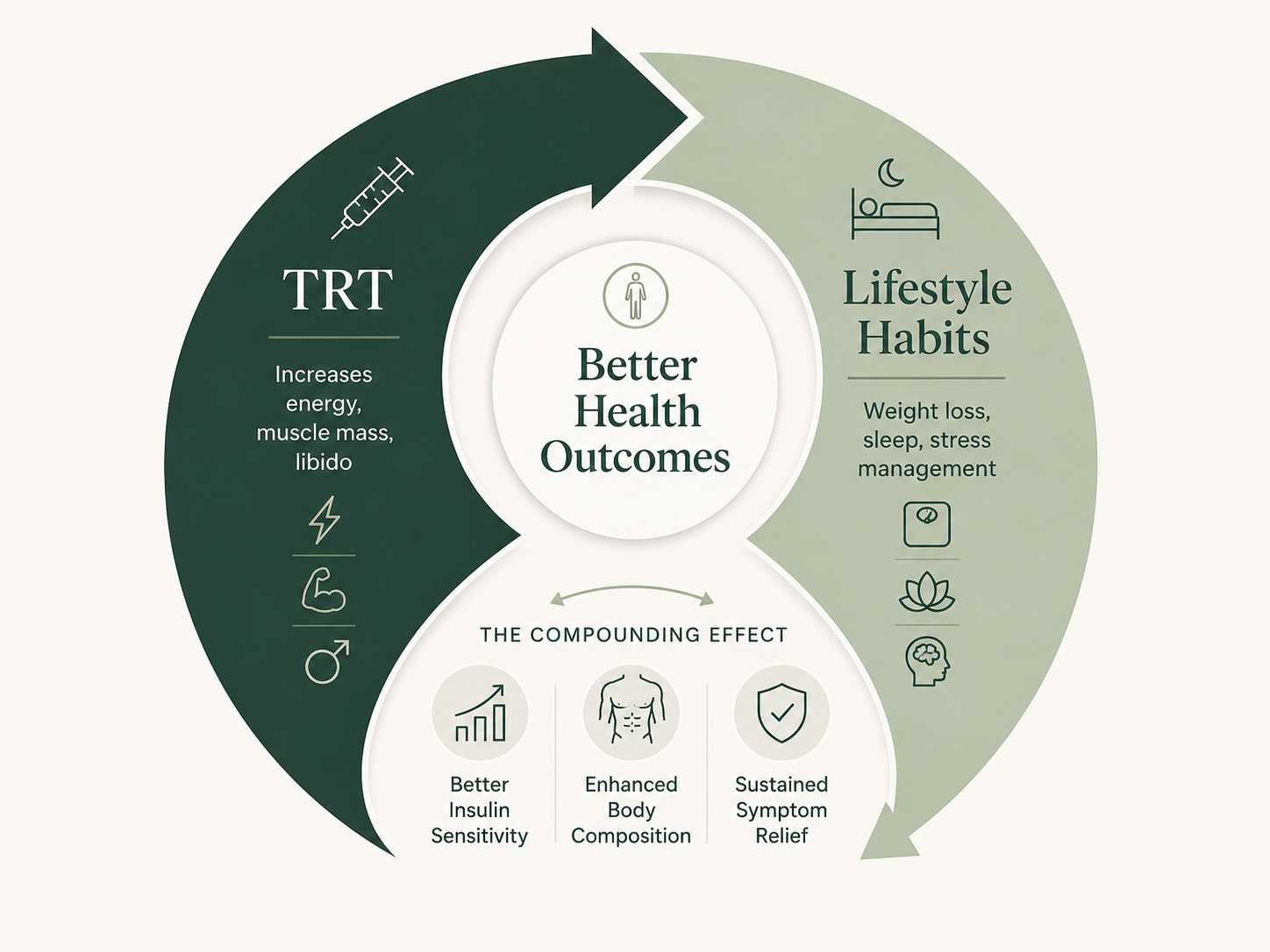
Lifestyle changes can raise testosterone levels on their own. Losing excess body fat and improving sleep matter most. They also improve how men feel day to day, regardless of what treatment they're on.
The largest trials on this topic combined both and got the best overall results. TRT does carry a few well-documented considerations worth planning around. We'll separate those from the more overstated concerns further down.
What TRT Actually Does for Men With a Diagnosed Deficiency
This is the part that gets lost when the conversation turns into "just fix your lifestyle instead." Testosterone therapy is FDA-approved for men with a diagnosed deficiency.
Prometheuz prescribes it through a licensed, LegitScript-certified telehealth process. For a man with a genuine, lab-confirmed deficiency, it's effective medicine backed by large, well-designed trials.
Sexual Desire and Activity Improve, and the Effect Holds Up Over Time
The TRAVERSE Sexual Function Study followed over 1,100 men with low libido. All had hypogonadism, meaning a diagnosed testosterone deficiency. It was published in 2024 in the Journal of Clinical Endocrinology and Metabolism.
Testosterone treatment improved sexual activity and sexual desire, also called "sex drive," compared with placebo. Hypogonadal symptoms improved too. These gains held up for the full two years of the trial.
Erectile function specifically didn't improve on testosterone alone. That's worth knowing if that's your main concern.
Muscle Mass Increases Through a Pathway Diet and Exercise Don't Fully Match
A 2024 review in Sports Medicine - Open compared testosterone treatment against exercise training. Both were studied in aging men. Clinical studies show both can support improved body composition.
Testosterone increases lean mass and reduces fat mass over time. Testosterone raised lean mass through a direct hormonal pathway. That's especially valuable for men who can't train intensively due to age or health limits.
The same review found exercise still wins for strength and aerobic fitness on its own. Combining testosterone with training beat either one alone for building muscle.
Blood Sugar Control Improved Significantly, and the Advantage Lasted Years
The T4DM trial is the largest testosterone study ever run. It enrolled over 1,000 men at high risk of type 2 diabetes. Testosterone treatment kept blood sugar control significantly better than placebo across all four years studied.
That advantage was largest in the first two years. Better blood sugar control usually reflects improved insulin sensitivity. This means how well your body responds to insulin.
Body composition gains, more muscle and less fat, held up the entire time too. For a man with a real, lab-confirmed deficiency, that's a meaningful, sustained result.
A June 2026 presentation at ENDO, the Endocrine Society's annual meeting, made the point directly. Testosterone alone doesn't replace lifestyle changes for older men at risk of type 2 diabetes.
The T4DM data backs this up. Blood sugar benefits were largest and most sustained when treatment was paired with lifestyle changes. Using testosterone alone didn't match that.
What Healthy Lifestyle Habits Can Actually Do for Your Testosterone Levels
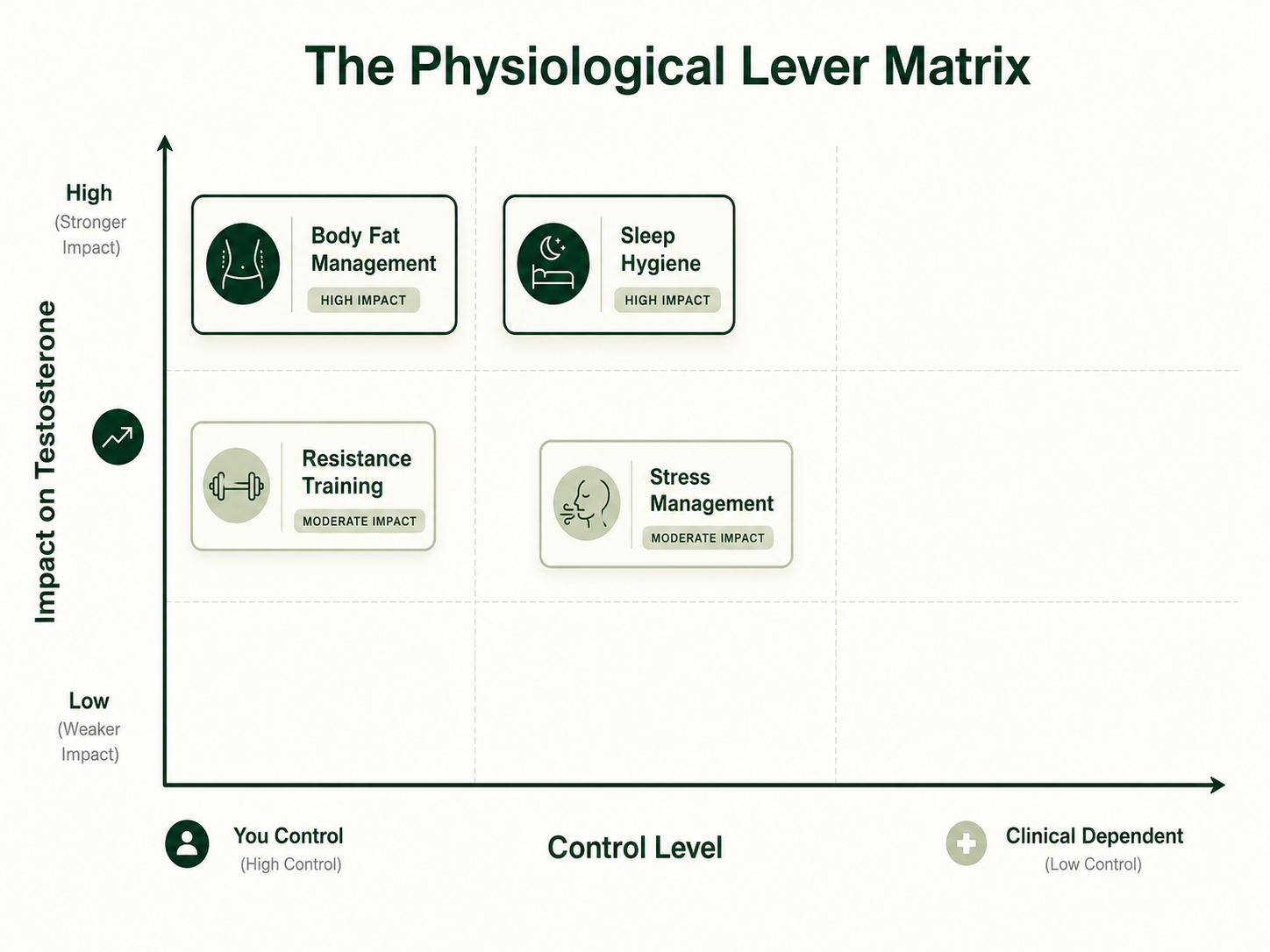
Lifestyle changes matter too, especially for men carrying excess body fat. This is where TRT and lifestyle changes overlap most directly.
Losing Excess Body Fat Is the Single Biggest Lifestyle Lever
Fat tissue converts testosterone into estrogen through aromatization. This enzyme process happens more in fat tissue. More fat mass often means lower circulating testosterone. Losing weight reverses part of that.
A 2024 randomized controlled trial offers a secondary analysis of the T4DM cohort. It was published in the Journal of Clinical Endocrinology and Metabolism. Men who lost more body weight saw better mental quality of life scores.
This held true regardless of whether they were on testosterone or placebo. The weight loss mattered as much as the treatment itself.
If you're carrying significant excess body fat, losing weight helps. It's one of the few ways to raise testosterone without a prescription.
Resistance Training Builds Muscle Mass and Supports Healthy Testosterone
Strength training does double duty. It helps build muscle, improves body composition directly, and supports healthier hormone function.
Regular resistance training, two to three sessions a week, is a consistent recommendation. It's widely recommended across clinical endocrinology. It helps men working on both weight and testosterone at once.
Regular physical activity can increase testosterone, especially when resistance work uses large muscle groups.
Seven to Nine Hours of Sleep Protects Your Hormone Levels
Most testosterone release happens during sleep. It's concentrated in REM sleep, the deep, dream-heavy stage of the sleep cycle. A 2024 analysis of NHANES data appeared in the journal Andrology.
It found that sleep duration and testosterone concentrations were linked. The relationship varied by age. In middle-aged men, sleeping nine or more hours nearly doubled the odds of low testosterone. This was compared with sleeping seven to eight hours.
Short sleep still carries its own risks, like weight gain and heart problems. For general health, seven to nine hours is the usual recommendation. For testosterone specifically, this study points toward the seven-to-eight-hour end of that range.
Managing Stress and Eating Healthy Fats Round Out the Picture
Cortisol is the body's main stress hormone. Chronically high cortisol has negative effects on hormone production, working against testosterone over time.
To manage stress well, keep cortisol in check through exercise, sleep, or simply protecting some downtime. This supports hormone balance indirectly. A healthier lifestyle here can also support mood and libido over time.
On the diet side, healthy fats matter more than most men assume. Testosterone is synthesized from cholesterol. Diets built around lean protein, vegetables, and healthy fats support hormonal health.
Extra virgin olive oil is a good source of these fats. These diets also support cardiovascular health better than very low-fat diets. Diet and recovery matter, but other factors also shape hormone levels.
Can Healthy Lifestyle Habits Alone Boost Testosterone Levels Enough?
For some men, yes. For men with clinically low testosterone tied to a diagnosed condition, usually not on their own.
The distinction matters. Age-related decline often responds to healthy habits alone. This is especially true with excess body fat, poor sleep, and low activity.
But male hypogonadism is different. It's caused by a problem with the testicles or pituitary gland. In that case, lifestyle changes support overall health but won't correct the underlying deficiency.
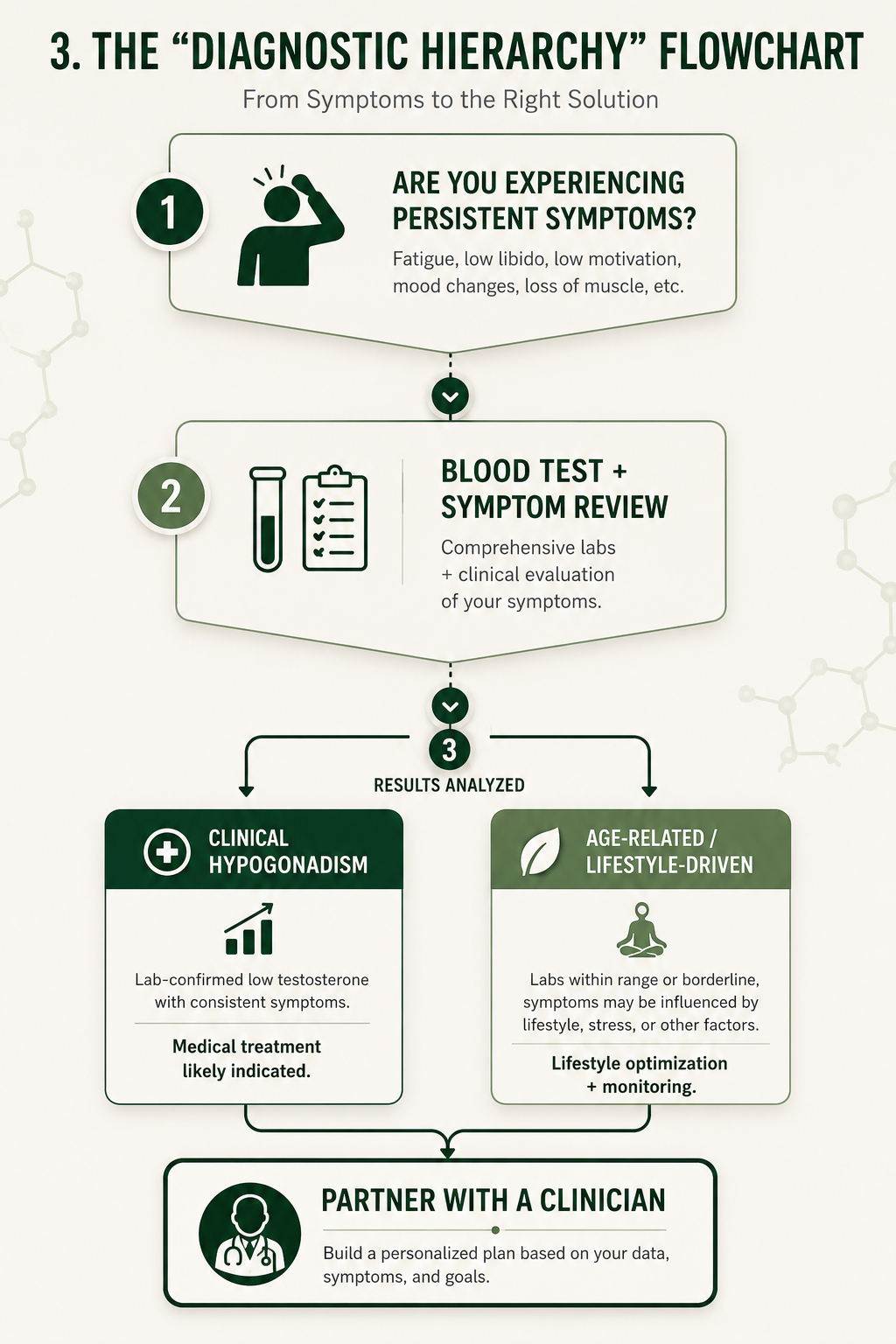
This is why a blood test matters. So does a real conversation with a doctor, not just a symptom checklist.
TRT's Risk Profile: Separating What's Proven From What's Still Debated
TRT is a prescription medication. Being clear-eyed about it means looking at the actual trial data. It's not the same as what gets repeated online. Some concerns are well established. Others reflect more cautious guidance based on limited data, and it's worth knowing the difference.
What the Evidence Actually Confirms
- Fertility suppression is mechanism-based and well established. TRT suppresses the body's signal to the pituitary gland for sperm and testosterone production. Worth planning around if you still want biological children, not a maybe.
- Enclomiphene and clomiphene are fertility-preserving alternatives, not FDA-approved for this use. Both stimulate the pituitary gland to raise the body's own testosterone, rather than supplying it externally. They don't suppress sperm production the way TRT does. Clomiphene is FDA-approved only for female fertility and used off-label in men. Enclomiphene isn't FDA-approved for any use. This is general information, not a Prometheuz recommendation. If fertility is a priority, raise it with your provider before starting TRT, not after.
- Ongoing blood work is required, not optional. Testosterone stimulates red blood cell production. So hematocrit, the percentage of red blood cells in your blood, needs regular monitoring. Your doctor will also track prostate-specific antigen (PSA), a marker used to monitor prostate health. Lipids get checked too.
- Bone density improves on scans, but that hasn't meant fewer fractures. A 2024 trial in the New England Journal of Medicine followed over 5,000 hypogonadal men. It found testosterone did not lower the rate of clinical fractures compared with placebo. Fracture incidence was numerically higher in the testosterone group. A stronger scan result didn't translate into fewer broken bones here.
What's Often Overstated as a Proven Danger
- Cardiovascular risk was not increased in the largest safety trial ever run. The TRAVERSE trial enrolled over 5,000 men with heart disease or high cardiovascular risk. It found testosterone treatment was not linked to more major cardiovascular events than placebo. That directly challenges a common assumption. The same trial did find three specific risks at higher rates:
- Atrial fibrillation: 3.5% vs. 2.4%
- Pulmonary embolism: 0.9% vs. 0.5%
- Acute kidney injury: 2.3% vs. 1.5%
It's not a clean bill of health. Men with a history of blood clots, kidney problems, or an irregular heartbeat should know this. It's worth raising with your provider before starting TRT.
- Obstructive sleep apnea caution is based on limited human data, not a firm causal link. Most guidelines treat untreated severe OSA as a reason to avoid starting TRT. This includes guidance from the Endocrine Society. But a 2023 review in Frontiers in Reproductive Health tells a different story. The actual human data on TRT and sleep apnea are still limited. A sleep history is still worth discussing with your doctor. It's a screening step, not an established red flag for every man.
[cta]
TRT vs Lifestyle Changes at a Glance
| Factor | TRT | Lifestyle Changes |
| Speed of symptom relief | Weeks to a few months | Months, builds gradually |
| Effect on testosterone levels | Direct and reliable | Variable, depends on starting point |
| Sexual desire and activity | Improves reliably in diagnosed men, sustained over years | Improves indirectly through weight management and sleep |
| Muscle mass | Increases through a direct hormonal pathway | Increases through training stimulus and regular physical activity |
| Ongoing monitoring | Required blood tests, doctor visits | None required |
| Effect on fertility | Can suppress sperm production | No negative effect |
| Reversibility | Symptoms often return if stopped | Fully reversible, no dependency |
| Best fit | Men with low testosterone and a clinical diagnosis | Age-related decline, excess body fat, poor sleep, or working toward a healthy weight |
Conclusion
- TRT and lifestyle changes aren't rivals. The strongest trials on record paired both together.
- For men with a diagnosed deficiency, TRT improves sexual desire, muscle mass, and blood sugar control.
- These gains held up for years across multiple clinical trials.
- Lifestyle changes can raise testosterone levels on their own for many men.
- Losing excess body fat and getting seven to nine hours of sleep matter most.
- The largest cardiovascular safety trial found TRT did not increase major cardiovascular events.
- That contradicts a common assumption many men have heard.
- TRT does carry well-established considerations, including effects on fertility and required blood monitoring.
- Its bone density benefit hasn't translated into fewer fractures.
- A blood test is the only way to know your true testosterone status.
- It shows whether you're clinically low or just on the lower end of normal.
Frequently Asked Questions
Can healthy lifestyle habits alone fix low testosterone?
Sometimes, but it depends on the cause. Lifestyle changes are one of the natural ways to improve testosterone. This helps most when low levels come from excess body fat, poor sleep, or inactivity. Men with diagnosed hypogonadism affecting the testicles or pituitary gland need more. They typically need treatment options beyond lifestyle habits.
How long does it take for lifestyle changes to raise testosterone levels?
Meaningful changes usually take a few months, not days. Weight loss and better sleep often show up in blood work within 8 to 12 weeks. Resistance training benefits build over a similar timeframe.
Does TRT stop working if I don't make any lifestyle changes?
No. TRT will still raise your measured testosterone levels on its own. It also improves sexual desire, activity, and muscle mass. Clinical trials show these gains holding up for years in men with a diagnosed deficiency. But research on blood sugar and body composition tells a fuller story. The fullest benefits show up when treatment is paired with diet, regular exercise, and fat loss. Testosterone in isolation doesn't do as much.
Does a weight loss drug like a GLP-1 medication raise testosterone on its own?
GLP-1 medications like semaglutide are FDA-approved for weight loss. Licensed telehealth providers, including Prometheuz, prescribe them. But they aren't approved to treat testosterone deficiency directly. The weight loss they produce can raise testosterone in men with obesity. Less fat tissue means less conversion of testosterone into estrogen. They're a different tool for a different problem. They don't replace a testosterone blood test if symptoms persist.
Is TRT safe for men with obstructive sleep apnea?
It depends on severity, and the human data here are still limited. Guidelines generally advise caution starting TRT in men with untreated or severe sleep apnea. Testosterone may worsen symptoms in some cases. Men with treated or mild sleep apnea are often considered case by case, with closer monitoring.
How is clinically low testosterone actually diagnosed?
Clinically low testosterone is often defined as under 300 ng/dL. That's the American Urological Association's threshold. Other medical societies use slightly different cutoffs.Diagnosis requires a blood test, usually a morning draw since testosterone follows a daily rhythm. It's typically repeated to confirm a low result isn't a one-off. Doctors also look at symptoms like low libido, fatigue, or muscle loss. A low reading without symptoms is treated differently than a low reading with them
A Note on Our Sources
This article relies on peer-reviewed studies. Sources include the New England Journal of Medicine, JCEM, and Andrology.
We also draw on guidance from professional medical societies like the Endocrine Society. Prometheuz prescribes only FDA-approved medications through a licensed, LegitScript-certified telehealth process. Our content is held to that same evidence standard.
Disclaimer
This content is for educational purposes only and does not replace medical advice. Testosterone therapy and hormone-related decisions should be guided by a licensed healthcare provider.
References
Grossmann M, Robledo KP, Daniel M, Handelsman DJ, Inder WJ, Stuckey BGA, Yeap BB, Ng Tang Fui M, Bracken K, Allan CA, Jesudason D, Zajac JD, Wittert GA. Testosterone treatment, weight loss, and health-related quality of life and psychosocial function in men: a 2-year randomized controlled trial. J Clin Endocrinol Metab. 2024;109(8):2019-2028. doi:10.1210/clinem/dgae085. PMID: 38335137. https://pubmed.ncbi.nlm.nih.gov/38335137/
Pencina KM, Travison TG, Cunningham GR, Lincoff AM, Nissen SE, Khera M, Miller MG, Flevaris P, Li X, Wannemuehler K, Bhasin S. Effect of testosterone replacement therapy on sexual function and hypogonadal symptoms in men with hypogonadism. J Clin Endocrinol Metab. 2024;109(2):569-580. doi:10.1210/clinem/dgad484. PMID: 37589949. https://pubmed.ncbi.nlm.nih.gov/37589949/
Green DJ, Chasland LC, Yeap BB, Naylor LH. Comparing the impacts of testosterone and exercise on lean body mass, strength and aerobic fitness in aging men. Sports Med Open. 2024;10(1):30. doi:10.1186/s40798-024-00703-x. PMID: 38563849. https://pubmed.ncbi.nlm.nih.gov/38563849/
Hernández-Pérez JG, Taha S, Torres-Sánchez LE, Villasante-Tezanos A, Milani SA, Baillargeon J, Canfield S, Lopez DS. Association of sleep duration and quality with serum testosterone concentrations among men and women: NHANES 2011-2016. Andrology. 2024;12(3):518-526. doi:10.1111/andr.13496. PMID: 37452666. https://pubmed.ncbi.nlm.nih.gov/37452666/
Snyder PJ, Bauer DC, Ellenberg SS, Cauley JA, Buhr KA, Bhasin S, Miller MG, Khan NS, Li X, Nissen SE. Testosterone treatment and fractures in men with hypogonadism. N Engl J Med. 2024;390(3):203-211. doi:10.1056/NEJMoa2308836. PMID: 38231621. https://pubmed.ncbi.nlm.nih.gov/38231621/
Lincoff AM, Bhasin S, Flevaris P, Mitchell LM, Basaria S, Boden WE, Cunningham GR, Granger CB, Khera M, Thompson IM Jr, Wang Q, Wolski K, Davey D, Kalahasti V, Khan N, Miller MG, Snabes MC, Chan A, Dubcenco E, Li X, Yi T, Huang B, Pencina KM, Travison TG, Nissen SE. Cardiovascular safety of testosterone-replacement therapy. N Engl J Med. 2023;389(2):107-117. doi:10.1056/NEJMoa2215025. PMID: 37326322. https://pubmed.ncbi.nlm.nih.gov/37326322/
Graziani A, Grande G, Ferlin A. The complex relation between obstructive sleep apnoea syndrome, hypogonadism and testosterone replacement therapy. Front Reprod Health. 2023;5:1219239. doi:10.3389/frph.2023.1219239. PMID: 37881222. https://pubmed.ncbi.nlm.nih.gov/37881222/
Wittert G. Testosterone alone is not a replacement for lifestyle changes in older men at risk of T2D. Presented at ENDO 2026, the Endocrine Society's annual meeting, Chicago, IL; June 13, 2026. https://www.endocrine.org/news-and-advocacy/news-room/2026/wittert-press-release-endo-2026