Low testosterone is not something that only happens to men in their 50s and 60s. Young men in their 20s and 30s are increasingly affected, and many have no idea their hormone levels are the underlying cause of what they are experiencing.
You might be feeling persistently fatigued, losing muscle despite training consistently, noticing a drop in sex drive, or struggling with a low mood that does not quite fit any other explanation. These are recognized symptoms of low testosterone, and in young males they are frequently attributed to stress, poor sleep, or depression without anyone ordering the one blood test that could reveal the actual hormonal picture.
Male hypogonadism, the clinical term for insufficient testosterone production, is defined by the Endocrine Society as a condition that results from failure of the testes to produce adequate testosterone, sperm, or both. Testosterone is one of the key hormones in this system, and the hormone helps regulate sexual function, muscle mass, mood, and fertility in male health. It can arise from a defect in the testes themselves, from disrupted signaling from the pituitary gland, or from a combination of both. In young men, the distinction matters because the underlying cause shapes both the diagnosis and the appropriate treatment path.
This article covers the known causes of low testosterone in young males, how the condition is classified, what the research says about its prevalence and trajectory, and what the appropriate next steps look like if you suspect your own low testosterone levels, or low T symptoms, may be affected.
Understanding Low Testosterone in Young Males: Why It Happens Before 40
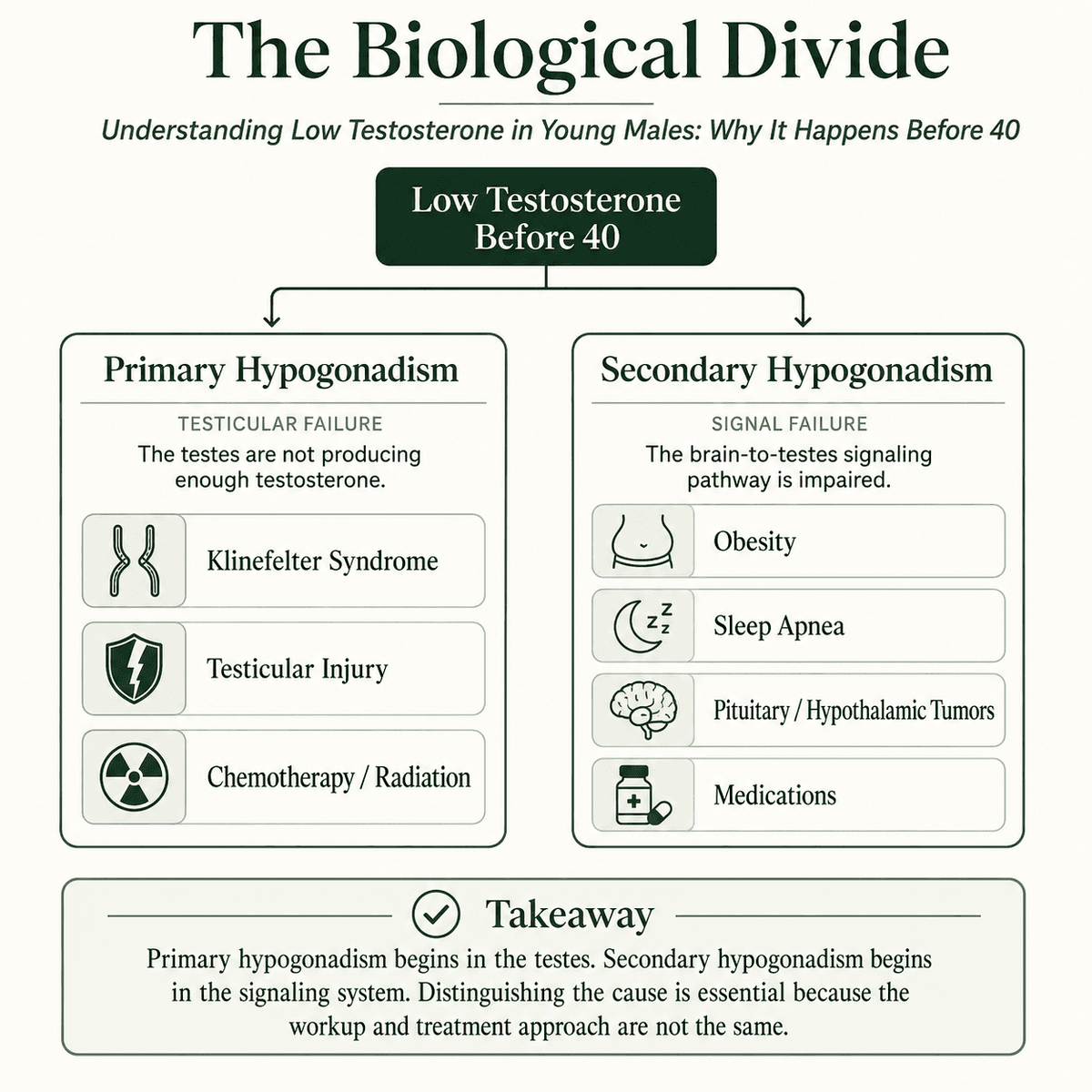
Low testosterone in young males is not a single condition. It is a clinical outcome with multiple possible causes, and those causes are not always what you would expect.
Testosterone Levels Are Declining Across Generations
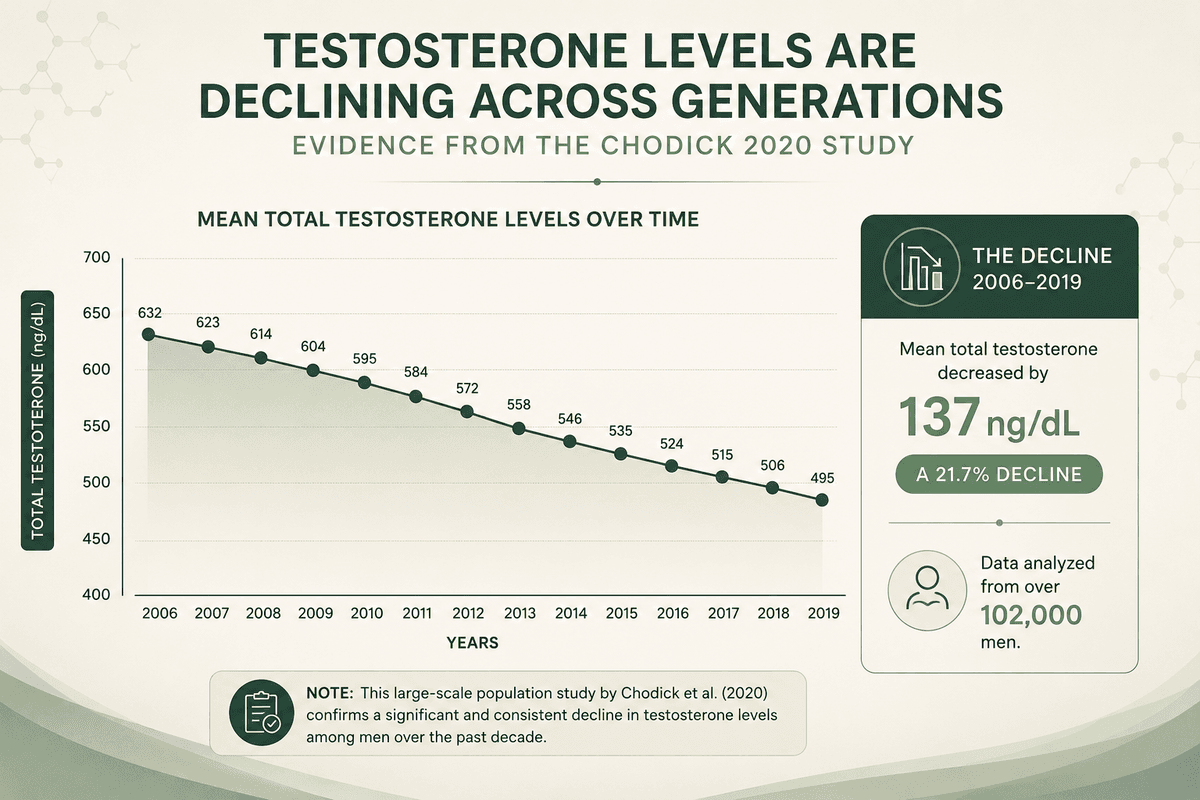
The data on this is striking. A population-level study published in Reproductive Biology and Endocrinology analyzed testosterone measurements from over 102,000 male members of a large Israeli health organization between 2006 and 2019. Researchers found a highly significant and age-independent decline in total testosterone across most age groups during this period. The decline could not be fully explained by increasing rates of obesity alone, suggesting additional environmental or lifestyle factors are contributing. You may not be experiencing a personal health failure. You may be experiencing a population-wide shift that has accelerated in the last two decades.
Environmental Factors and Endocrine-Disrupting Chemicals
The Chodick 2020 study found that obesity alone could not explain the drop, suggesting environmental factors. EDCs, present in plastics (BPA, phthalates), insecticides, and personal care goods, impair hypothalamic-pituitary-gonadal hormonal transmission. Today's widespread exposure to these substances has been linked to testosterone suppression in population studies. Researchers studying the generational testosterone reduction increasingly consider EDC exposure as a role, albeit the exact effect in people is unknown..
Low Testosterone Is Not Just an Older Man's Problem
A cross-sectional study published in Der Urologe measured testosterone in 5,735 men under routine clinical conditions. Pathologically low testosterone levels were found in 15.2% of subjects overall, and the frequency was comparable across age groups. Low testosterone was not concentrated in older men. Young adults were represented proportionally in the deficient group. If you are under 35 and have been told your symptoms are just stress or burnout, that dismissal may not be clinically warranted.
Primary Hypogonadism: When the Problem Is in the Testes
Primary hypogonadism means the testes themselves fail to produce normal levels of testosterone, even when the pituitary gland is sending the appropriate hormonal signals.
A comprehensive review published in The Lancet describes primary hypogonadism as arising from testicular disease or failure, with the pituitary responding by producing elevated luteinizing hormone in an attempt to stimulate more testosterone output. This elevated LH with low testosterone is the hormonal signature your provider looks for to identify a primary cause.
Klinefelter Syndrome: The Most Common Genetic Cause
Klinefelter syndrome is a congenital condition in which a male is born with an extra X chromosome, resulting in an XXY pattern rather than the typical XY. It is the most common sex chromosome disorder and one of the most common genetic conditions overall, affecting approximately 1 in 600 males. A review published in the Journal of Endocrinological Investigation confirmed that Klinefelter syndrome is characterized by hypergonadotropic hypogonadism, meaning the testes fail to respond adequately to hormonal signaling, resulting in low testosterone production and impaired sperm production. Many men with Klinefelter syndrome are not diagnosed until they present with infertility or symptoms of androgen deficiency in their 20s or 30s. You may have had this condition your entire life without knowing it.
Testicle Injury and Undescended Testicles
Physical damage to the testes from injury; infection, such as mumps orchitis; or prior surgery can permanently reduce testosterone production. Undescended testicles, a congenital condition where one or both testicles do not descend into the scrotum before birth, can result in testicular damage over time that affects hormone production even after surgical correction. These are acquired or structural causes that can present as primary hypogonadism in young men with no obvious lifestyle risk factors. If testicular damage occurs before or during puberty, testosterone deficiency may also interfere with normal pubertal development.
Testicular torsion is a medical emergency where the spermatic cord twists and cuts off blood supply; it can cause permanent Leydig cell damage if not corrected within hours. Young men who experienced testicular torsion or unexplained orchidectomy in childhood should have testosterone monitoring as part of routine care.
Radiation Therapy and Chemotherapy
Cancer treatment in childhood or early adulthood can damage the testes directly. Radiation therapy directed near the pelvic region and certain chemotherapy agents are toxic to the Leydig cells in the testes that produce testosterone. If you received treatment for cancer as a child or young adult, your testosterone levels deserve monitoring as part of your ongoing care.
Secondary Hypogonadism: When the Signal Never Reaches the Testes
Secondary hypogonadism means the testes are intact and may be structurally normal, but hormones from the pituitary gland or hypothalamus in the brain are not signaling correctly to trigger production.
The Lancet review describes this as dysfunction of the hypothalamic-pituitary unit, where luteinizing hormone is low or inappropriately normal despite low testosterone, so the testes receive less stimulation and the result is decreased testosterone rather than a primary problem in the testes themselves.
Obesity Is a Leading Acquired Cause in Young Men
A cross-sectional study published in the International Journal of Clinical Practice enrolled 258 men aged 20 to 60 and found that 43% had hypogonadism. Among obese men, testosterone levels were significantly lower than in men of normal weight. In young men specifically, researchers observed that the decrease in testosterone was likely driven by suppression of the hypothalamic-pituitary-gonadal axis rather than testicular failure. Obesity-associated secondary hypogonadism in young men is increasingly recognized as a public health concern. Excess body fat, particularly visceral fat, converts testosterone to estrogen through aromatase activity, and elevated leptin from fat tissue independently suppresses pituitary signaling. Obesity is one of the most common acquired conditions behind secondary hypogonadism in young men, and in those cases, weight loss is often the most effective first intervention.
Obstructive Sleep Apnea Disrupts Hormone Production
Most testosterone production occurs during deep sleep. Obstructive sleep apnea interrupts sleep architecture repeatedly throughout the night, reducing the time spent in the slow-wave stages where testosterone synthesis is concentrated. Young men who snore heavily, wake unrefreshed, or have been told they stop breathing during sleep are at elevated risk of testosterone suppression from this cause alone. It is a correctable condition, and treating sleep apnea can meaningfully improve testosterone levels independent of any medication.
Pituitary Gland Disorders and Tumors
The pituitary gland sits at the base of the brain and releases hormones, including luteinizing hormone, that lead the testes to produce testosterone and sperm. Tumors of the pituitary gland, including prolactin-secreting adenomas called prolactinomas, suppress LH output and result in low testosterone. Elevated prolactin is one of the first things your provider should test for when secondary hypogonadism is suspected in a young man. Pituitary damage from head trauma, prior surgery, or radiation near the skull can also produce secondary hypogonadism by the same mechanism.
Chronic Illness, High Blood Pressure, and Diabetes
Several chronic conditions independently suppress testosterone production in young men. Diabetes, particularly poorly controlled type 2 diabetes, is associated with reduced testosterone through multiple pathways including insulin resistance and direct effects on pituitary function. High blood pressure and cardiovascular disease correlate with lower testosterone levels in younger populations. A review published in Medical Clinics of North America confirmed that reduced libido, erectile dysfunction, reduced muscle mass, increased adiposity, and depressed mood are the main clinical presentations of hypogonadism and that these symptoms appear in men with chronic metabolic disease regardless of age.
Certain Medications That Suppress Hormone Production
Several medications commonly prescribed to young men can suppress testosterone levels as a side effect. Opioid pain medications suppress the hypothalamic-pituitary-gonadal axis and are one of the more underrecognized causes of secondary hypogonadism in young males. Anabolic steroid use, even when discontinued, can suppress the body's natural testosterone production for months or years. Certain antidepressants, antifungals, and drugs used to treat hair loss, such as finasteride, have also been associated with reduced testosterone or symptoms of androgen deficiency in some men. If you are on any ongoing medication and are experiencing symptoms of low testosterone, medication review with your provider is a necessary step before assuming the cause is structural.
Recreational Drug and Substance Use
Several studies have linked excessive or chronic cannabis use to lower testosterone, which is noteworthy considering its rising prevalence among young men. High cortisol and dopamine dysregulation can suppress the hypothalamic-pituitary-gonadal axis with cocaine and other stimulants. Chronic excessive alcohol use directly poisons Leydig cells. When researching low testosterone, tell your doctor whether you take recreational drugs often.
Risk Factors That Make Low Testosterone More Likely in Young Men
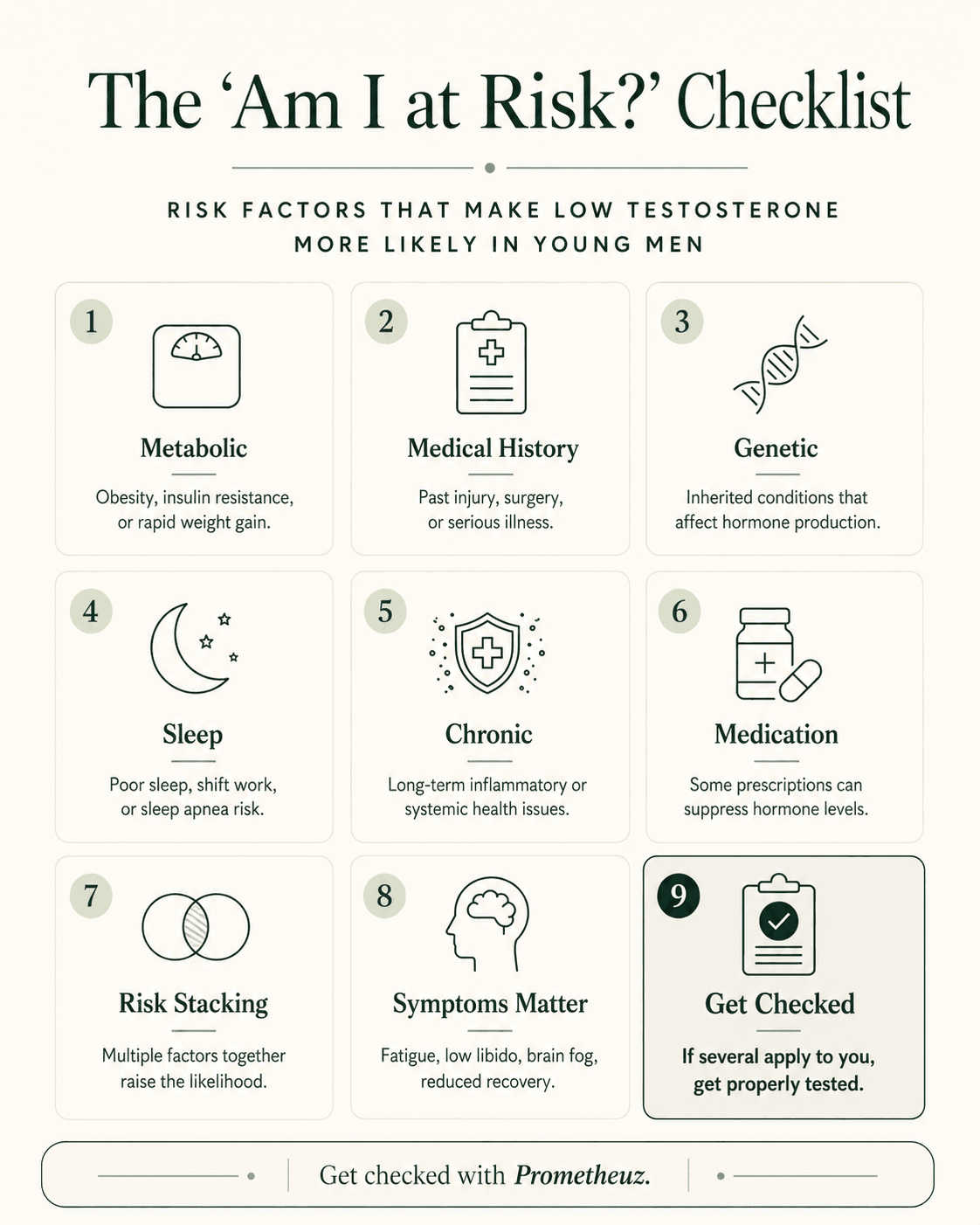
Not every young man with low energy or reduced libido has low testosterone. But certain risk factors make it more likely, and recognizing them helps guide appropriate clinical investigation.
Who Is at Higher Risk
- Overweight or obese men, particularly those with significant abdominal fat
- Men with a history of childhood cancer treatment, including radiation therapy or chemotherapy
- Men with known genetic conditions including Klinefelter syndrome or other chromosomal abnormalities
- Men with untreated or undiagnosed obstructive sleep apnea
- Men with type 2 diabetes, metabolic syndrome, or significant insulin resistance
- Men with a prior testicle injury, infection, or undescended testicle
- Men taking opioid medications, anabolic steroids, or certain other long-term medications
- Men with known pituitary or hypothalamic disorders
You may look at this list and see yourself in one or more categories. That is not a diagnosis. It is a reason to have the conversation with your healthcare provider and get the appropriate blood test.
Symptoms of Low Testosterone in Young Males
The symptoms of low testosterone in young men are similar to those in older men, but they are more likely to be misattributed in younger populations.
The Lancet review on male hypogonadism and the Medical Clinics of North America review both identify the following as the core clinical presentations of testosterone deficiency:
- Low sex drive and reduced interest in sexual activity
- Erectile dysfunction or difficulty maintaining erections
- Decreased muscle mass and strength despite consistent training
- Increased body fat, particularly around the abdomen
- Low energy and persistent fatigue that does not resolve with rest
- Depressed mood, reduced motivation, or emotional flatness
- Reduced bone density, which may not be apparent without testing
- Reduced sperm count and potential infertility
- Gynecomastia, meaning breast tissue development in males
- Reduced body hair and facial hair growth
- Sleep disturbances
[cta]
You may experience some of these but not all. The pattern and persistence of symptoms matter as much as the individual items. A young man who has noticed multiple items on this list for several months, and whose other health markers look reasonable, has a clinical basis for a testosterone evaluation.
How Low Testosterone Is Properly Diagnosed in Young Males
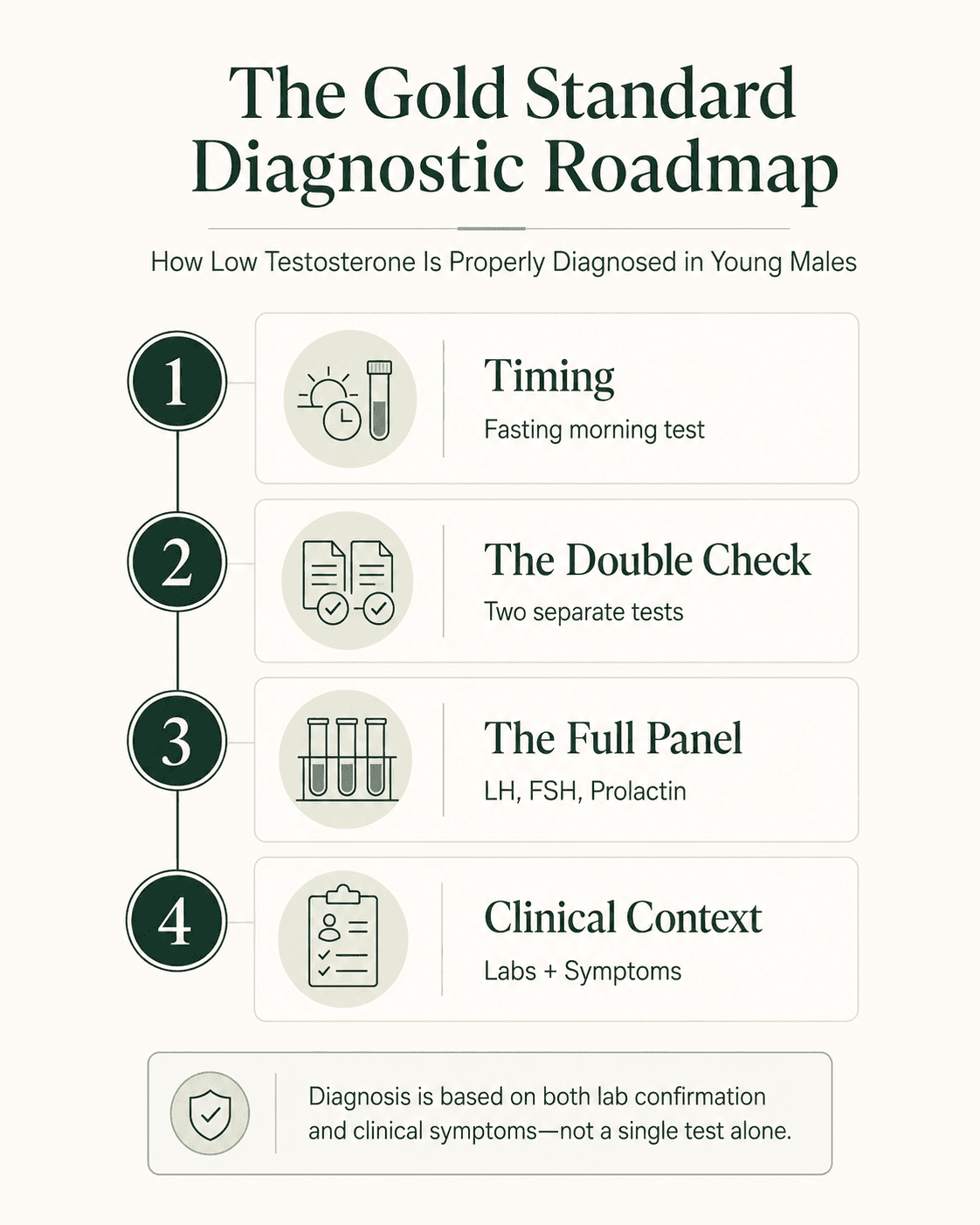
Getting an accurate diagnosis requires the right tests done under the right conditions.
The Blood Test Protocol
- Total testosterone must be measured in the morning, between 7 and 10 AM, when Testicle Injury and Undescended Te are at their daily peak. A single measurement is not sufficient for diagnosis.
- Two separate fasting morning blood tests on different days are required to confirm consistently low testosterone levels.
- Luteinizing hormone (LH) and FSH distinguish primary hypogonadism (high LH, low testosterone) from secondary hypogonadism (low or normal LH, low testosterone).
- Prolactin rules out a pituitary tumor as the underlying cause.
- Free testosterone should be measured when total testosterone is borderline or when your provider suspects abnormal sex hormone binding globulin levels.
What Normal Testosterone Levels Look Like
Most clinical guidelines set the lower threshold for normal testosterone levels at approximately 300 ng/dL for total testosterone, though the Endocrine Society notes that the normal range varies by laboratory and assay method. One commonly cited evidence-based cutoff for how much testosterone is low is a total testosterone level below 264 ng/dL, though lab ranges still vary. In young men, levels between 400 and 700 ng/dL are generally considered within a healthy functional range. Your provider will interpret your numbers in context, not in isolation.
Population-based studies suggest approximate median testosterone values by decade: men in their 20s typically range 600–700 ng/dL, men in their 30s 550–650 ng/dL. These are population medians, not individual targets. A man who felt his best at 700 ng/dL in his late 20s experiencing a drop to 320 ng/dL may have clinically significant deficiency even if 320 ng/dL falls above the 300 ng/dL diagnostic threshold which is why symptoms must be assessed alongside lab values.
The Diagnosis Requires Both Low Levels and Matching Symptoms
The comprehensive review published in Metabolism by Tsametis and Isidori is explicit on this point: treatment of young adults with known causes of pituitary or testicular failure is universally recognized as necessary, but diagnosis requires both clinical symptoms and testosterone levels below the normal range, not just one or the other, and whether testosterone levels normal for age are present matters in that interpretation. A low number alone, or symptoms alone, is not sufficient for a diagnosis of hypogonadism. Both must be present, confirmed, and attributed to an underlying cause before treatment begins.
Natural Ways to Support Testosterone in Young Men First
Before considering testosterone replacement therapy, lifestyle changes are the appropriate first step for young men whose low testosterone is driven by modifiable causes.
Resistance training consistently supports testosterone production. Progressive strength training three to four times per week is one of the most evidence-supported interventions for maintaining healthy hormonal function in young men.
Losing weight is the most effective lifestyle intervention for young men with obesity-associated secondary hypogonadism. Reducing body fat, particularly visceral fat, reduces aromatase activity and removes the leptin-driven suppression of pituitary signaling. Research consistently shows testosterone levels rise in proportion to the amount of weight lost.
Treating obstructive sleep apnea, if present, can meaningfully restore testosterone levels without any hormonal medication. If you have undiagnosed sleep apnea, this is the first clinical issue to address.
Reducing alcohol intake is relevant because chronic heavy alcohol use is directly toxic to Leydig cells and suppresses testosterone production through multiple pathways.
Managing chronic stress matters because chronically elevated cortisol suppresses the same hormonal axis that drives testosterone production. Sleep, exercise, and workload management all reduce cortisol burden.
If meaningful lifestyle changes over several months do not resolve your symptoms, and blood work confirms consistently low testosterone levels, a clinical conversation about treatment options with a licensed healthcare provider is the appropriate next step.
When Testosterone Replacement Therapy May Be Considered
Testosterone replacement therapy is an established treatment for confirmed male hypogonadism in young men with both low testosterone levels and matching symptoms, and it is one form of hormone therapy used when that diagnosis is clear.
The Lancet review identifies several approved formulations for testosterone replacement, including injectable testosterone, transdermal gels, and patches. Some patients refer more broadly to hormone replacement therapy when discussing these options, but the appropriate formulation depends on your clinical profile, lifestyle, and preferences and should be determined by your provider.
However, there is an important consideration specific to young men: testosterone replacement therapy suppresses sperm production by reducing LH and FSH signaling from the pituitary gland. If you are a young man who wants biological children in the future, this must be discussed before starting any testosterone therapy. Men taking hormone replacement therapy need regular follow-up because treatment can affect fertility and other health markers. Alternative treatments that stimulate the body's own testosterone production, such as clomiphene citrate or human chorionic gonadotropin, are sometimes used in young hypogonadal men specifically to preserve fertility while addressing testosterone deficiency.
The risks of testosterone replacement therapy in young men, including elevated hematocrit, suppressed sperm production, skin reactions, and the need for ongoing monitoring, are covered in a separate dedicated article. Prostate screening is typically reviewed before treatment, and men with known prostate cancer generally should not start testosterone therapy. A board-certified endocrinologist or urologist with experience in men's health is the appropriate specialist to guide these decisions.
A Note on Identifying the Cause First
In young men, treating the symptom without identifying the cause can delay the diagnosis of a serious underlying condition. A pituitary tumor, a previously undiagnosed genetic condition, or a medication side effect all require their own management. Testosterone therapy treats the deficiency but does not address the source. Your healthcare provider should investigate the underlying cause before any treatment decision is made.
Frequently Asked Questions
Can a man in his 20s have low testosterone?
Yes. Low testosterone affects men of all ages. Research measuring testosterone across large populations shows that pathologically low levels are not limited to older men, and the frequency of testosterone deficiency is comparable across age groups, including men in their 20s and 30s.
What is the most common cause of low testosterone in young males?
There is no single most common cause. In young men, congenital conditions like Klinefelter syndrome represent the most common structural cause of primary hypogonadism. For secondary hypogonadism, obesity, obstructive sleep apnea, and pituitary disorders are among the most frequent acquired causes.
Can low testosterone in young men be reversed?
It depends on the cause. Secondary hypogonadism driven by obesity, sleep apnea, or certain medications can often be significantly improved or reversed by addressing those underlying factors. Primary hypogonadism caused by genetic conditions or permanent testicular damage typically requires ongoing testosterone replacement therapy.
Will testosterone replacement therapy affect my fertility?
Yes. Testosterone therapy can affect fertility in most men, including those taking hormone replacement therapy for low testosterone, because it suppresses sperm production by reducing the pituitary signals that drive it. Young men who want biological children should discuss fertility-preserving alternatives with their provider before starting TRT.
What is the difference between primary and secondary hypogonadism?
Primary hypogonadism means the testes are failing to produce testosterone despite adequate hormonal signaling from the brain. Secondary hypogonadism means the testes are capable but the pituitary gland or hypothalamus is not sending the correct signals. The distinction determines the appropriate treatment approach.
How do I know if my testosterone levels are normal?
A fasting morning blood test for total testosterone is the starting point. Most guidelines use 300 ng/dL as a lower threshold, but a single reading is not enough. Two separate morning tests are required to confirm low testosterone levels, and those numbers must be interpreted alongside your symptoms and medical history.
Is low testosterone linked to depression in young men?
Research consistently identifies depressed mood, reduced motivation, and emotional flatness as recognized symptoms of testosterone deficiency. However, the relationship is not simple or one-directional. Depression can suppress testosterone, and low testosterone can contribute to depressive symptoms. A proper evaluation distinguishes which is primary and which is secondary in your specific situation.
Conclusion
Low testosterone in young males is real, it is more common than most people expect, and it has identifiable causes. Some are structural. Some are driven by lifestyle. Most are treatable once properly diagnosed.
If you have been brushing off the fatigue, the low drive, or the mood shifts as just life, it may be worth getting one morning blood test before drawing that conclusion. Your symptoms have a cause. Finding it is where everything else starts.
Disclaimer
This content is for educational purposes only and does not replace medical advice. Testosterone therapy and hormone-related decisions should be guided by a licensed healthcare provider.
References
- Chodick G, Epstein S, Shalev V. Secular trends in testosterone: findings from a large state-mandate care provider. Reprod Biol Endocrinol. 2020;18(1):19. doi:10.1186/s12958-020-00575-2. PMID: 32151259. PMCID: PMC7063751. https://pmc.ncbi.nlm.nih.gov/articles/PMC7063751/
- Jäger T, Kramer J, Bätz O, et al. Testosterone deficiency: an underestimated risk for men? Prevalence of hypogonadism. "Der Urologe. 2013;52(12):1684-1689. doi:10.1007/s00120-013-3203-8. PMID: 23754609. https://pubmed.ncbi.nlm.nih.gov/23754609/
- Basaria S. Male hypogonadism. Lancet. 2013;383(9924):1250-1263. doi:10.1016/S0140-6736(13)61126-5. PMID: 24119423. https://pubmed.ncbi.nlm.nih.gov/24119423/
- Bonomi M, Rochira V, Pasquali D, et al. Klinefelter syndrome: genetics, clinical phenotype and hypogonadism. J Endocrinol Invest. 2017;40(2):123-134. doi:10.1007/s40618-016-0541-6. PMID: 27644703. PMCID: PMC5269463. https://pmc.ncbi.nlm.nih.gov/articles/PMC5269463/
- Li FP, Wang CZ, Huang JM, et al. Obesity-associated secondary hypogonadism in young and middle-aged men in Guangzhou: a single-centre cross-sectional study. Int J Clin Pract. 2020;74(8):e13513. doi:10.1111/ijcp.13513. PMID: 32304616. https://pubmed.ncbi.nlm.nih.gov/32304616/
- Bassil N. Late-onset hypogonadism. Med Clin North Am. 2011;95(3):507-523. doi:10.1016/j.mcna.2011.03.001. PMID: 21549875. https://pubmed.ncbi.nlm.nih.gov/21549875/
- Tsametis CP, Isidori AM. Testosterone replacement therapy: for whom, when and how? Metabolism. 2018;86:69-78. doi:10.1016/j.metabol.2018.03.007. PMID: 29530796. https://pubmed.ncbi.nlm.nih.gov/29530796/