Andropause symptoms may include low energy, reduced sexual desire, mood changes, decreased muscle mass and muscle tone, increased fat mass, and sexual dysfunction in some men after age 40.
These symptoms may relate to shifts in sex hormones.
However, they are not caused by aging alone. Sleep issues, obesity, stress, illness, and drugs may also affect hormone production.
Because of this overlap, symptoms alone cannot confirm testosterone deficiency. Proper review and blood tests are needed.
What Is Andropause?
“Andropause” is a non-medical term used to describe age-related changes in men, especially the gradual decline in testosterone. The word comes from Greek, where “andras” means male and “pause” means cessation, referring to a slowing of male hormonal function. Early descriptions linked this to reduced well-being and sexual satisfaction in older men, along with symptoms like fatigue, irritability, low mood, and overall health decline.
In clinical practice, the term is not formally used. Instead, healthcare professionals refer to late onset hypogonadism (LOH) or age-related decline in male hormone production, commonly referred to as age-related testosterone deficiency. LOH is defined as a condition linked to being part of ageing, where both symptoms and low testosterone levels are present. It may involve changes in both testicular function and hormone regulation in the brain.
Unlike menopause, changes in men are slow. They also vary widely.
Many men do not develop clear testosterone deficiency as part of ageing.
A true medical condition is more likely when the testes or hormone system is impaired.
Symptoms of Andropause: What Are the Warning Signs of Andropause?
Commonly reported signs include:
- Low libido
- Erectile dysfunction
- Fatigue
- Low energy
- Mood changes
- Poor focus
- Lower muscle mass
- More body fat
- Lower strength
- Sleep problems
These signs often appear slowly.
At What Age Do Symptoms Start?
Patterns differ across men's age groups.
- Before age 40: Stress, weight gain, and poor sleep are common causes
- Midlife: Sexual changes may become more clear
- Later years: Fatigue and lower strength may be more common
These are trends, not fixed stages. For many men experiencing andropause, symptoms may affect daily life differently depending on overall body composition and hormonal health.
Why Symptoms Happen
Testosterone levels are only one part of men's health. Sleep, stress levels, weight, and illness also matter.
Some men keep normal hormone levels for many years. Others may see low levels and a decline.
Why Obesity, Illness, and Medications Can Mimic Symptoms of Andropause
The body controls testosterone levels through the brain and testes. This system guides hormone production. When the system is disturbed, symptoms may appear. These symptoms can look like onset hypogonadism. As discussed in Journal of Andrology, obesity, chronic illness, and certain medications can:
- Lower testosterone levels
- Affect hormone production
- Increase fatigue
- Reduce sex drive
- Lower muscle mass
- Raise body fat
Common associated conditions include:
- Diabetes
- Heart disease
- Kidney or liver disease
- Chronic lung disease
- Depression and chronic stress
Common associated conditions include diabetes, depression, chronic stress, kidney disease, and high risk of heart disease or heart attack.
What the Evidence Really Says About
Men's testosterone levels typically peak in early adulthood and gradually decline with age as a natural part of aging. Based on Journal of Endocrinology, it may gradually decline by around 1% yearly, though more research continues to refine our understanding of this age related decline.
Free testosterone may decline faster due to increased SHBG levels with aging.
However, research based on Journal of Andrology also shows obesity and chronic disease often have a stronger effect than ageing alone.
Testosterone Replacement Therapy: Andropause Treatment and How It Works
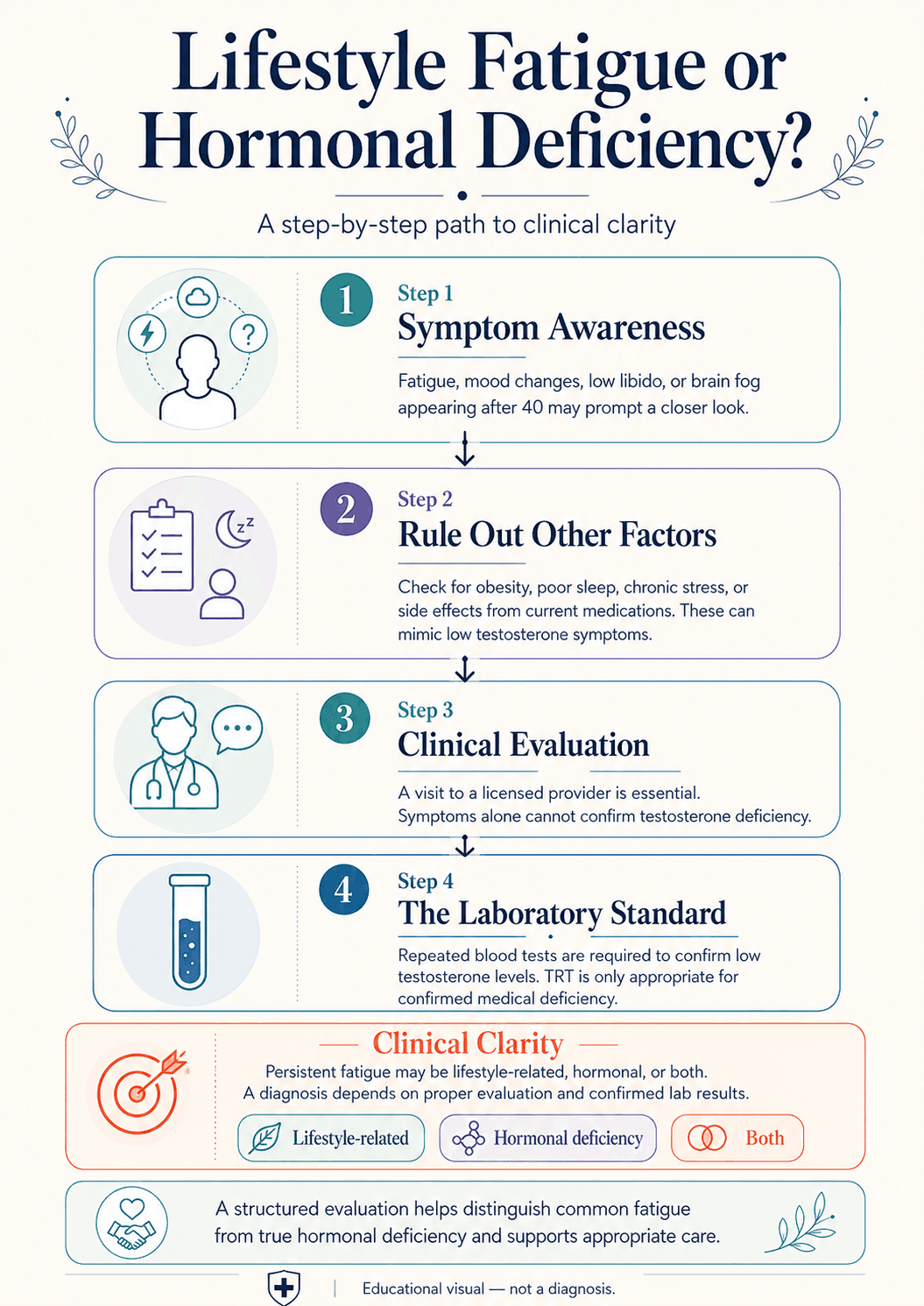
Managing andropause starts with identifying the root cause. Here's how treatment typically progresses:
Step 1:
Address Underlying Conditions First If bothersome symptoms are linked to weight gain, poor sleep, or another medical condition, a doctor will identify the underlying cause and treat these conditions before considering hormone replacement therapy or other treatment approaches.
Step 2:
Confirm Testosterone Deficiency According to the Journal of Clinical Endocrinology, a confirmed diagnosis of testosterone deficiency through lab testing is essential before any hormonal treatment is considered.
Step 3:
Consult a Licensed Provider About TRT Once a deficiency is confirmed, a licensed provider may recommend TRT. FDA-approved treatment options include oral formulations, topical gels, transdermal patches, buccal systems, and intramuscular injections. Selection depends on clinical evaluation, convenience, and monitoring needs. It is important to note that TRT is FDA-approved only for men with confirmed testosterone deficiency tied to a medical condition, not for normal aging alone.
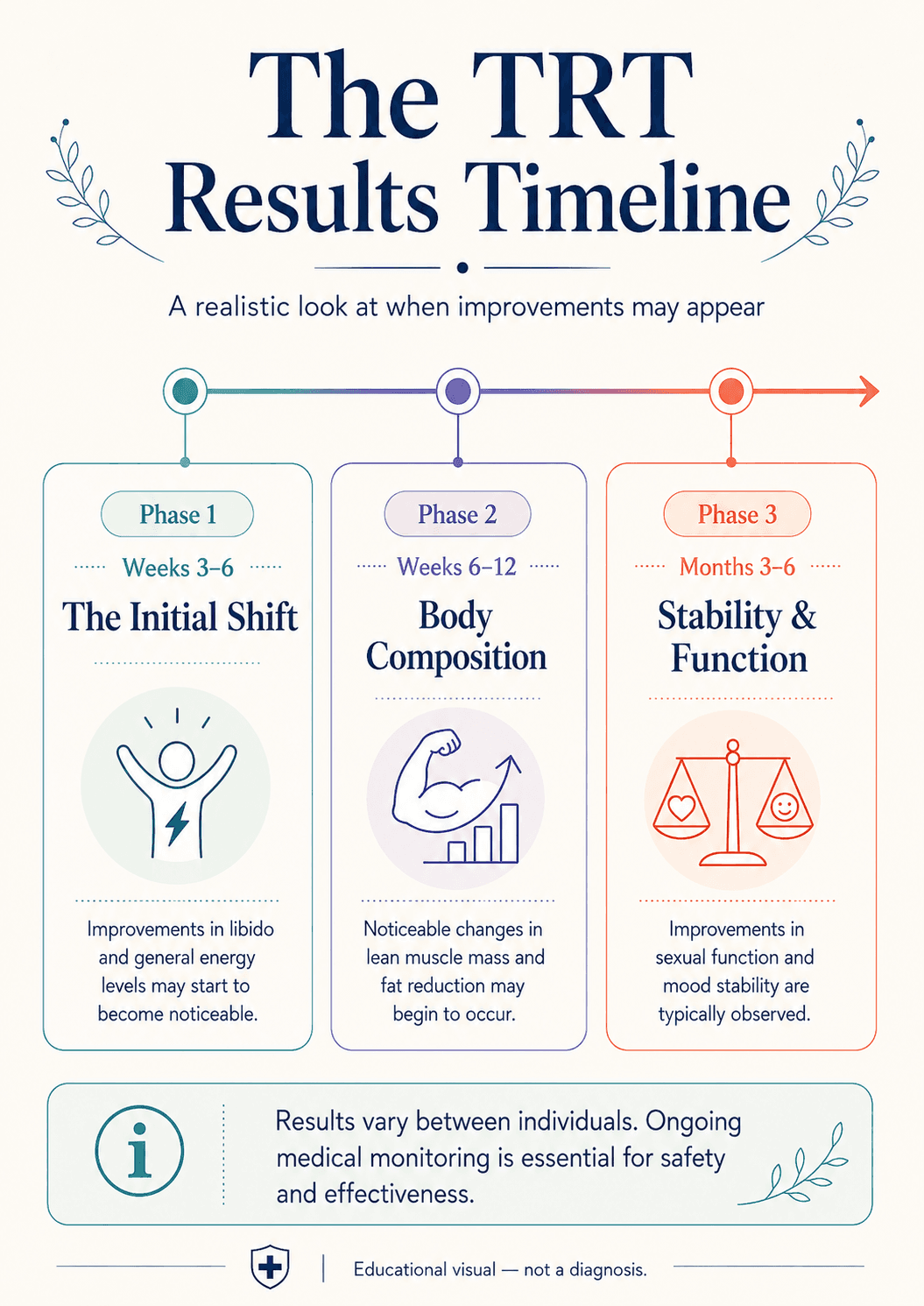
Step 4: Know When to Expect Results TRT does not work overnight. In selected patients, improvements are generally observed on the following timeline:
- 3–6 weeks — improved libido and energy levels
- 6–12 weeks — noticeable changes in lean mass and fat reduction
- 3–6 months — improved sexual function and mood stability
Note: Results vary between individuals, and ongoing monitoring by a provider is essential.
[cta]
Possible Side Effects of TRT
TRT may involve monitoring for:
- Acne
- Fluid retention
- Increased red blood cells
- Fertility suppression
- Sleep apnea worsening in some cases
- PSA changes requiring prostate cancer screening discussions when clinically appropriate
How to Support Hormone Health Naturally
Healthy habits may support hormone production:
- Maintain a healthy lifestyle by keeping a healthy weight and balanced diet
- Do resistance training and regular exercise to maintain bone density
- Improve sleep
- Manage stress
- Avoid smoking
- Limit alcohol
- Get regular checkups
FAQ
How long do men go through andropause?
Unlike male menopause, andropause is not a sudden event. Hormonal changes may develop gradually over years, and severity differs between individuals.
When do andropause symptoms start?
They may begin after age 40. Timing varies by health and lifestyle.
Can low testosterone cause erectile dysfunction?
Yes. But erectile dysfunction can also come from stress, diabetes, or vascular disease.
Is testosterone decline normal with aging ?
Yes, but severity varies. Some men maintain testosterone levels within the normal range throughout life, while others experience a more significant age-related decline.
What foods may support testosterone naturally?
Balanced nutrition, adequate protein, zinc-rich foods, healthy fats, and weight management may support hormone health.
Does andropause or male menopause affect women differently?
Andropause is specific to men's male hormones. Women experience female menopause, which involves different hormonal changes. However, understanding both conditions helps healthcare providers address treatment options.
Conclusion
Symptoms after age 40 may have many causes. They are not due to part of ageing alone.
Changes in testosterone levels may play a role. So can obesity, illness, stress, and drugs.
Proper diagnosis needs symptoms, medical review, and blood tests.
That should happen before testosterone replacement therapy trt is considered.
Disclaimer
This content is for educational purposes only and does not replace medical advice. Testosterone therapy and hormone-related decisions should be guided by a licensed healthcare provider.
References
Wu FCW, Tajar A, Beynon JM, et al. Identification of late-onset hypogonadism in middle-aged and elderly men. New England Journal of Medicine (N Engl J Med). 2010;363(2):123–135. doi:10.1056/NEJMoa0911101. PMID: 20554979. https://pubmed.ncbi.nlm.nih.gov/20554979/
Bhasin S, Cunningham GR, Hayes FJ, et al. Testosterone therapy in men with hypogonadism: An Endocrine Society clinical practice guideline. J Clin Endocrinol Metab. 2018;103(5):1715–1744. doi:10.1210/jc.2018-00229. PMID: 29562364. https://pubmed.ncbi.nlm.nih.gov/29562364/
Snyder PJ, Bhasin S, Cunningham GR, et al. Effects of testosterone treatment in older men. N Engl J Med. 2016;374(7):611–624. doi:10.1056/NEJMoa1506119. PMID: 26886521. https://pubmed.ncbi.nlm.nih.gov/26886521/
Corona G, Rastrelli G, Di Pasquale G, et al. Endogenous testosterone levels and cardiovascular risk: A meta-analysis of observational studies. J Sex Med. 2018;15(9):1260–1271. doi:10.1016/j.jsxm.2018.06.016. PMID: 30145097. https://pubmed.ncbi.nlm.nih.gov/30145097/
Travison TG, Araujo AB, O’Donnell AB, et al. A population-level decline in serum testosterone levels in American men. J Clin Endocrinol Metab. 2007;92(1):196–202. doi:10.1210/jc.2006-1375. PMID: 17062768. https://pubmed.ncbi.nlm.nih.gov/17062768/
Corona G, Vignozzi L, Sforza A, Maggi M. Obesity and late-onset hypogonadism. PMCID: PMC4046605. 2014. https://pmc.ncbi.nlm.nih.gov/articles/PMC4046605/
Lopez DS, et al. Late-onset hypogonadism: clinical definition, symptoms, and diagnostic considerations. PubMed Central. 2020. PMID: 31639279. https://pubmed.ncbi.nlm.nih.gov/31639279/
U.S. Food and Drug Administration (FDA). FDA issues class-wide labeling changes for testosterone products. 2025. https://www.fda.gov/drugs/drug-alerts-and-statements/fda-issues-class-wide-labeling-changes-testosterone-products