Have you found yourself snapping at the people closest to you without knowing why? Maybe the irritability comes and goes, or the motivation you used to have just is not there anymore. You feel off, but you cannot quite explain it, and that is frustrating in itself.
Testosterone affects mood. Research consistently links low testosterone levels to depressive symptoms, irritability, anxiety, and reduced emotional resilience in men. But the picture is not simple. Many conditions produce the same symptoms. Stress, poor sleep, thyroid dysfunction, and vitamin D deficiency can all cause what feels like a personality shift.
This article walks through what the science actually shows, which mood symptoms are linked to testosterone, how strongly, and what that means for how you approach the problem.
What Testosterone Does to Your Brain
Testosterone is classified as a neuroactive steroid, meaning it directly influences central nervous system function, not just peripheral physiology. Unlike hormones that act primarily on peripheral tissue, testosterone crosses the blood-brain barrier and binds to androgen receptors in regions that regulate emotion, motivation, memory, and stress response. [Zitzmann, 2020].
The hormone crosses the blood-brain barrier and binds to androgen receptors in areas of the brain that regulate emotion, motivation, and stress response. A review published in Andrology found that testosterone plays a central role in maintaining psychological balance, including mood, self-perception, and perceived quality of life in men across all age groups.
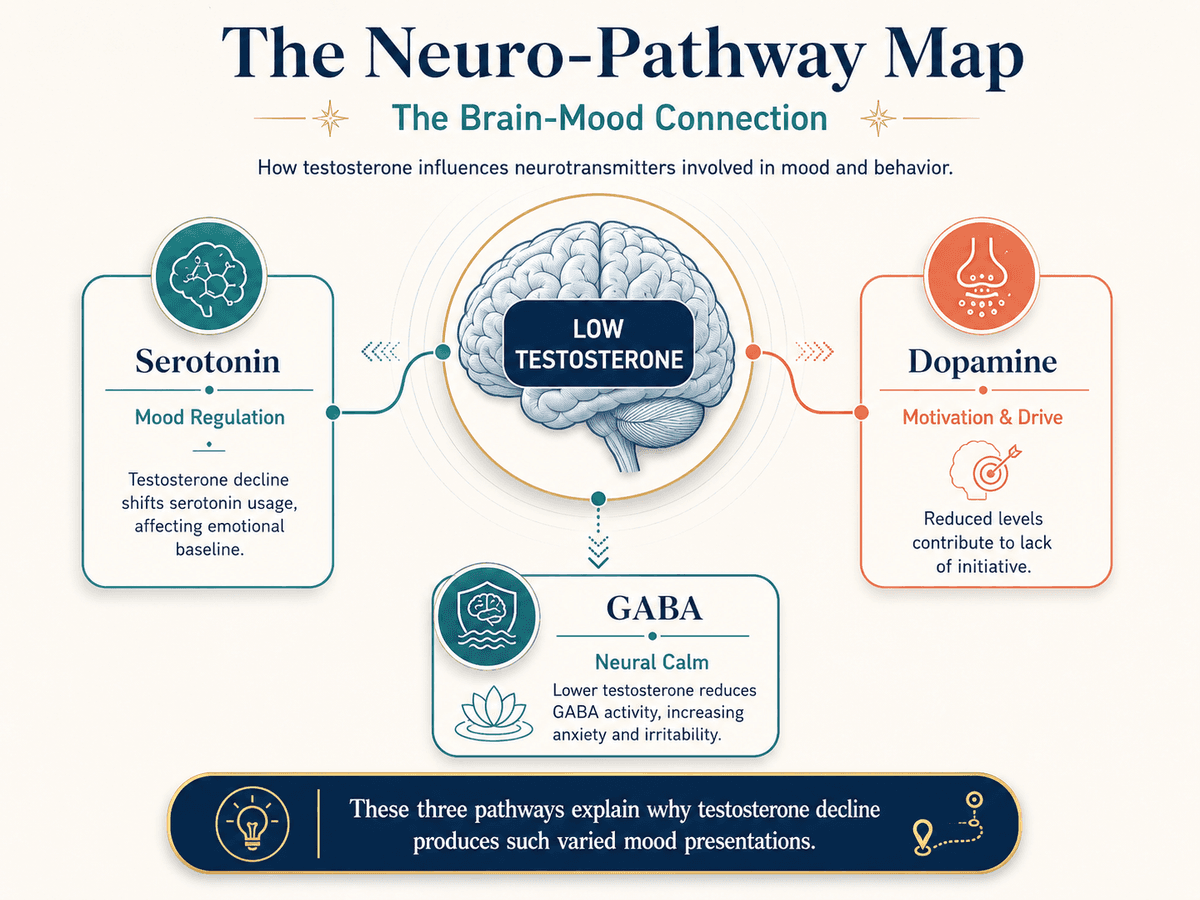
Testosterone's role also influences how the brain produces and uses neurotransmitters. Serotonin and dopamine, these two chemicals, are closely tied to mood regulation and are both affected by testosterone levels. When testosterone drops, these systems shift, which contributes to low mood, reduced drive, and difficulty managing emotions. [Zitzmann, 2020]
Testosterone also influences GABA (gamma-aminobutyric acid) activity. The brain's primary inhibitory neurotransmitter responsible for calming neural activity. Lower testosterone has been associated with reduced GABA activity, which may increase susceptibility to anxiety, emotional reactivity, and irritability in research models. This three-pathway effect on serotonin, dopamine, and GABA simultaneously helps explain why testosterone decline can produce such varied mood presentations in different men. [Seidman, 2003]
The Specific Mood Changes Linked to Low Testosterone
Low testosterone does not just affect energy or sex drive. It produces distinct emotional and psychological symptoms. Age matters here. Testosterone production begins declining at approximately age 30-35, with clinically meaningful reductions most common after 50.
Research indicates approximately 20% of men over age 60 have testosterone levels below normal reference ranges, making mood symptoms in this age group more likely to have a hormonal component worth evaluating.
A review in the World Journal of Biological Psychiatry identified the following symptoms associated with testosterone deficiency in aging men: depressive mood, anxiety, irritability, difficulty concentrating, and memory impairment. These can range from mild fatigue and low drive to persistent emotional heaviness.
A review published in Frontiers in Endocrinology found that men with hypogonadism commonly report depressed mood and anxiety. The same review noted that men diagnosed with depression frequently show reduced testosterone concentrations; it's a pattern that runs in both directions.
Low Testosterone Mood Symptoms: 7 Signs to Watch For
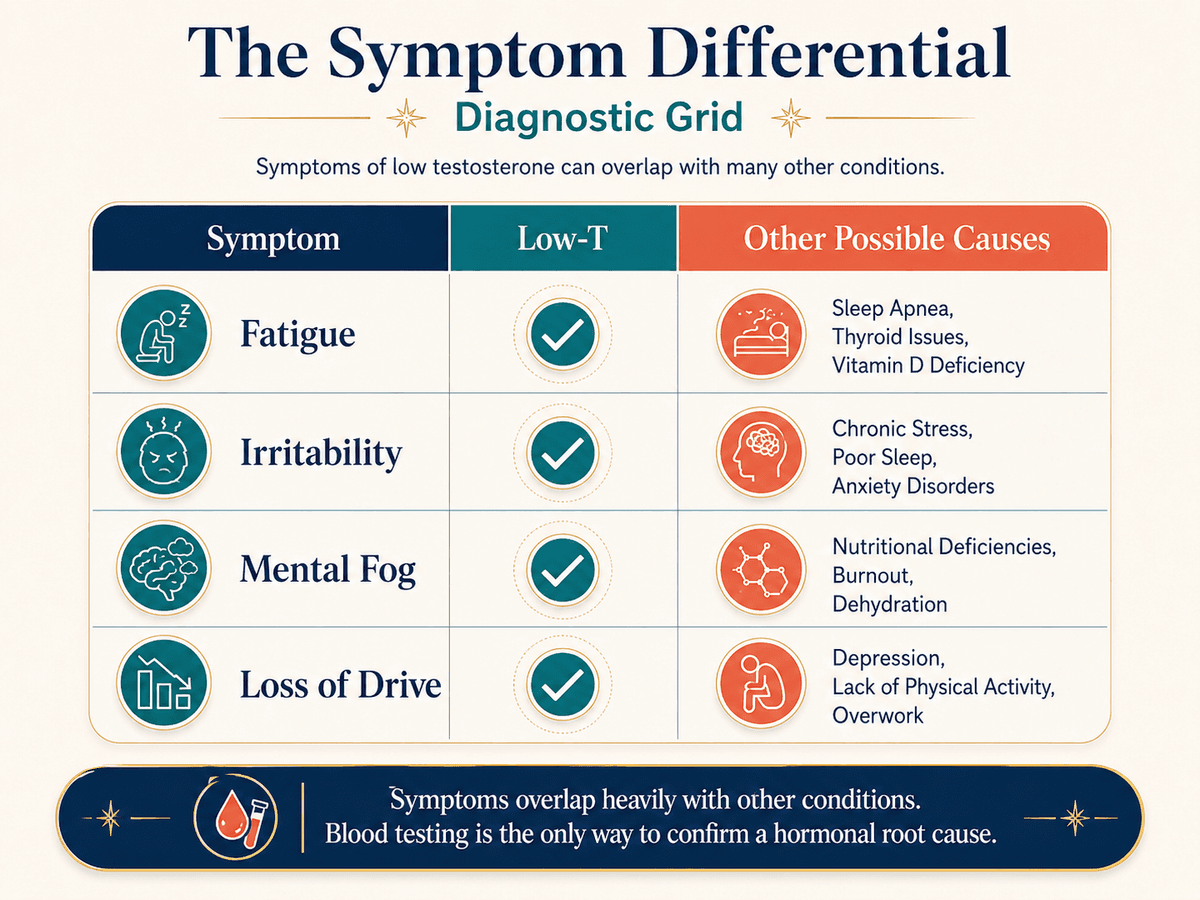
Mood symptoms commonly reported alongside low testosterone include:
- Persistent low mood or emotional flatness that doesn't improve with rest
- Increased irritability, short fuse, or unexplained mood swings
- Anxiety, persistent worry, or feeling on edge
- Loss of motivation and drive
- Reduced confidence and self-esteem
- Difficulty concentrating or mental fog (cognitive slowing)
- Social withdrawal - pulling back from relationships and activities
These symptoms overlap heavily with other conditions. They are not exclusive to low testosterone.
Does Low Testosterone Make You Aggressive?
No. At clinical testosterone levels, both normal and deficient, aggressive behavior is not a reliable outcome. The connection between testosterone and aggression is far more nuanced than popular belief suggests. The connection between testosterone and aggression is far more nuanced than popular belief suggests.
A review in Current Opinion in Psychology found that human studies show only a weak overall correlation between testosterone and aggression. The review noted that testosterone influences behavior in context-dependent ways, affecting competitive responses differently based on individual factors like dominance and cortisol levels. It does not reliably trigger aggressive behavior in clinical or everyday settings.
What research does find is that low testosterone is more commonly linked to withdrawal, low motivation, and depressive symptoms rather than outward aggression. The irritability that comes with low testosterone tends to look more like emotional sensitivity and frustration than hostility toward others. [Carré & Archer, 2018]
Blaming conflict in your relationships entirely on testosterone levels without proper testing is not clinically supported. Many other factors contribute to emotional reactivity, including sleep deprivation, chronic stress, and underlying mental health conditions.
A related phenomenon studied in preclinical models is Irritable Male Syndrome (IMS) - a state of nervousness, irritability, lethargy, and heightened emotional reactivity observed in mammals during testosterone withdrawal. While IMS terminology is more commonly applied to animal research models, it is referenced in the clinical literature to describe the behavioral constellation of symptoms men can experience during periods of testosterone decline.
The emotional sensitivity and frustration pattern of low testosterone is distinct from hostility; it more closely resembles the IMS presentation than the aggressive behavior commonly attributed to high testosterone.
Why Feeling Bad Can Lower Your Testosterone Even Further
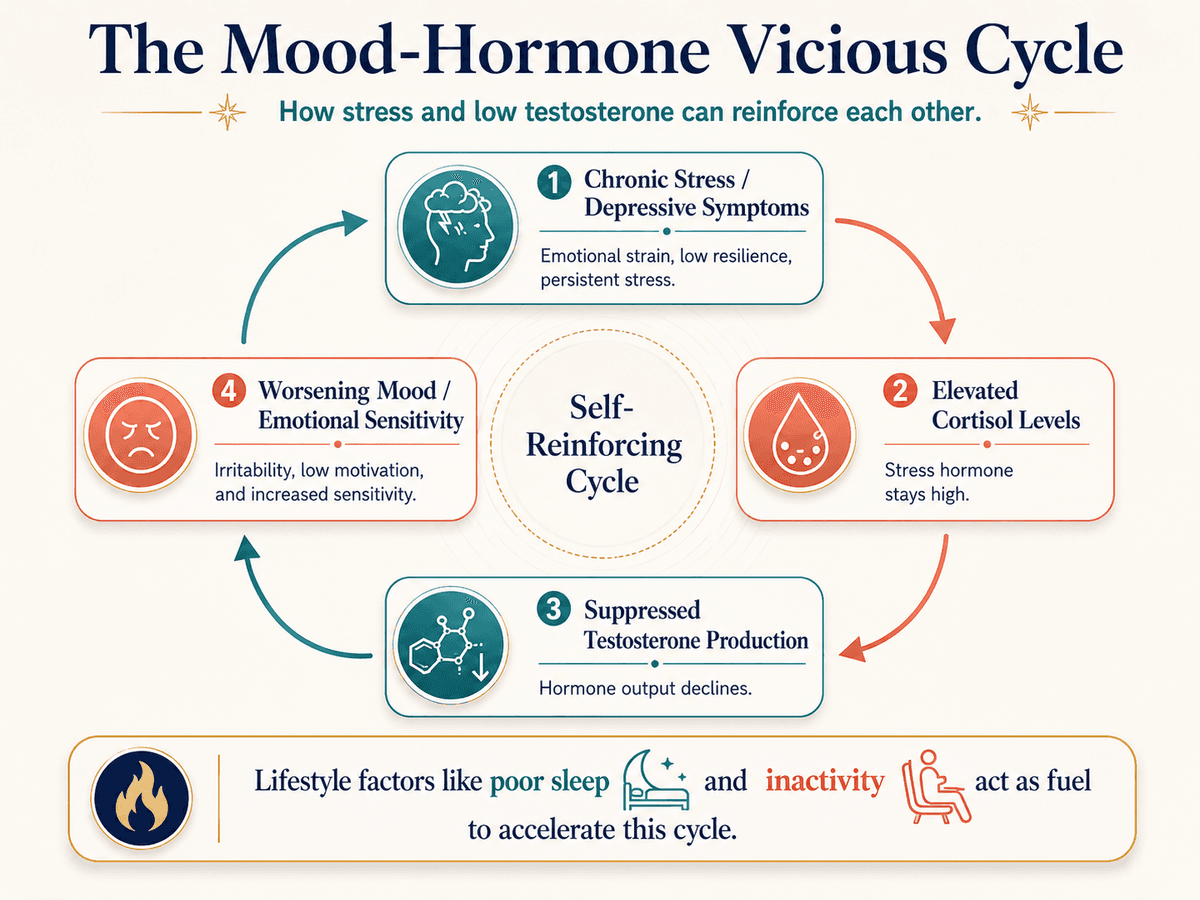
Low testosterone and poor mood can fuel each other, making it harder to identify which came first.
Chronic stress raises cortisol levels. Elevated cortisol suppresses the hormonal signals that regulate testosterone production. Over time, this reduces testosterone, which further worsens mood disturbances and stress tolerance. A sedentary lifestyle and weight gain compound the problem further, since excess body fat is associated with lower testosterone and greater hormonal imbalances.
A review in Aging Clinical and Experimental Research described this relationship as multifactorial. It involves both biological changes in hormone levels and psychosocial factors; these include life stress and the natural transitions of midlife. No single cause explains it in every person.
This cycle is one reason why mood symptoms in men are frequently underdiagnosed or misattributed. Addressing only one part of the cycle without evaluating the others often produces incomplete results.
Simple Ways to Improve Your Mood First
Before considering any clinical intervention, lifestyle changes have clear research backing for improving mood and supporting healthy testosterone levels.
Regular exercise: Physical activity, especially resistance training is one of the most consistently supported tools for improving mood. Research published in Medicine and Science in Sports and Exercise found that men who combined exercise with treatment showed significantly greater improvement in mood scores and overall psychological distress compared to those who did not exercise.
Improved sleep: Poor sleep directly suppresses testosterone production and worsens mood. Addressing sleep quality, including evaluating for sleep apnea, is one of the first steps a clinician will recommend.
Stress management: Chronic stress sustains elevated cortisol, which reduces testosterone over time. Structured stress reduction, whether through physical activity, behavioral strategies, or social support, has direct effects on hormone balance and emotional stability.
Vitamin D adequacy: Vitamin D deficiency is associated with both lower testosterone and depressive symptoms. Research suggests addressing deficiency may support hormone production and mood, though it is not a replacement for clinical evaluation.
Weight management: Excess body fat, particularly around the midsection, converts testosterone to estrogen through a process called aromatization. Reducing body fat through consistent dietary and exercise habits supports better hormone balance.
These changes matter. If symptoms persist despite meaningful lifestyle improvements, clinical evaluation becomes the appropriate next step.
If testing confirms low testosterone and symptoms are affecting your quality of life, increasing testosterone levels through medically supervised hormone replacement therapy is one option.
Important clinical distinction: Major depressive disorder is a separate diagnosis requiring evaluation and treatment by a mental health professional. TRT does not treat clinical depression and should not delay or replace appropriate psychiatric care. If you are experiencing persistent depressive symptoms, speak with both your primary care provider and a mental health professional.
What Testosterone Replacement Therapy Can Do for Mood
TRT is not a mood medication. It is a treatment for confirmed testosterone deficiency. When deficiency is the underlying cause of mood changes, restoring normal levels can produce meaningful improvements.
A large evidence synthesis published in Health Technology Assessment analyzed 35 trials involving over 5,600 men. It found that testosterone replacement therapy improved quality of life and sexual function across most patient groups. Improvements in mood and energy were among the reported benefits.
[cta]A review in Andrology found that quality of life, including mood, motivation, and self-perception, showed positive changes in older hypogonadal men who received testosterone substitution in placebo-controlled trials.
A review in the Medical Clinics of North America noted that TRT improves mood, cognitive function, muscle mass, and body composition when prescribed appropriately for confirmed hypogonadism.
These benefits are meaningful. They are also specific to men with confirmed deficiency who are appropriately monitored.
Risks to Be Aware Of With Testosterone Therapy
TRT is a medical treatment, and like all medical treatments, it carries risks. Understanding them helps you have an informed conversation with your provider.
Elevated hematocrit: Testosterone stimulates red blood cell production. If levels rise too high, blood thickens, which can increase clotting risk. Regular blood monitoring addresses this.
Fertility considerations: TRT suppresses the hormonal signals that drive sperm production. Men planning to conceive should discuss this with their provider before starting.
Estrogen conversion: Some testosterone converts to estrogen through a natural process called aromatization. This is manageable with monitoring and, when needed, appropriate clinical intervention.
Acne and skin changes: Some men experience increased acne, particularly in the early stages of treatment. This is not universal.
Sleep apnea: Existing sleep apnea may worsen with TRT. Providers typically screen for this before and during treatment.
Prostate monitoring: PSA levels and prostate overall health are monitored during TRT. Research does not show that TRT causes prostate cancer, though it can stimulate existing prostate tissue.
Cardiovascular considerations: Available evidence does not support a significant increase in cardiovascular events with TRT in the short to medium term. The large evidence synthesis mentioned above found no meaningful difference in cardiovascular events between TRT and placebo groups across 35 trials. Long-term data are still being studied, and individual risk factors matter.
Will Testosterone Change Who You Are?
No. Restoring testosterone to a normal range does not create a different person. It removes a hormonal deficiency that was altering how you felt and functioned.
Men who receive TRT for confirmed low testosterone often describe feeling more like themselves, not a new version of themselves. The irritability, low drive, and emotional flatness associated with deficiency tend to ease as levels normalize. What you are left with is closer to your baseline, not a hormonal override.
The idea that testosterone therapy makes men aggressive or dramatically changes personality is not supported by clinical research. The review in Current Opinion in Psychology found that the testosterone-aggression connection in humans is weak and highly context-dependent. Therapeutic normalization of deficient levels is not the same as pharmacological elevation above normal.
How Testosterone Is Properly Measured
Mood symptoms alone are not enough to confirm low testosterone. Blood testing through a licensed provider is required.
The standard evaluation includes:
- Total testosterone: Measured in the morning between 7 and 10 AM when levels are at their highest. A result below 300 ng/dL is generally considered low, though reference ranges vary by laboratory.
- Repeat testing: Clinical guidelines require at least two separate morning tests on different days to confirm low testosterone. A single result is not sufficient.
- Free testosterone: Measures the active portion available for use by the body. Useful when total testosterone is borderline or symptoms persist despite normal total levels.
- LH and FSH: These pituitary hormones help identify whether the cause of low testosterone is in the testes or in the brain's signaling pathway.
- SHBG: Sex hormone-binding globulin affects how much testosterone is biologically available.
Low testosterone is a clinical diagnosis. It requires both confirmed low lab values and symptoms that affect daily quality of life.
FAQ
Does low testosterone cause depression?
Low testosterone is associated with depressive symptoms, but it is not a confirmed cause of clinical depression in most cases. Research suggests mild depressive symptoms may lead to testosterone replacement in men with confirmed deficiency. Major depressive disorder does not respond to TRT alone.
Can testosterone therapy improve mood?
Evidence suggests TRT may play a significant role in improving mood, energy levels, and motivation in men with confirmed low testosterone. This effect has not been consistently shown in men with normal testosterone levels.
Does testosterone make you more aggressive?
No. Research shows the link between testosterone and aggression in humans is weak and highly context-dependent. Clinical treatment that restores normal testosterone levels does not cause aggressive behavior.
Will testosterone therapy change who I am?
No. Restoring testosterone to a normal range tends to reduce the symptoms—low mood, irritability, low drive—that were caused by deficiency. Men typically describe feeling more like their former selves, not a different person.
How do I know if my mood swings are related to testosterone?
The only reliable way is clinical evaluation. Two separate morning blood tests, combined with a full medical review by a licensed provider, are required to determine whether testosterone is a contributing factor.
Can lifestyle changes improve my mental health without treatment?
Yes, for many men. Regular resistance training, improved sleep, stress management, adequate vitamin D, and weight management play a significant role in improving mood and supporting healthy testosterone levels. These are the appropriate first steps before clinical intervention is considered.
Does chronic stress lead to low testosterone levels?
Yes. Chronic stress elevates cortisol, which suppresses the hormonal signals that regulate testosterone production. This is one reason why stress management is part of addressing low testosterone alongside clinical evaluation.
Conclusion
Testosterone affects more than muscle mass and sex drive. It shapes how you think, feel, and function day to day. Low testosterone is linked to irritability, anxiety, low libido, and reduced mental clarity, symptoms that affect overall well-being in real, measurable ways.
Mood changes have many causes. Proper blood testing is the only way to know if testosterone is a contributing factor. If lifestyle changes do not move the needle, a licensed provider can evaluate whether testosterone replacement therapy is the right next step for you.
Disclaimer
This content is for educational purposes only and does not replace medical advice. Testosterone therapy and hormone-related decisions should be guided by a licensed healthcare provider.
References
Zitzmann M. Testosterone, mood, behaviour and quality of life. Andrology. 2020;8(6):1598-1605. doi:10.1111/andr.12867. PMID: 32657051. https://pubmed.ncbi.nlm.nih.gov/32657051/
Seidman SN. Testosterone deficiency and mood in aging men: pathogenic and therapeutic interactions. World J Biol Psychiatry. 2003;4(1):14-20. doi:10.3109/15622970309167905. PMID: 12582972. https://pubmed.ncbi.nlm.nih.gov/12582972/
Indirli R, Lanzi V, Arosio M, Mantovani G, Ferrante E. The association of hypogonadism with depression and its treatments. Front Endocrinol (Lausanne). 2023;14:1198437. doi:10.3389/fendo.2023.1198437. PMID: 37635965. PMCID: PMC10449581. https://pmc.ncbi.nlm.nih.gov/articles/PMC10449581/
Amore M, Scarlatti F, Quarta AL, Tagariello P. Partial androgen deficiency, depression and testosterone treatment in aging men. Aging Clin Exp Res. 2009;21(1):1-8. doi:10.1007/BF03324891. PMID: 19225262. https://pubmed.ncbi.nlm.nih.gov/19225262/
Carré JM, Archer J. Testosterone and human behavior: the role of individual and contextual variables. Curr Opin Psychol. 2018;19:149-153. doi:10.1016/j.copsyc.2017.03.021. PMID: 29279215. https://pubmed.ncbi.nlm.nih.gov/29279215/
Wagner G, Rabkin J, Rabkin R. Exercise as a mediator of psychological and nutritional effects of testosterone therapy in HIV+ men. Med Sci Sports Exerc. 1998;30(6):811-817. doi:10.1097/00005768-199806000-00006. PMID: 9624636. https://pubmed.ncbi.nlm.nih.gov/9624636/
Cruickshank M, Hudson J, Hernández R, et al. The effects and safety of testosterone replacement therapy for men with hypogonadism: the TestES evidence synthesis and economic evaluation. Health Technol Assess. 2024;28(43):1-210. doi:10.3310/JRYT3981. PMID: 39248210. https://pubmed.ncbi.nlm.nih.gov/39248210/
Bassil N. Late-onset hypogonadism. Med Clin North Am. 2011;95(3):507-523. doi:10.1016/j.mcna.2011.03.001. PMID: 21549875. https://pubmed.ncbi.nlm.nih.gov/21549875/