Clinical investigations suggest that there are two types.of causes of low testosterone: Medical and lifestyle. Both of them may accelerate the decline in testosterone levels. Therefore, understanding these causes is the first step to stop testosterone decline.
In this blog, we explain these causes of low testosterone under the light of research studies and also suggest some remedies that may help you support testosterone levels. Read this blog and gain insight.
What is Low Testosterone?
When the body does not produce enough of the male sex hormone testosterone that it needs, then the condition is known as low testosterone or testosterone deficiency. In medical terms, healthcare professionals also call this condition hypogonadism or testosterone deficiency syndrome. The medical community suggests how much testosterone levels for adult men is between 300 to 1,000 nanograms per deciliter (ng/dL).
If diagnosis reveals levels less than this range, it indicates that you have low testosterone levels (hypogonadism), as per clinical evaluation. You might face multiple health problems, including weak muscle strength, low energy, and low libido, among other issues.
Healthcare professionals check testosterone levels by taking blood samples early in the morning. This is because in the morning, testosterone levels are high, and thus doctors may check testosterone levels accurately. The doctors may perform blood tests multiple times until they reach the final and accurate testosterone results.
How Does Testosterone Production Work?
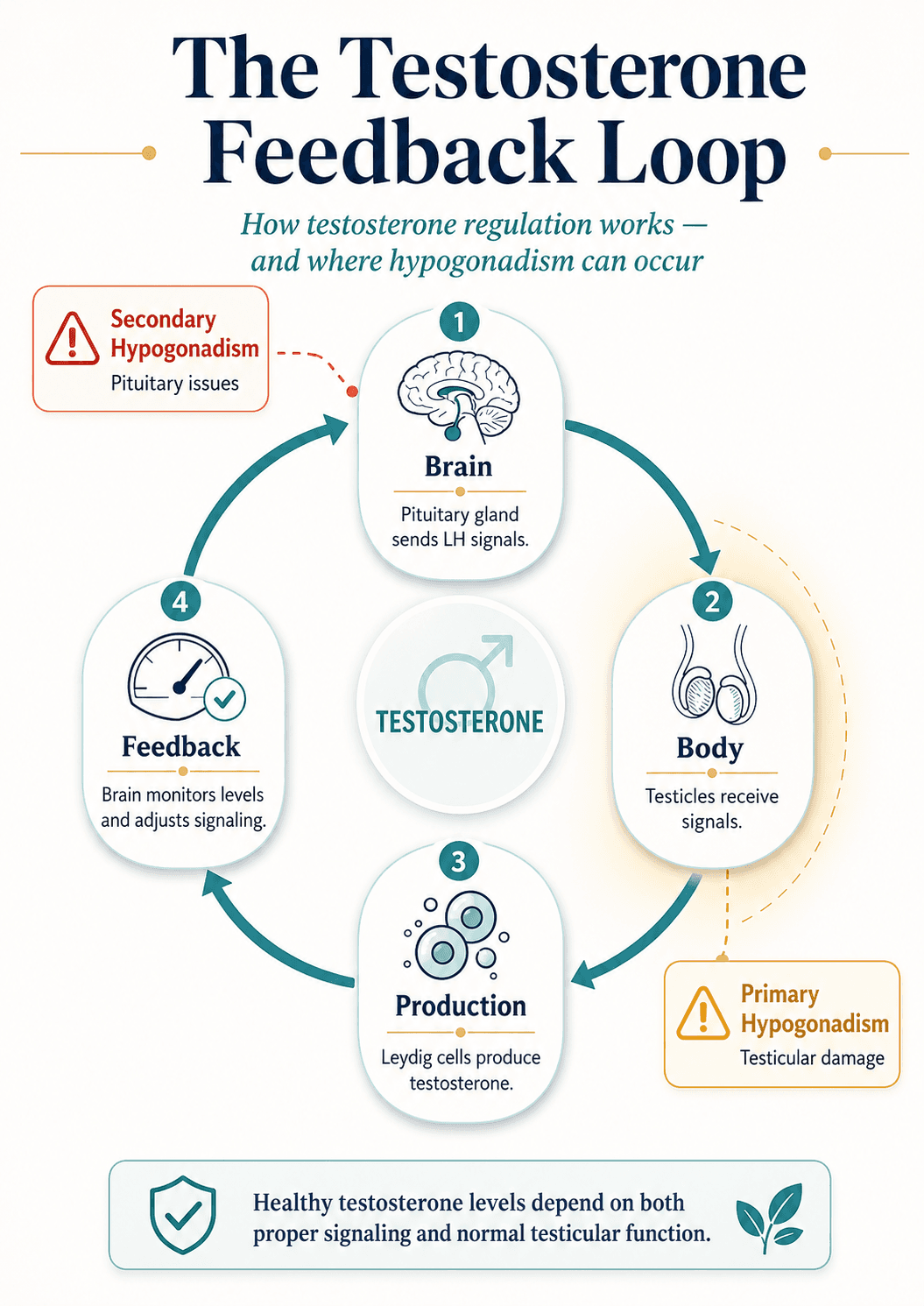
Your body makes testosterone in a chain reaction involving pituitary hormones and gonadotropin releasing hormone. A small gland in your brain called the pituitary gland starts the process. It sends luteinizing hormone signals to your testicles (sex organs) and then your testicles produce testosterone through Leydig cells.
When levels get low, the brain sends more signals through follicle stimulating hormone and luteinizing hormone, and when levels are high, it slows down. The male sex hormone testosterone includes many functions in your body, such as energy levels, muscle mass, bone mass, hair growth including facial hair, and even your mood.
Normal Testosterone Levels by Age
Normal testosterone levels vary by age and decline gradually over time. The ranges below are based on total serum testosterone measured in the morning (ng/dL):
| Age Group | Normal Range (ng/dL) |
| 19–39 years | 400–1,080 |
| 40–49 years | 350–890 |
| 50–59 years | 300–760 |
| 60–69 years | 250–720 |
| 70+ years | 220–680 |
Ranges vary slightly across laboratories. These figures reflect commonly cited clinical reference values.
Medical Conditions That Cause Low Testosterone
Medical conditions that cause low testosterone include primary hypogonadism (testicular disorders), secondary hypogonadism (brain and pituitary problems), and chronic diseases. Some men are born with congenital conditions in this system while others develop issues later in life. Clinical evidence indicates that several medical conditions may stop normal testosterone production.
Testicular Problems (Primary Hypogonadism)
Primary hypogonadism means one or both testicles themselves do not work right. One example is Klinefelter syndrome which is a genetic condition where a boy is born with an extra X chromosome on his sex chromosomes.
Other causes include testicle injury to the testicles. Mumps infection during the teenage years may also cause damage. Cancer treatments like radiation therapy may harm the testicles too. Undescended testicles (cryptorchidism) is another congenital condition affecting testosterone production. In these cases, the brain works well but the testicles cannot answer the brain's signal. Some rare inherited disorders like Leydig cell hypoplasia also fall under primary hypogonadism.
Brain and Hormonal Disorder (Secondary Hypogonadism)
Secondary hypogonadism starts in the brain. The pituitary gland or the hypothalamus does not send the right pituitary hormones signals. A pituitary tumor on the pituitary gland may cause this problem.
Similarly, a head injury or a brain infection may also cause secondary hypogonadism. Isolated hypogonadotropic hypogonadism is a condition where the brain fails to produce gonadotropin releasing hormone. Here the testicles are healthy but they never get a message from the brain to produce enough testosterone.
Chronic Diseases that Lower Testosterone Over Time
Chronic diseases that lower testosterone include high blood pressure, kidney disease, liver disease, HIV/AIDS, and obstructive sleep apnea. Long-term sickness may slowly drop your testosterone level. Research suggests that high blood pressure is associated with lower testosterone levels in men. On the other hand, kidney disease and liver disease are also linked to low testosterone. HIV and AIDS may also affect the hormonal system too.
Even obstructive sleep apnea (a condition where you stop breathing at night) is also connected to low testosterone. These diseases may not always cause symptoms in the start but the drop happens over months or years.
Lifestyle Choices That Cause Low Testosterone
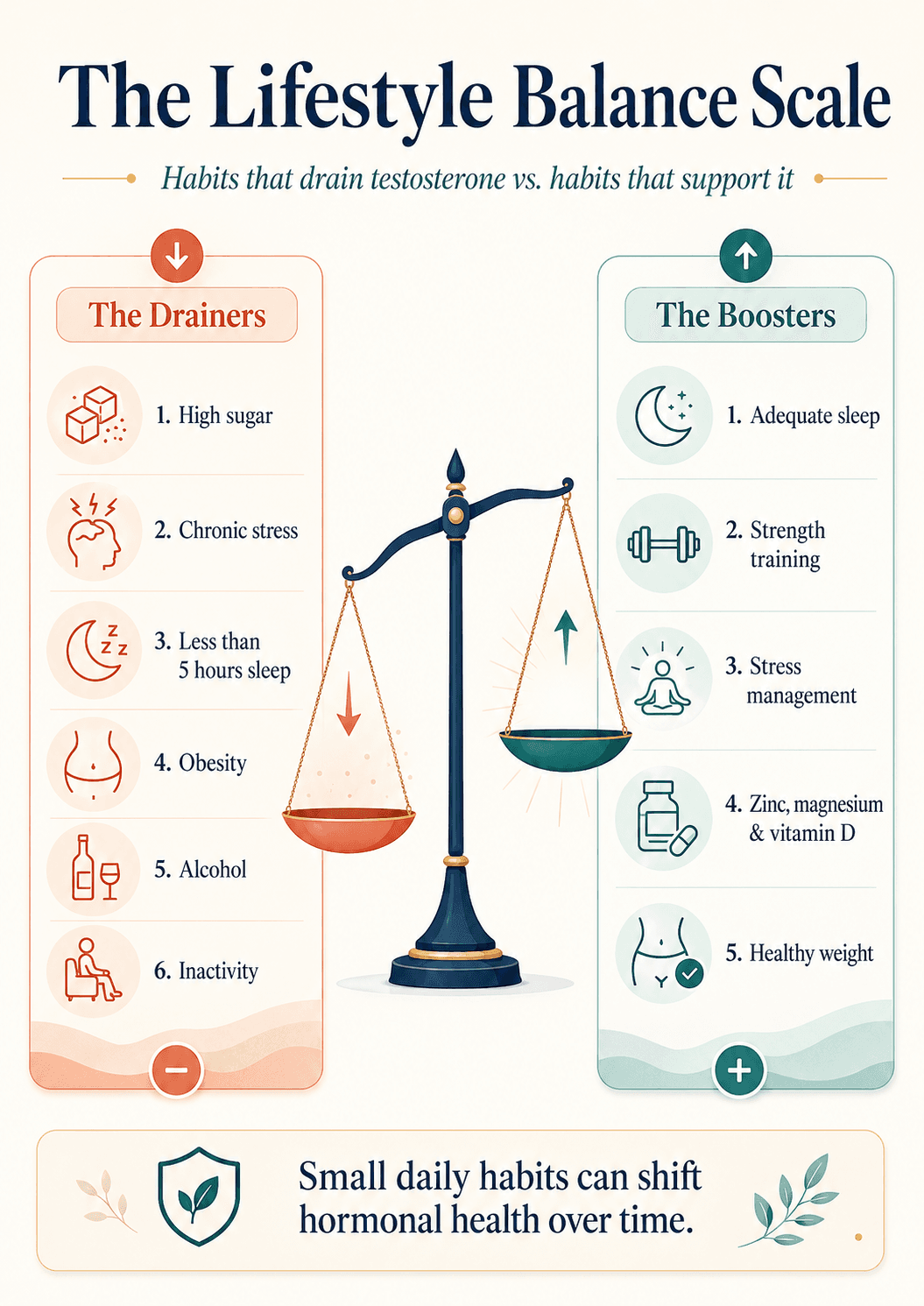
Lifestyle causes of low testosterone include poor diet, lack of sleep, chronic stress, physical inactivity, and obesity. Your daily choices matter a lot. Men's health research shows that bad habits may lower testosterone. However, you may change many of these causes.
Poor Diet and Nutrient Deficiencies
Your body needs certain nutrients to make testosterone. Zinc and magnesium are two of them. Vitamin D also plays a role. A diet high in junk food may lack these nutrients.
Too much sugar may also disturb your hormone balance. Testosterone production slows down when your body is missing key building blocks.
Lack of Sleep (Obstructive Sleep Apnea)
Sleep is when your body repairs itself. Most testosterone production happens during deep sleep. If you sleep for less than 5 hours a night, your levels may drop. Obstructive sleep apnea makes this worse.
Your brain wakes up many times without you knowing. Treating obstructive sleep apnea may help bring testosterone back up.
Chronic Stress and High Cortisol Levels
Stress triggers a hormone called cortisol. Cortisol and testosterone have an opposite relationship. When cortisol goes up, testosterone often goes down. Long-term stress keeps cortisol high all day. This may cause a slow drop in your testosterone levels. Learning to manage stress could help protect your hormones.
Physical Inactivity
Research suggests that regular physical activity boosts testosterone. Both weightlifting and high-intensity cardio may help. But too much endurance exercise without rest may have the opposite effect. Balance is the key here to maintain testosterone levels.
Age-Related Testosterone Decline
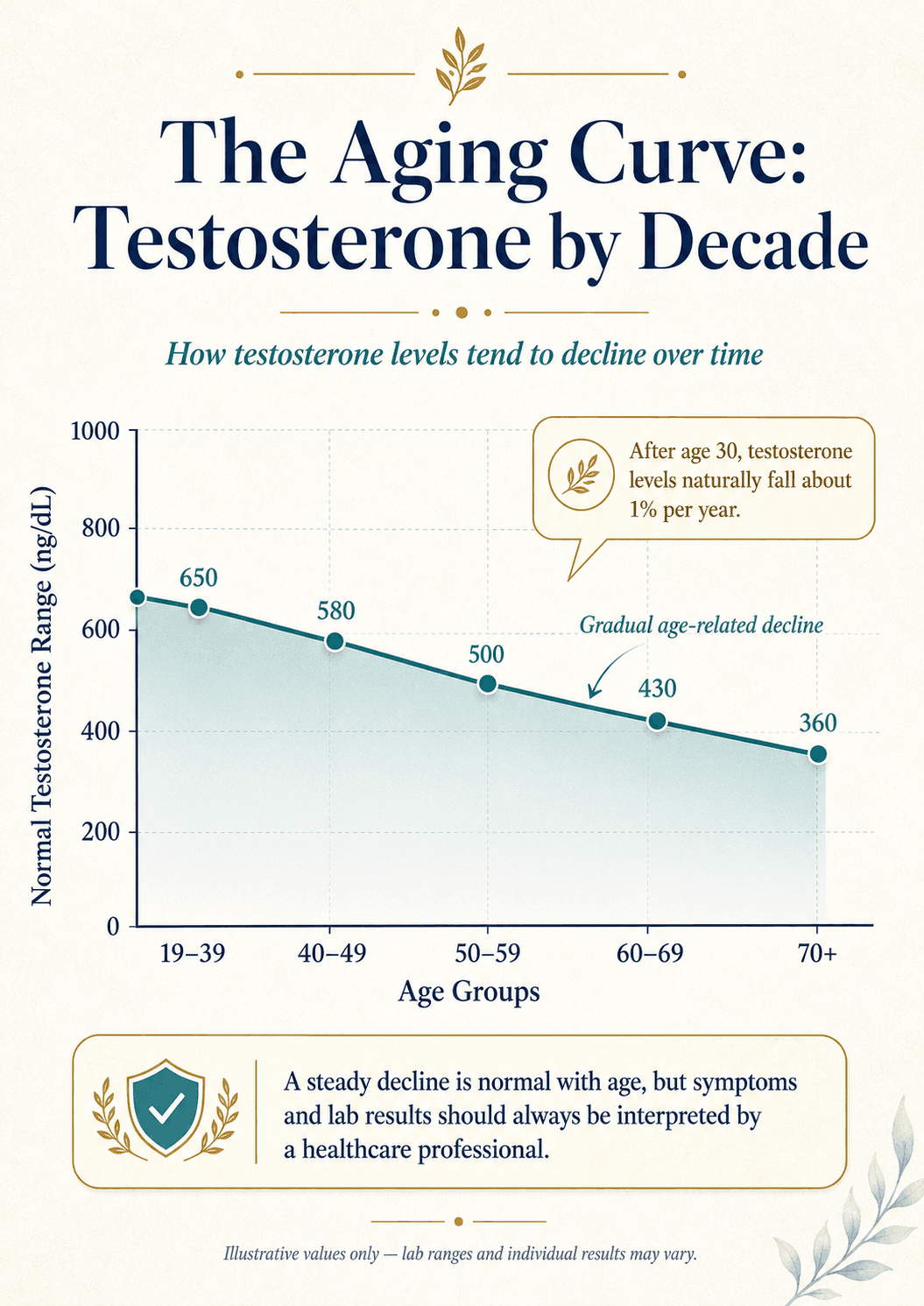
Testosterone levels decline as aging men get older, a condition sometimes called late onset hypogonadism. However, it is not true for all, as it matters person to person. After men age 30, testosterone levels fall about 1% each year but this drop is usually slow. Most older men still have normal levels, and only a small number have true male hypogonadism from age alone.
Common Causes of Low Testosterone That are Often Overlooked
Often overlooked causes of low testosterone include obesity, metabolic issues, and the use of anabolic steroids. Some reasons for low T surprise both patients and doctors. These causes hide in plain sight and no one notices them.
Obesity and Metabolic Issues
Extra body fat changes your hormones. Research shows that fat cells contain an enzyme known as aromatase. That enzyme turns testosterone into estrogen. So more body fat means less testosterone available in the bloodstream.
Obesity also comes with increased risk of high blood pressure and diabetes. These problems feed on each other and thus disturb testosterone levels. Losing weight can help you support testosterone levels naturally.
Use of Steroids and Hormonal Imbalance
Some men take anabolic steroids to build muscle. These are artificial hormones, and they signal your brain to stop making its own testosterone. After you stop the steroids, your system may not restart quickly.
Sometimes it never fully recovers, and even certain medications may also affect your testosterone balance.
Alcohol and Testosterone Decline
Many men do not consider alcohol a hormonal risk But can alcohol lower testosterone? Research suggests that regular or heavy alcohol use is associated with lower testosterone levels in men.
Alcohol disrupts the signaling chain between the brain and the testicles, affecting how much testosterone the body produces. It also places stress on the liver, which plays a role in hormone metabolism. Heavy, chronic use is consistently linked to reduced testicular function.
[cta]Symptoms of Low Testosterone
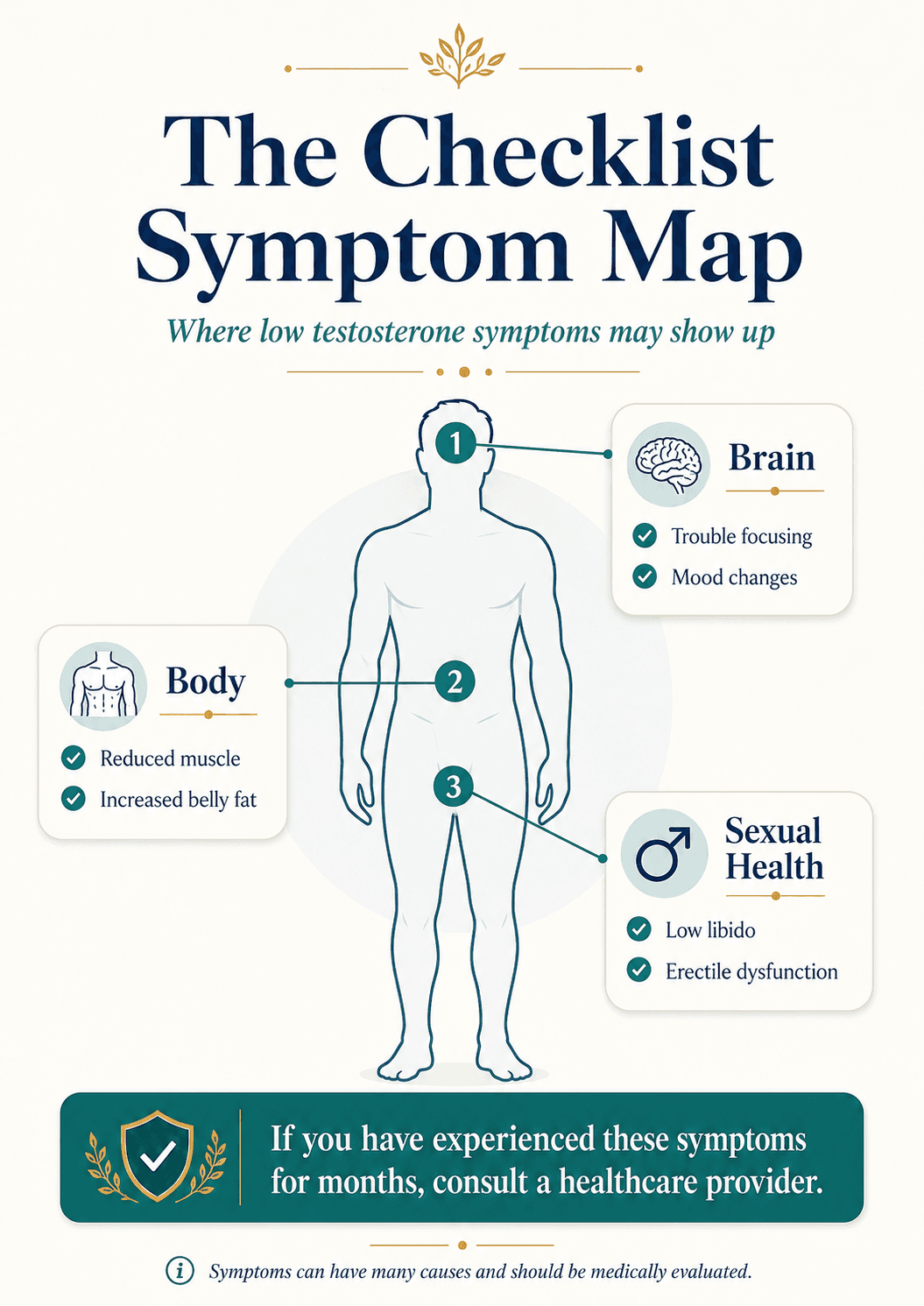
Symptoms of low testosterone include low energy, reduced muscle mass, increased body fat, low libido, erectile dysfunction, mood changes, and cognitive difficulties. Low testosterone symptoms show up in many ways. You do not need all the signs to have a problem, but having several of them is a reason to consult a doctor.
- Low energy levels and constant tiredness
- Less muscle mass and bone mass over time
- More body fat, especially belly fat
- Low sex drive or libido
- Trouble getting or keeping erections (sexual function problems)
- Less hair growth on face (facial hair) and body
- Feeling sad or depressed
- Trouble focusing or remembering things
- Hot flashes (like women have in menopause)
- Small or shrinking testicles
- Increased risk of cardiovascular issues
These signs may also come from other health issues. For example, obstructive sleep apnea alone may cause daytime tiredness, and high blood pressure medications might cause erection problems. That is why blood tests are so important.
When to See a Doctor
You should see a doctor if you have several symptoms of low testosterone for many months. Do not wait if these signs bother your daily life. Your doctor will ask about your health history and risk factors. And then he will order blood tests. The best time for testing is in the morning, as testosterone levels are highest then.
The doctor will check two things. The first is your total testosterone level measured in nanograms per deciliter (ng/dL), and the second is your free testosterone level. Free testosterone is the amount your body can actually use. Some men have testosterone levels normal for total testosterone but low free testosterone. This still counts as male hypogonadism.
If testosterone therapy or hormone replacement therapy is recommended, certain medications and testosterone products like oral testosterone are available. However, treatment carries risks, including increased red blood cells, blood clots, and worsening of obstructive sleep apnea. Some men may also experience reduced sperm production and sperm count while taking hormone replacement therapy.
Frequently Asked Questions (FAQs)
What are the reasons for having low testosterone?
The first reason is age-related decline in aging men, sometimes called late onset hypogonadism. Testosterone levels gradually decline with age. Secondly, your diet, lifestyle choices, and chronic stress levels reduce the baseline testosterone levels. Medical conditions affecting sex organs and pituitary hormones also contribute.
How does a person act when he has low testosterone?
A person with low testosterone may experience constant fatigue, low libido, mood changes, difficulty concentrating, and reduced interest in activities. If a person is diagnosed with having low testosterone levels, he needs to visit a doctor. Secondly, he needs to change lifestyle habits and include a healthy diet full of vitamins. Third, he must avoid stress, as it directly impacts your testosterone levels.
How do you fix low testosterone?
Doctors may prescribe testosterone replacement therapy or hormone therapy as treatments for clinically confirmed hypogonadism. However, lifestyle modifications including losing weight, regular physical activity, adequate sleep, stress management, and proper nutrition may help support natural testosterone production. Testosterone is a Schedule III controlled substance requiring medical supervision. Treatment should only be pursued under guidance from healthcare professionals who can monitor for risks including blood clots, cardiovascular issues, and changes in red blood cells.
What are the five signs of low testosterone?
The five signs of having low testosterone levels are constant fatigue, low libido (sexual drive), chronic stress response, weak muscle tissues, and reduced sperm production affecting fertility. Besides, some other signs such as low energy levels and brain fog may also indicate low testosterone levels.
How serious is low testosterone?
Chronically low testosterone may be dangerous if left untreated. Beyond fatigue and low libido, it may also cause serious health consequences. These include increased risk of cardiovascular issues, weak bones (osteoporosis leading to reduced bone mass), and constant stress. The condition affects sexual function and overall quality of life.
How do I boost my testosterone?
You may support your testosterone levels by getting enough sleep up to 8 hours, taking a healthy diet, and doing regular physical activity. Moreover, you may also support levels by reducing chronic stress, as it increases cortisol levels which negatively affects testosterone production. Losing weight if obese can help restore hormonal balance. However, these lifestyle changes work best as preventive measures and may not fully restore levels in men with clinically diagnosed testosterone deficiency syndrome.
Disclaimer
This content is for educational purposes only and does not replace medical advice. Testosterone therapy and hormone-related decisions should be guided by a licensed healthcare provider.
References
- Hackett G, Kirby M, Edwards D, Jones TH, Wylie K, Ossei-Gerning N, David J, Muneer A. British Society for Sexual Medicine Guidelines on Adult Testosterone Deficiency, With Statements for UK Practice. J Sex Med. 2017 Dec;14(12):1504-1523. doi: 10.1016/j.jsxm.2017.10.067. PMID: 29198507. https://pubmed.ncbi.nlm.nih.gov/29198507/
- Bassil N, Alkaade S, Morley JE. The benefits and risks of testosterone replacement therapy: a review. Ther Clin Risk Manag. 2009 Jun;5(3):427-48. doi: 10.2147/tcrm.s3025. PMID: 19707253. PMCID: PMC2701485. https://pubmed.ncbi.nlm.nih.gov/19707253/
- Schiffer L, Kempegowda P, Arlt W, O'Reilly MW. MECHANISMS IN ENDOCRINOLOGY: The sexually dimorphic role of adipose tissue in the generation and metabolism of steroid hormones. Eur J Endocrinol. 2017 Nov;177(5):R199-R214. doi: 10.1530/EJE-17-0124. PMID: 28801420. PMCID: PMC5632268. https://pubmed.ncbi.nlm.nih.gov/28801420/
- Fernandez CJ, Chacko EC, Pappachan JM. Male Obesity-related Secondary Hypogonadism - Pathophysiology, Clinical Implications and Management. Eur Endocrinol. 2019 Aug;15(2):83-90. doi: 10.17925/EE.2019.15.2.83. PMID: 31616501. PMCID: PMC6785966. https://pubmed.ncbi.nlm.nih.gov/31616501/
- Rastrelli G, Carter EL, Ahern T, Finn JD, Antonio L, O'Neill TW, Bartfai G, Casanueva FF, Forti G, Giwercman A, Han TS, Huhtaniemi IT, Kula K, Lean ME, Pendleton N, Punab M, Boonen S, Vanderschueren D, Wu FC, Maggi M; EMAS Study Group. Development of and Recovery from Secondary Hypogonadism in Ageing Men: Prospective Results from the EMAS. J Clin Endocrinol Metab. 2015 Aug;100(8):3172-82. doi: 10.1210/jc.2015-1571. PMID: 26086329. PMCID: PMC4524991. https://pubmed.ncbi.nlm.nih.gov/26086329/
- Grossmann M. Hypogonadism and male obesity: Focus on unresolved questions. Clin Endocrinol (Oxf). 2018 Jul;89(1):11-21. doi: 10.1111/cen.13723. PMID: 29797671. https://pubmed.ncbi.nlm.nih.gov/29797671/
- Zitzmann M. Testosterone deficiency, insulin resistance and the metabolic syndrome. Nat Rev Endocrinol. 2009 Dec;5(12):673-81. doi: 10.1038/nrendo.2009.212. PMID: 19859074. https://pubmed.ncbi.nlm.nih.gov/19859074/
- Groti Antonič K, Antonič B, Žibert J, Svare A. Klinefelter syndrome: the commonest form of hypogonadism, but often overlooked or untreated. Dtsch Arztebl Int. 2013 May;110(20):347-53. doi: 10.3238/arztebl.2013.0347. PMID: 23825486. PMCID: PMC3689414. https://pubmed.ncbi.nlm.nih.gov/23825486/
- Cohen J, Nassau DE, Patel P, Ramasamy R. Low Testosterone in Adolescents & Young Adults. Front Endocrinol (Lausanne). 2020 Jan 31;10:916. doi: 10.3389/fendo.2019.00916. PMID: 32082260. PMCID: PMC7005003. https://pubmed.ncbi.nlm.nih.gov/32082260/
- Dandona P, Dhindsa S. Update: Hypogonadotropic hypogonadism in type 2 diabetes and obesity. J Clin Endocrinol Metab. 2011 Sep;96(9):2643-51. doi: 10.1210/jc.2010-2724. PMID: 21896895. PMCID: PMC3167667. https://pubmed.ncbi.nlm.nih.gov/21896895/
- Qu M, Feng C, Wang X, Gu Y, Shang X, Zhou Y, Xiong C, Li H. Association of Serum Testosterone and Luteinizing Hormone With Blood Pressure and Risk of Cardiovascular Disease in Middle-Aged and Elderly Men. J Am Heart Assoc. 2021 Apr 6;10(7):e019559. doi: 10.1161/JAHA.120.019559. Epub 2021 Mar 19. PMID: 33739129. PMCID: PMC8174322. https://pubmed.ncbi.nlm.nih.gov/33739129/
- Bekaert M, Van Nieuwenhove Y, Calders P, et al. Determinants of testosterone levels in human male obesity. Endocrine. 2015 Sep;50(1):202-11. doi: 10.1007/s12020-015-0563-4. PMID: 25771885. PMCID: PMC4546699. https://pubmed.ncbi.nlm.nih.gov/25771885/