Testosterone is a steroid hormone primarily produced in the testes in men and in the adrenal glands and ovaries in women. The adrenal glands are involved in hormone production in both men and women, producing DHEA, which can be converted into testosterone.
Testosterone is one of the main reproductive hormones that regulates muscle mass, libido, bone density, mood, and energy levels. Normal levels vary by age and gender, and imbalances may lead to various physical and psychological symptoms.
In its natural form it is an anabolic androgen that plays an important role to improve sexual performance and muscle mass. Hormone levels, including testosterone, are regulated in the blood and can fluctuate due to various factors.
As per American urology association, less than 300 nanograms per deciliter ng dl can affect several body functions depending on age, gender and health status. TRT is used to treat conditions related to hypogonadism with outcomes and risks still under research.
The hormone matters because it may impact sperm product, bone density, mood, energy levels and over all psychological and physical health. Optimal testosterone levels are linked to better mood, energy levels, and a general sense of vitality; low levels can contribute to depression.
So, knowing about what testosterone is actually for people who question their low energy and libido. Usually, adult males are interested and search for Testosterone replacement therapy and its effects. However the effects of TRT are not identical for each individual and mostly depend on health conditions.
Additionally, factors like age, stress, sleep cycle, dietary habits, lifestyle, body mass, frequency of sexual activity and age related issues may affect how hormones work in the body.
In women, testosterone produced in adult females is mostly converted to estradiol in the ovaries, and it plays a role in enhancing libido.
Disclaimer: Testosterone related products and therapies are only approved by US Food and Drug Administration (FDA) in specific medical conditions. Their use is not universally approved and remains an area of ongoing medical research.
Is Testosterone Naturally a Steroid or Anabolic?
Natural testosterone is a steroid hormone that works as a signaling molecule to help in regulating multiple functions in the body. It should not be confused with anabolic steroids, which are synthetic versions often misused to build muscle mass and may cause artificially high testosterone levels in the body. Once produced the hormone is converted to dihydro-testosterone ( DHT) by the enzyme 5α-reductase. It is medically suggested that DHT has a comparatively more potent androgenic effect which is significant to develop male sexual characteristics.
Types of Testosterone Present in Men and Women
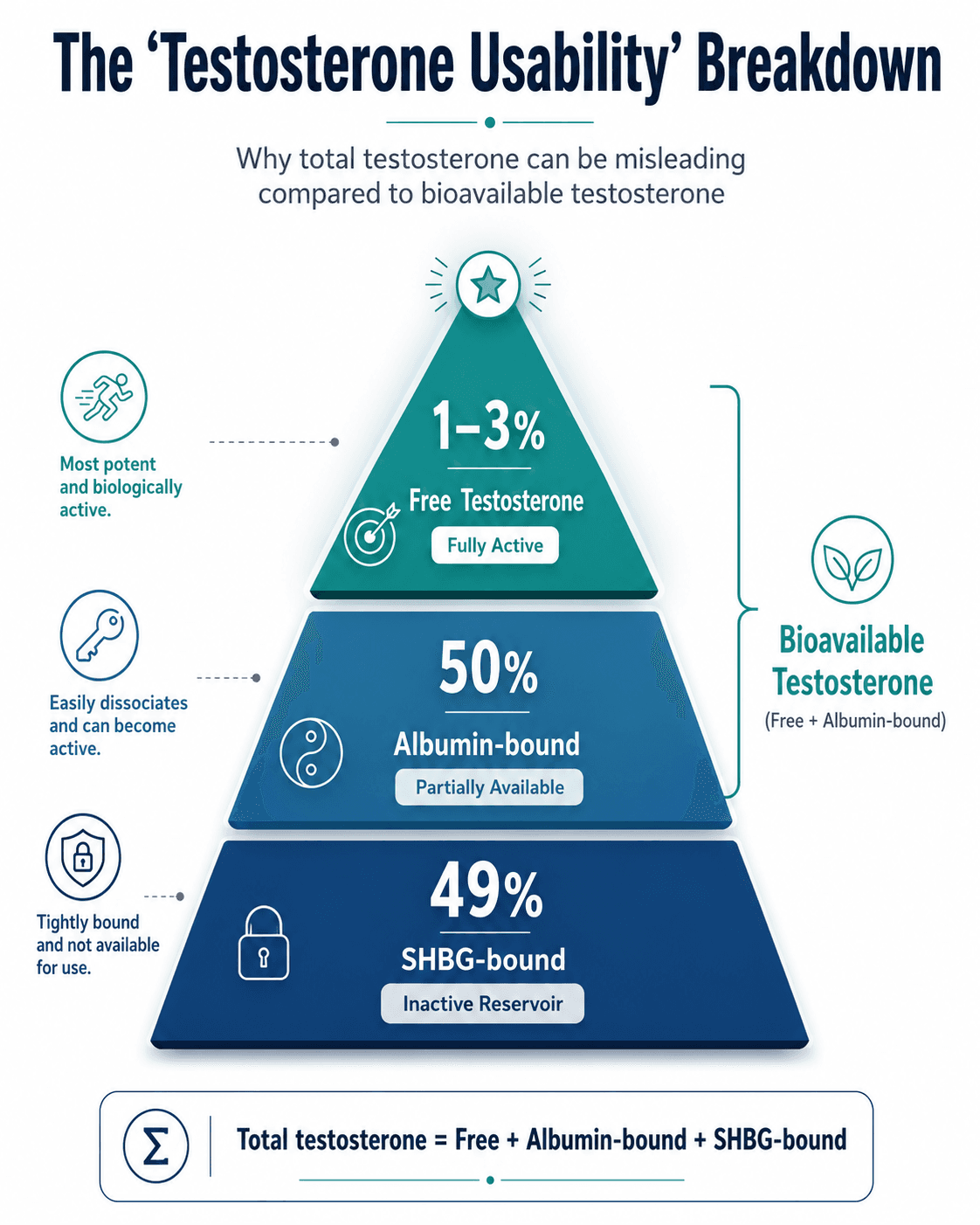
Mainly there are three types of testosterones produced in adult males and somehow in females. These types are further categorised as per their function.
- Unbound often known as free testosterones
- Albumin bound often known as loosely bound
- Sex hormone binding globulin (SHBG) tightly bound
Free testosterones:
These are only 1-3% of total testosterones that can enter and act on cellular level. These are most active bioavailably form and not bound to protein like albumin.
Albumin bound
These are 50% of total bioavailable testosterone readily available to enter tissues. This type of T acts as a high-capacity carrier and loosely binds to a protein called albumin. As per pubmed there are multiple researchers that happened to determine the usefulness of these testosterones. It was found that testosterone bound to albumin is not inactive. It still plays an important role in the body and contributes significantly to overall hormone activity.
SHBG Bound Testosterone
Sex hormone–binding globulin, is a circulating steroid. It is bound to protein produced by the liver and binds tightly to hormones like testosterone. This form of testosterones is biologically inactive. It still adds to the total serum testosterone in the blood but does not directly act on tissues. So, high or low levels of SHBG comes with different issues like low libido or acne growth.
Free vs Bound Testosterone: Key Differences
| Parameter | Free Testosterone | Bound Testosterone |
| Definition | Testosterone not attached to any protein | Testosterone attached to proteins (mainly SHBG & albumin) |
| Percentage in Blood | Very small fraction (~1–4%) | Majority (~96–99%) |
| Biological Activity | Directly active and usable by tissues | Mostly inactive while bound |
| Ability to Enter Cells | Can easily enter cells and bind receptors | Cannot act until released from proteins |
| Function in Body | Drives muscle growth, libido, energy, mood | Acts as a reservoir/storage form |
| Binding Proteins | Not bound | Strongly bound to SHBG, weakly to albumin |
| Clinical Importance | Key indicator of hormonal activity and symptoms | Reflects total hormone supply but not immediate usability |
| Measurement Methods | Measured via equilibrium dialysis or calculated | Measured as part of total testosterone |
| Bioavailability | Fully bioavailable | Partially available (albumin-bound may become active) |
| Clinical Interpretation | Low levels may cause symptoms even if total T is normal | High levels may not mean high activity if mostly bound |
How Does Testosterone Travel and Act in the Body?
Research indicates that after being produced in testes, the testosterone circulating in the blood stream binds with specific receptors in tissues, bones, muscles and reproductive system. Blood levels of testosterone are regulated by the hypothalamus, pituitary gland, and gonads, and abnormal blood levels whether too high or too low can significantly affect health and behavior. The interaction between receptors and hormones create significant responses in the body.
Secondly, the production of the hormone is controlled by hypothalamic pituitary glands (HPG) which keep varying by certain periods of time.
For men with low blood testosterone levels and symptoms likely caused by a low level, the benefits of hormone replacement therapy usually outweigh potential risks, but for most other men, it's a shared decision with their doctor.
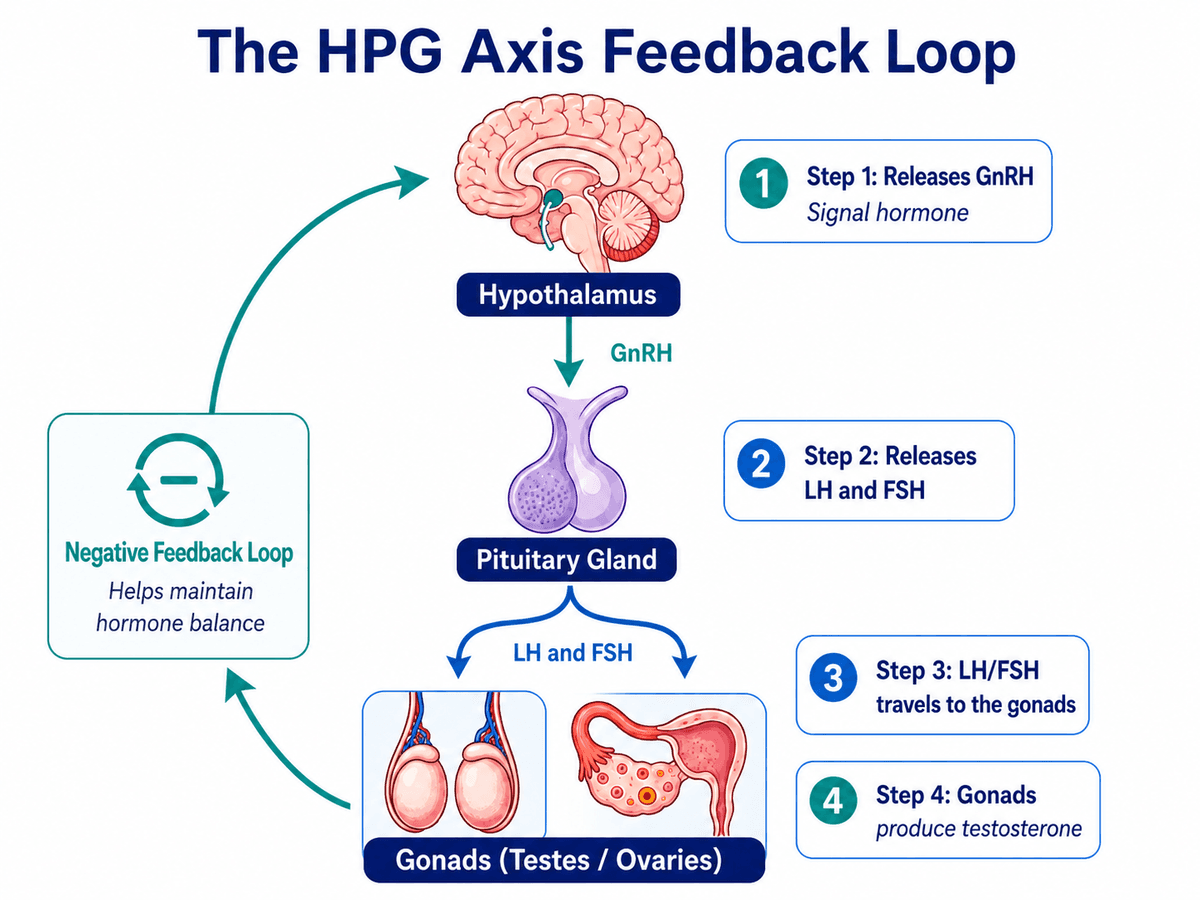
Brain-Hormone Feedback System (HPG Axis)
The human body has a communication system between the brain and reproductive organs. This specific system is called HPG axis which is required for hormonal balance in the body. Here we have step by step working of this feedback loop:
- Hypothalamus releases gonadotropin releasing hormone (GnRH) as a signal
- Response comes from pituitary gland by releasing LH and FSH hormones
- LH travel to female ovaries and FSH to the male testes
- Gonads produce testosterone and other hormones to improve sexual function
How the Body Maintains Balance?
When testosterone levels are low or high, the brain starts to send signals. The signals indicate to avoid excessive production. This system creates a natural feedback loop to maintain hormone stability. This systematic loop is significant to:
- Control puberty and sexual development
- Supports sperm production
- Stable overall hormonal balance
- Prevent uncertain medical conditions
Some factors like stress, unhealthy lifestyle, high drug intake may disrupt hormone signals. The disruption in the brain feedback loop may cause reduced testosterone production.
What Is the Main Function of Testosterone?
According to Harvard health research, androgen has mood and cognitive function, reproductive production, and helps in red blood cell production. Testosterone is also key for maintaining bone mass and density, helping to prevent osteoporosis. The hormone has its anabolic effects and controls excessive body mass accumulation. Hormone levels, including testosterone, can impact these important functions.
Key Functions in Men
According to the (NIH) National Institute of Health and Sciences, the hormone has two types of function in men. These can be referred to as primary and secondary. The primary function is related to regulating libido and erectile function and secondary is to maintain metabolic characteristics with growing age.
Muscle growth: The hormone boosts muscle growth, bone health and bone density, stimulating muscle bulk strength and reduces the risk of osteoporosis.
Sperm production: It is necessary for sex drive, erectile functioning and spermatogenesis. It also supports the prostate gland and helps in producing new red blood cells in the bone marrow.
Voice and physical changes: During the male puberty phase, testosterone is responsible for deepening the voice and for the development and growth of facial and body hair, as well as pubic hair, during puberty and throughout life. Even in male infants, testosterone plays a role in early sexual development before puberty starts.
Key Functions in Adult Females
It is important to consider that testosterone hormone is important for women too. In adult females, it is one of several androgens produced in small amounts by the ovaries and adrenal gland. Different research indicates that proper combination of testosterone and estrogen is essential for female ovaries to work normally.
Hormonal balance: The required level of testosterone creates hormonal balance in women. It prevents excessive hair growth and acne like problems. In some cases, conditions like polycystic ovary syndrome (PCOS) may cause too much testosterone in women, which leads to irregular cycles and other symptoms.
Bone strength: The average level of the hormone maintains bone mass, physical strength and energy levels.
Libido: Androgen is a major drive for sexual drive and satisfaction.
General Health: The hormone is effective to act as neuroprotective, anti-inflammatory agent and also add in cardiovascular health.
How Do Testosterone Levels Change With Age and Time?
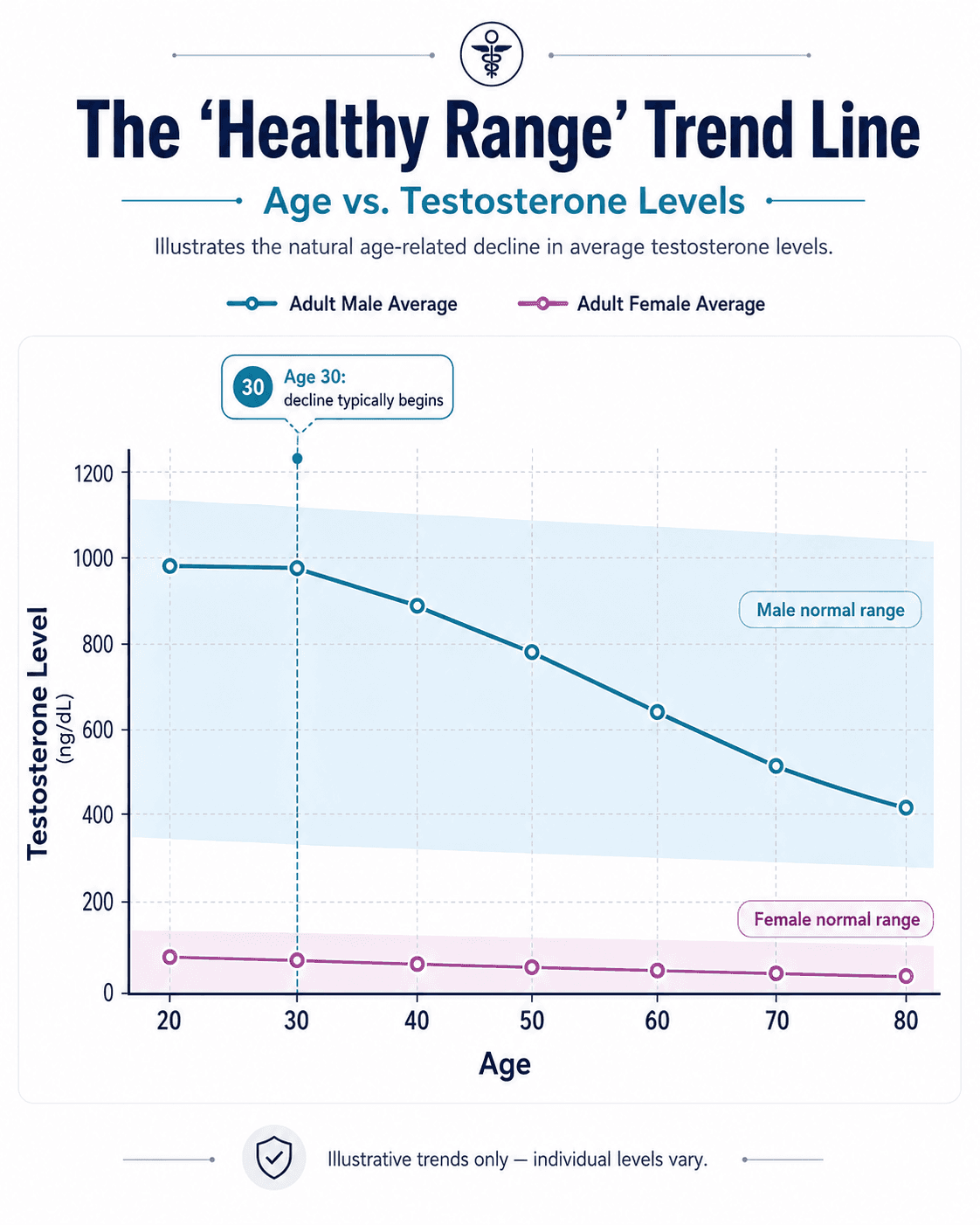
As per pubmed, primary androgen levels go at peak in teen age to early adulthood ( 15 to 20 age). It may sustain from age 25 to 30. Research shows that the levels of testosterone start facing decline by age thirty in both male and females.
What Are Normal Testosterone Levels?
Doctors usually check testosterone levels in men through blood samples taken in the morning. Here is breakdown of normal levels by age and gender:
| Group | Total (ng/dL) | Free Testosterone (pg/mL) | Notes |
| Adult Men (19–39 yrs) | ~300 – 1000 | ~9 – 30 | Peak levels, highest in early adulthood |
| Adult Men (40–59 yrs) | ~300 – 900 | ~7 – 25 | Gradual decline may begin |
| Older Men (60+ yrs) | ~250 – 800 | ~5 – 20 | Age-related decline is common |
| Adult Women (19–49 yrs) | ~15 – 70 | ~0.5 – 8 | Much lower than men |
| Postmenopausal Women | ~10 – 50 | ~0.3 – 5 | Further decline after menopause |
| Children (Pre-puberty) | Very low (<30) | Very low | Levels rise during puberty |
Anything outside this range may point to abnormal testosterone levels and should be discussed with a doctor.
[cta]Do Testosterone Levels Fluctuate Daily?
Yes, different research indicates that male sex hormones fluctuate daily and at different times. The matter of fact is, it is not attributed to every individual but varies according to each person's routine and lifestyle. It is suggested that 1.6% of the total decrease annually and 55% till mid day if we talk about twenty four hours.
We may say that at morning times the testosterone levels rise to peak and then start declining. As we discussed above, the hormone plays several roles in maintaining different body functions and gets consumed with time.
Does GLP-1 or Medication Affect Testosterone Levels?
In past researchers it has been indicated that GLP-1 or medication like semaglutide and liraglutide may affect T-levels. In 2025 a study was conducted taking 400 men as sample with type two diabetes taking GLP-1 medications. Researchers observe that there was a significant boost in bioavailable male sex hormones and a clear improvement in blood sugar (HbA1c).
Different studies suggest that GLP-1 drugs may improve free T-levels but SHBG showed no major change. Secondly these medications are observed to boost metabolism and maintain body weight. However, further research is still needed in this area of study.
What Are the Symptoms of Low Testosterone Levels?
As we discuss above, low androgen may happen gradually, depending on age and other factors. So the signs at the initial level are subtle. Both men and women may experience different signs based on various factors.
Symptoms in Men: In men, low testosterone symptoms are also linked to a condition known as male hypogonadism. So the low T may lead to these symptoms:
- Reduce sexual drive/performance
- Erectile dysfunction
- Fatigue and low energy
- Decreased sperm production
- Weight gain and increased body fat
- Memory related problems
Symptoms in Women: Biologically women have less testosterone in their blood. When women have testosterone deficiency they may experience these symptoms:
- Reduce sexul stamina
- Low libido
- Facial hair growth
- Muscle fatigue
- Increase in body weight
- Energy and mood fluctuations
Is Having High Testosterone Good or Harmful?
Harvard health education center suggested that having high testosterone levels is not common in men. If someone is having high levels they may face physical and neurological changes. Normally artificial resources like anabolic steroids can be the reason for artificially high testosterone levels, which is only required in certain medical conditions.
What Happens When Testosterone Is High?
High levels may affect individuals in different ways based on duration, cause, age and individual sensitivity. Some may not have prominent effects while others may get affected due to external factors.
Effects in Men: Men may face oily skin, mood swings, aggregation, irritating behaviour, infertility, increased muscle mass with increased risk of injuries, male pattern baldness and testicular shrinkage. In some cases men do not experience any symptoms especially if T level is slightly elevated.
Effects in Women Women may face thinning hair on the scalp, irregular menstrual cycle, mood variations and hirsutism. In some cases, an adrenal gland disorder or polycystic ovary syndrome can also cause high testosterone in women. We need to keep in mind, the symptoms may vary by person to person.
How Is Testosterone Tested With a Blood Test?
If you are interested to know your T-count, it is medically suggested to have a blood test in the early morning. Hypogonadism (Low-T) generally requires these type of tests on blood samples to check serum testosterone levels:
- Total-T Test to measure bound and unbound testosterone level.
- Free testosterone to measure active-T level
- Bioavailable-T test is less common to know loosely bound testosterone
What Are Natural Testosterone Boosters?
Natural testosterone boosters are naturally occurring supplements used to increase the baseline levels of primary androgen. Unlike the TRT method, natural testosterone boosters support hormones in the body, which improve testosterone levels.
There are many supplements that act as natural testosterone boosters. Here are a few of them:
- Zinc
- Vitamin D
- Tongkat Ali
- Fenugreek
- Ashwagandha
Additionally, lifestyle habits (regular sleep of 8 hours and balanced diet) also act as natural testosterone boosters.
What is Testosterone Replacement Therapy?
TRT stands for Testosterone Replacement Therapy. It is a medical testosterone treatment used to restore or improve production of testosterone in men only. Health professionals prescribe it when the blood tests confirm low androgen levels. TRT directly injects testosterone into the body. Multiple methods are used for TRT therapy in men. Here are some of them:
- Injections containing androgen
- Gels contain T
- Skin patches of male sex hormone
- Small hormone pellets
Risks of Testosterone Therapy (TRT)
TRT often improves symptoms such as low energy, weak muscle strength, infertility and reduced sex drive. This may also come with risks like blood clots, sleep apnea, PSA level changes, fertility suppression and an increased risk of cardiovascular disease. Men with existing prostate cancer are usually advised to avoid testosterone treatment due to safety concerns.
So, considering the risks, do not rely on ads or quick online quizzes. You need real data from your own body. Ask yourself if you have true symptoms. Ask if you are done having children. Think about whether you can commit to lifelong treatment and blood tests.
Note: The benefits of T-replacement therapy are clearly observed but risks may vary. There is a conflict in past researchers on the ratio and form of TRT risks and limitations. If TRT has multiple advantages, you also need to deal with some disadvantages. TRT outcome totally depends on individual variability so visit an authentic medical practitioner before making a decision. Moreover, the procedure is always exercised under strict medical supervision and is still under research.
Does Not Ejaculating Increase Testosterone?
There is no medical evidence that not ejaculating for long term can increase T-level. It is medically indicated that people who ejaculate regularly may not get affected. This may have short term effects on hormones such as low energy or low sex drive.
Conclusion
To cap up the topic we may say that primary androgen is an essential hormone for males and females. On one hand it has vital functions to perform in the human body meanwhile on the other it comes up with certain complexities. Benefits may exist but that are not universal and depend on the average count of total T-level. If you are dealing with low or high T symptoms or having any complexity cognitively, psychologically or physically, it's better to seek a professional guide.
As per above discussion we know that the area of study relates to T-count and TRT is still under research. Whether you are thinking about having any natural way to improve T-level or interested in T-replacement therapy, consider related risks too. In addition, keep in mind that every benefit is attached to some uncertainties, so personalized medical guidance is compulsory.
FAQs
Are testosterone boosters safe?
Most testosterone boosters come with some risks. Their results and usage effects depend on an individual's need and medical condition.
What are testosterone injections?
It is a prescribed T improvement therapy for men with low testosterone level or puberty.
What are risks associated with testosterone injections?
Increased red blood cell count, swelling and pain, hair growth, increased body weight are some of the risks associated with therapeutic injections.
Can you take GLP and testosterone together?
Yes, these can be taken together but with medical guidance and under proper supervision.
Does taking TRT raise PSA level or risk of prostate cancer?
Some research shows TRT therapy may slightly raise prostate-specific antigen levels and may add to the risk of prostate cancer.
Can Low Testosterone Cause Erectile Dysfunction?
Yes, low testosterone levels in men may contribute to erectile dysfunction. However, ED is not always caused by low T alone. Other factors like blood flow, nerve function, stress and overall health also play a role. A blood test is the right way to confirm if low testosterone is the actual reason.
References:
- https://www.fda.gov/drugs/postmarket-drug-safety-information-patients-and-providers/testosterone-information
- https://pubmed.ncbi.nlm.nih.gov/4040924/
- https://pmc.ncbi.nlm.nih.gov/articles/PMC2890370/
- https://medlineplus.gov/lab-tests/testosterone-levels-test/#:~:text=Free%20testosterone%20is%20more%20available,is%20necessary%20for%20your%20health.
- https://www.health.harvard.edu/healthy-aging-and-longevity/testosterone--what-it-does-and-doesnt-do#:~:text=Can%20you%20have%20too%20much,League%20games%2C%20and%20sexual%20promiscuity.
- https://pmc.ncbi.nlm.nih.gov/articles/PMC12752444/