Testosterone typically begins to decline in the 30s. Studies show an average gradual decrease of about 1% per year. Symptoms often become more noticeable around age 40, but the rate varies widely.
Clinical research shows that this decline is slow and varies between individuals. Some men notice symptoms changes earlier, while others maintain stable hormone levels for years. Because of this variation, normal aging alone cannot determine testosterone deficiency.
When Testosterone Levels Peak Before Decline
Testosterone like other hormones in the endocrine system peaks around age 19, then gradually begins to decline.
In a clinical study from PLOS ONE, testosterone levels were shown to peak around age 19, followed by a gradual decline toward midlife.
This peak stage sets the baseline for future hormonal changes.
How Hormones Change Over Time
Testosterone declines slowly and gradually across adulthood not suddenly.
A longitudinal clinical study from the Journal of Clinical Endocrinology & Metabolism found that decreasing testosterone levels occur steadily across adulthood rather than suddenly.
Key findings include:
- Hormone levels decline slowly
- Free testosterone declines faster than total levels
- Variation increases with age
This explains why the term "male menopause" is not considered a precise diagnosis. The term is borrowed from female menopause, where women experience hot flashes and hormonal shifts. However, men's testosterone decline is gradual and lacks the rapid hormonal changes seen in female menopause, which is why the comparison is imprecise.
How Fast Testosterone Declines Each Year
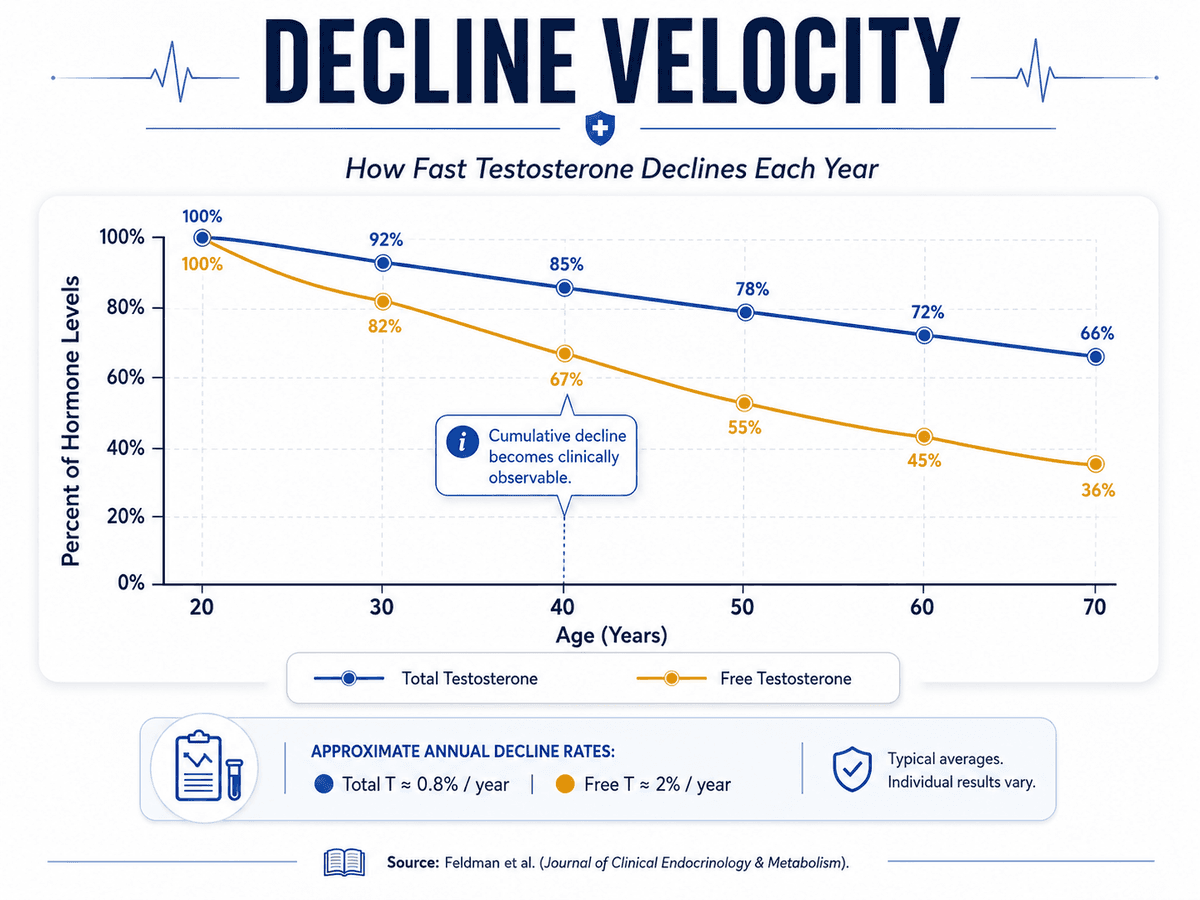
In a clinical study from the Journal of Clinical Endocrinology & Metabolism, total testosterone was found to decline by about 0.8% per year, while free testosterone declined at a faster rate of about 2% per year.
This slow decline explains why many men do not notice changes immediately.
Why Some Men Notice Changes in Their 30s
Testosterone decline can begin in the 30s, but changes at this stage are usually mild.
A clinical study from the Journal of Clinical Endocrinology & Metabolism showed that testosterone levels decline gradually starting in early adulthood, even before midlife.
At this stage, early changes may be influenced by both gradual decline and individual health factors:
- Increased body fat affecting hormone levels
- Poor sleep or sleep apnea
- Chronic stress affecting energy levels
- Reduced recovery affecting muscle mass and strength
These factors have been linked to lower testosterone levels in clinical research, particularly in studies on overall health and obesity.
Why Changes Become More Noticeable Around Age 40
By age 40, cumulative decline produces observable symptoms.
A clinical study from the New England Journal of Medicine found that symptoms such as reduced libido, fatigue, and erectile dysfunction are more commonly reported in middle-aged men with lower testosterone levels.
At this stage, several factors combine:
- Greater variation in levels of testosterone
- More consistent changes in sexual function
- Declines in muscle mass and strength
- Lower energy levels that persist over time
These patterns reflect the cumulative effect of gradual decline rather than a sudden drop.
Because symptoms become more consistent, this phase is often the stage when clinicians recommend evaluation using repeat blood tests.
What Influences Healthy Testosterone Levels Decline
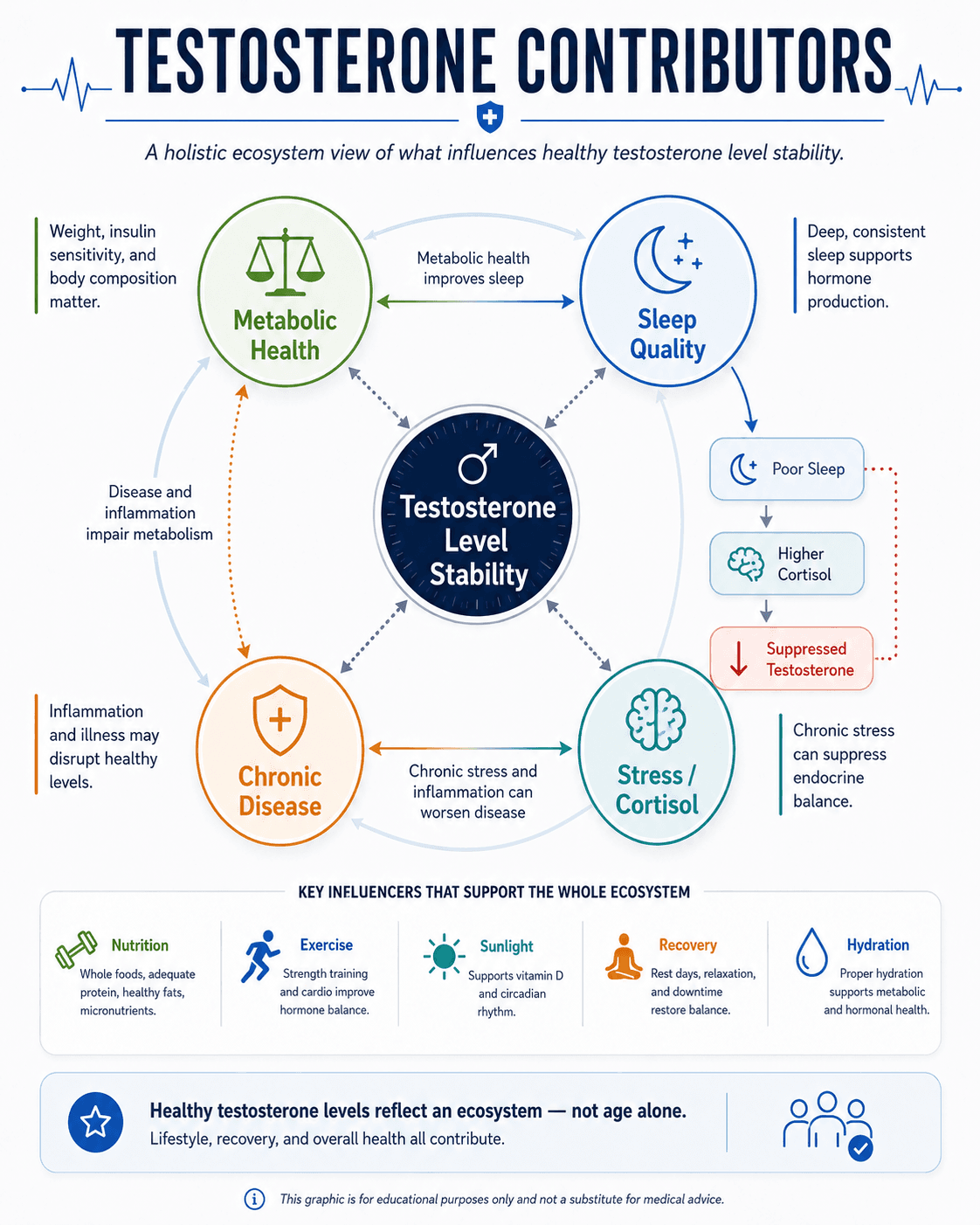
Age alone does not determine testosterone decline; other factors play an important role. Clinical research shows that several biological and health factors can influence both the timing and severity of changes.
- Body fat and metabolic health
- In a clinical review, obesity and high levels of body fat were linked to reduced testosterone levels and metabolic dysfunction.
- Sleep quality and sleep apnea
- A clinical study found that obstructive sleep apnea is associated with lower testosterone levels, even after accounting for age and obesity.
- Stress and hormonal regulation
- In a clinical study published in Frontiers in Endocrinology, stress-induced increases in cortisol were shown to suppress testosterone levels by affecting the body’s hormonal regulation system.
- Chronic illness and metabolic conditions
- Clinical findings show that conditions such as metabolic syndrome and chronic disease are associated with lower testosterone levels.
These findings explain why testosterone drops may appear earlier or be more noticeable in some individuals, even before typical men age-related changes.
[cta]
What Testosterone Does in the Body
Testosterone supports:
- Sexual health, including sex drive and sexual function
- Maintain muscle mass and strength
- Bone density and protection against bone loss
- Body hair growth
- Mood and energy
Changes in levels of testosterone may affect these areas, but they are not specific to more testosterone alone.
Symptoms Often Associated With Low Testosterone
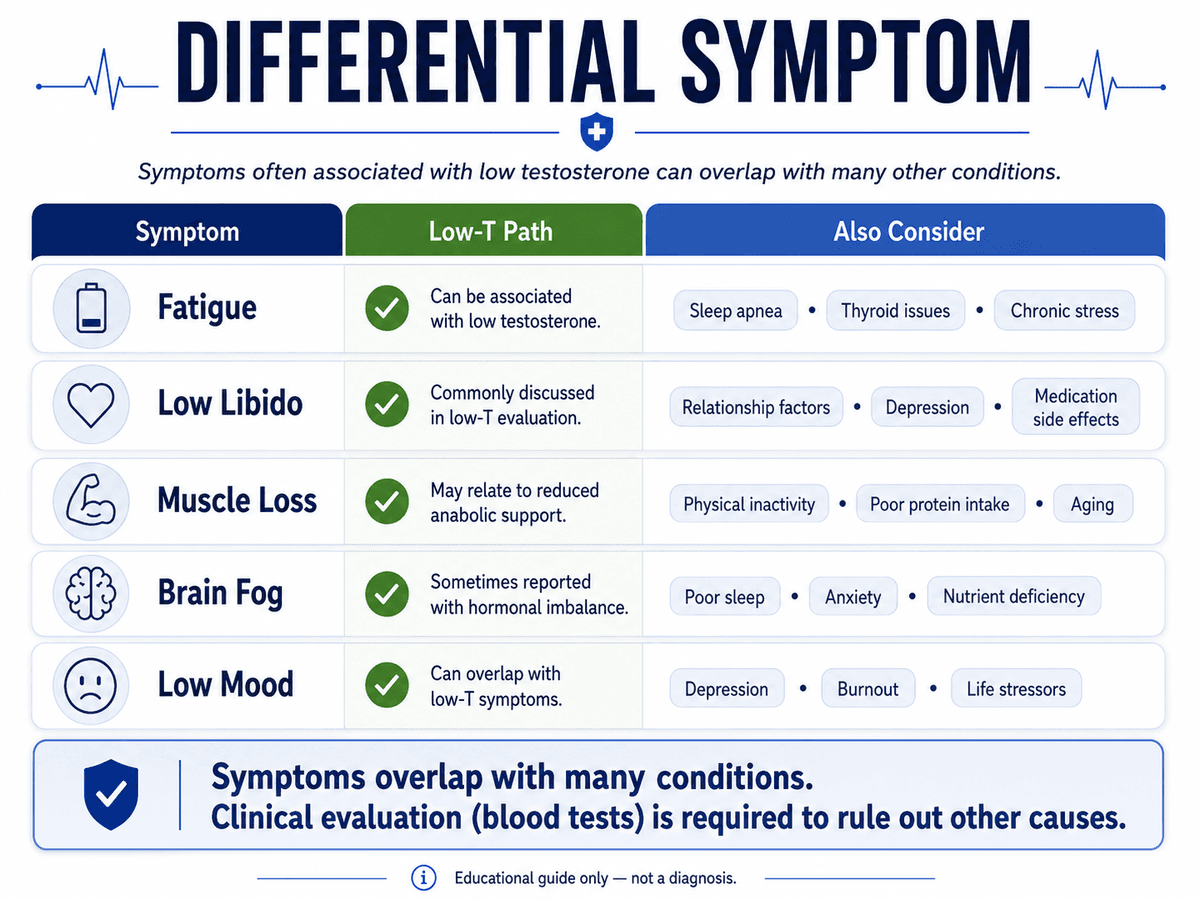
Several symptoms include:
- Reduced sex drive
- Erectile dysfunction
- Low energy levels
- Reduced muscle mass and strength
- Emotional symptoms such as mood swings, including anxiety, irritability, and in some cases depression
- Increased body fat and and unexplained weight gain
These symptoms overlap with other conditions.
When Testosterone Decline May Be Considered Abnormal: Recognizing Abnormal Symptoms
While decline is normal part, evaluation may be needed when experiencing abnormal symptoms such as
- Symptoms persist
- Energy in low levels
- Changes in sexual function affect daily life
Clinical guidelines recommend confirming findings with repeat blood tests, as testosterone levels can fluctuate daily.
Treatment Options for Low Testosterone
When clinical evaluation confirms low t levels through repeat tests and lab values, several treatment approaches may be considered based on individual health factors and underlying conditions.
Lifestyle Modifications
For some men, lifestyle changes can support healthy testosterone levels. Regular exercise has been shown in clinical research to help maintain muscle mass. Stress management, improved sleep quality, and achieving a healthy weight may also influence testosterone production.
Testosterone Replacement Therapy (TRT)
Testosterone replacement therapy is a medical treatment option for men with clinically diagnosed testosterone deficiency. TRT is available in various formulations. Clinical guidelines indicate that testosterone therapy may help address symptoms such as low energy levels or a general lack of motivation, reduced sex drive, mood changes, and decreased motivation when properly prescribed and monitored by a primary care physician.
Important Considerations
Treatment decisions should be made in consultation with a healthcare provider after thorough medical evaluation and other tests to rule out alternative causes. While testosterone replacement is generally safe when appropriately monitored, it is not suitable for all individuals.
Most men who pursue treatment require ongoing monitoring to ensure lab values remain within the normal range and to assess symptom improvement over time.
FAQ
Does testosterone always decline with age?
Decline is common, but the rate varies.
Can younger men in early adulthood have low testosterone?
Yes. It may be linked to lifestyle factors or medical conditions.
Is male menopause real?
The term male menopause is not a formal diagnosis.
Can lifestyle result in low testosterone levels?
Yes. Sleep, stress, and body composition affect hormone levels.
Conclusion
What age testosterone declines is best understood as a gradual physiological process rather than a fixed milestone. Evidence from longitudinal and population-based studies shows that decline may begin in early adulthood, with more noticeable changes often emerging by midlife.
However, age alone does not explain individual outcomes. Variations in hormone levels are strongly influenced by metabolic health, sleep quality, stress-related hormonal regulation, and underlying medical conditions. This explains why some individuals experience symptoms earlier or more significant changes, while others maintain stable levels for longer periods.
Because of this variability, the presence of noticeable symptoms such as reduced sex drive, fatigue, or changes in muscle mass and strength should not be attributed to age alone. Clinical evaluation using repeat blood tests remains the most reliable method to determine whether testosterone deficiency is present.
References
Feldman HA, Longcope C, Derby CA, et al. Age trends in serum testosterone in middle-aged men: Massachusetts Male Aging Study. J Clin Endocrinol Metab. 2002 Feb;87(2):589–598.
doi: 10.1210/jcem.87.2.8201. PMID: 11836290. https://pubmed.ncbi.nlm.nih.gov/11836290/
Wu FC, Tajar A, Beynon JM, et al. Identification of late-onset hypogonadism in middle-aged and elderly men. N Engl J Med. 2010 Jul;363(2):123–135. doi: 10.1056/NEJMoa0911101.
PMID: 20554979. https://pubmed.ncbi.nlm.nih.gov/20554979/
Grossmann M. Low testosterone in men with type 2 diabetes: significance and treatment.
J Clin Endocrinol Metab. 2011 Aug;96(8):2341–2353. doi: 10.1210/jc.2011-0118.
PMID: 21632481. https://pubmed.ncbi.nlm.nih.gov/21632481/
Kelsey TW, Li LQ, Mitchell RT, et al. A validated age-related normative model for male total testosterone. PLoS One. 2014;9(10):e109346. doi: 10.1371/journal.pone.0109346.
PMCID: PMC4190174. https://pmc.ncbi.nlm.nih.gov/articles/PMC4190174/
Khan SU, et al. Stress-induced cortisol release and its effects on testosterone regulation. Front Endocrinol (Lausanne). 2023. PMCID: PMC9830570. https://pmc.ncbi.nlm.nih.gov/articles/PMC9830570/