Knowing the symptoms of low testosterone is like a second chance to restore your normal testosterone levels. Some of the symptoms include weak muscle growth, constant fatigue, low energy, and low sex drive.
Some people might see these signs as normal. But in reality, they are indicators that you need to check your testosterone levels. In this blog, we thoroughly explain the common and some hidden signs of low testosterone and how to treat it. Read the blog and gain insight right now!
What Is Low Testosterone?
Low testosterone, also called low T, is a medical condition in which the body does not make enough testosterone. The body produces less testosterone than required for proper functioning. In medical terms, healthcare professionals call this condition hypogonadism.
To treat this condition, doctors often prescribe hormone therapy (testosterone replacement therapy or TRT). However, testosterone is a Schedule III controlled substance in the United States. That means it has accepted medical uses but also a risk of misuse.
Why Does Recognizing Symptoms Early Matter?
 Spotting symptoms early may help you talk to a doctor sooner. Research suggests that early intervention in men with testosterone deficiency may have beneficial effects on metabolic markers and cardiovascular health including heart disease prevention. Clinical evidence indicates that early action may prevent worse problems later.
But remember, many medical conditions share these same signs. So you need a doctor's help to know for sure. Knowing it on time may prevent you from testosterone-induced healthcare issues.
What are the Early Signs of Low Testosterone?
Early signs of low T (low testosterone) include increased fatigue, mild brain fog, difficulty focusing, and gradual loss of morning sex drive. Early signs may be mild and you might feel more tired than usual. Similarly, you may notice brain fog or trouble focusing. Many men lose their morning sex drive, while others see a small drop in energy levels. These changes happen slowly and many people ignore them at first.
Here are the common and some hidden low testosterone symptoms you need to know.
Common Symptoms of Low Testosterone
The common symptoms of low testosterone are grouped into three categories. These categories are given below:
Sexual Symptoms
| Symptoms | What It Feels Like |
| Low libido or sex drive | No interest in sex for weeks |
| Erectile Dysfunction | Trouble getting or keeping an erection |
| Fewer Morning Erections | Body no longer wakes you with an erection |
Physical Symptoms
- Loss of muscle strength without trying
- Increased body fat, particularly in conditions like gynecomastia
- Thinner bones that may break more easily
- Less facial or body hair
- Swollen or tender breast tissue (gynecomastia)
Mental and Emotional Symptoms
- Brain fog makes thinking feel slow
- Feeling sad or irritable for no clear reason
- Poor sleep even when you are tired
- Lower cognitive function at work or school
According to published research on testosterone deficiency and depression, partial androgen deficiency in aging males is responsible for behavioral symptoms including decreased libido, erectile dysfunction, depressive mood, anxiety, insomnia, and memory impairment.
Some Hidden Low Testosterone Signs Most People Ignore
Besides the common symptoms of low testosterone, there are some hidden signs that most people try to ignore.
- Sudden drop in blood pressure
- Hot flashes
- Feeling very anxious without a clear cause
These signs are rare, but if you have them with other symptoms, you need to consult a healthcare professional.
Low Testosterone Symptoms Timeline
A fall in testosterone does not occur suddenly; it takes time and moves from mild to severe. Here is a detailed outline of low testosterone signs:
Early Stage
Testosterone level starts to fall, and you may feel a little more tired. Your energy levels drop in the afternoon. Friends might say you seem less happy, stressed, or discouraged.
Moderate Stage
In the moderate stage, symptoms become hard to ignore. Muscle loss becomes visible, and your sex drive drops a lot. Erectile dysfunction may also happen sometimes. Increased body fat, even if you exercise can also be a symptom of low testosterone levels.
Severe
In the severe stage, testosterone deficiency is very low. You may have weak bones. Cognitive function declines noticeably, and depression may be common. Some men cannot work or enjoy hobbies anymore.
Do You Have Low Testosterone? Check It Now
You may have decreased testosterone if you experience multiple persistent symptoms. If you are worried about your testosterone levels, this checklist might help you. Read this checklist and ask yourself whether you have these signs.
- Low sex drive (no interest in sex)
- Erectile dysfunction (trouble with erections)
- Brain fog (trouble focusing or remembering)
- Loss of muscle strength
- Increase in body fat without diet change
- Very low energy levels all day
- Feeling sad, empty, or angry often
- Poor sleep or waking up tired
Note: If you have these signs for a long time, you should visit a healthcare professional.
When to See a Doctor
See a doctor if symptoms last more than three months. Do not try to fix this on your own. Also, do not buy testosterone products online without a prescription. Testosterone helps, but it may be an option, but only a doctor can decide that.
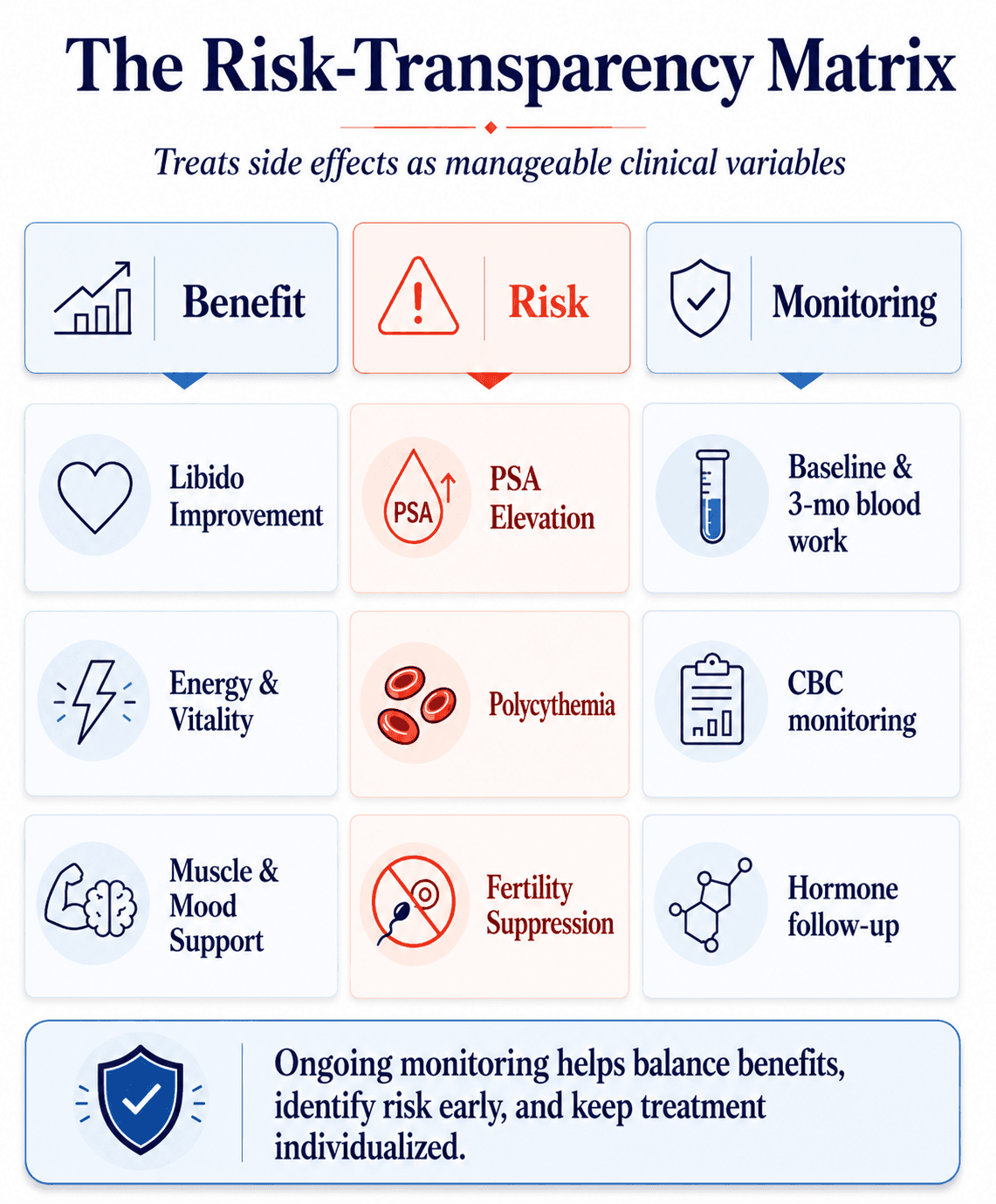
Clinical evidence indicates that TRT may improve libido, erectile function, and overall sexual satisfaction in men with confirmed hypogonadism (total testosterone below 12 nmol/L) under medical supervision. However, the therapy also has side effects. These may include acne, sleep apnea, an increase in red blood cells, reduced sperm production and sperm count, and blood clots.
How to Diagnose Low Testosterone?

A doctor will determine if you have low testosterone by asking about your symptoms and ordering blood tests. These tests must be done in the morning. That is when your testosterone level is highest.
Most doctors require two separate morning blood tests that measure both total testosterone and free testosterone levels. If both show a low number, and you have signs of low testosterone, a diagnosis may be made.
What Happens if You Ignore Symptoms
Ignoring symptoms may lead to worsening health outcomes including bone density loss, increased cardiovascular risk including heart disease, and progressive cognitive decline. Ignoring symptoms does not make them go away. Over time, loss of muscle may lead to falls in older men with low testosterone. Low cognitive function may affect your job. Erectile dysfunction may harm your relationships.
Research suggests that long-term untreated testosterone deficiency may be associated with reduced bone mineral density and cardiovascular considerations. However, more studies are needed to prove this link clearly.
Frequently Asked Questions
At what age does testosterone typically decline?
The typical age at which testosterone decline begins is from the early 40s, sometimes called late-onset hypogonadism. However, some men may have healthy testosterone levels even in their 50s due to balanced diet, proper physical activity, and healthy lifestyle choices.
How do you treat low testosterone (male hypogonadism) in men?
Doctors prescribe testosterone replacement therapy to restore the normal levels of testosterone. However, you may also support testosterone levels by doing regular physical activity (exercise), avoiding stress, and getting enough sleep up to 9 hours.
Can testosterone therapy address erectile dysfunction, mood changes and increased body fat?
Research shows that testosterone therapy can improve sexual function including sexual dysfunction like erectile dysfunction and low libido in men with confirmed hypogonadism, but sexual desire improvements are more consistent than erectile function benefits. The effect on mood changes is more conflicting, with studies showing mixed results. While testosterone therapy may help reduce increased body fat and improve muscle mass, the effect sizes are modest and TRT is not recommended primarily for weight reduction. Treatment should only be considered under medical supervision after confirming hypogonadism through proper testing including luteinizing hormone levels.
References
- Malkin CJ, Pugh PJ, Jones RD, Jones TH, Channer KS. Androgen deficiency as a predictor of metabolic syndrome in aging men: an opportunity for intervention? Drugs Aging. 2008;25(5):357-69. doi: 10.2165/00002512-200825050-00001. PMID: 18447401. https://pubmed.ncbi.nlm.nih.gov/18447401/
- Seidman SN, Walsh BT. Testosterone and depression in aging men. Am J Geriatr Psychiatry. 1999 Winter;7(1):18-33. doi: 10.1097/00019442-199902000-00004. PMID: 19225262. https://pubmed.ncbi.nlm.nih.gov/19225262/
- Rastrelli G, Guaraldi F, Reismann Y, Sforza A, Isidori AM, Maggi M, Corona G. Testosterone Replacement Therapy for Sexual Symptoms. Sex Med Rev. 2019 Jul;7(3):464-475. doi: 10.1016/j.sxmr.2018.11.005. PMID: 30803919. https://pubmed.ncbi.nlm.nih.gov/30803919/
- Zarrouf FA, Artz S, Griffith J, Sirbu C, Kommor M. Testosterone and depression: systematic review and meta-analysis. J Psychiatr Pract. 2009 Jul;15(4):289-305. doi: 10.1097/01.pra.0000358315.88931.fc. PMID: 19625884. https://pubmed.ncbi.nlm.nih.gov/19625884/
- Zhang Z, Kang D, Li H. The effects of testosterone on bone health in males with testosterone deficiency: a systematic review and meta-analysis. BMC Endocr Disord. 2020 Mar 7;20(1):33. doi: 10.1186/s12902-020-0509-6. PMID: 32145741. https://pubmed.ncbi.nlm.nih.gov/32145741/
- Kurita N, Yamazaki S, Fukumoto K, Otaki N, Otani K, Sekiguchi M, Konno S, Kikuchi S. Low testosterone levels, depressive symptoms, and falls in older men: a cross-sectional study. J Am Med Dir Assoc. 2014 Jan;15(1):30-5. doi: 10.1016/j.jamda.2013.08.003. PMID: 24047633. https://pubmed.ncbi.nlm.nih.gov/24047633/
- Aluka J, Nwokocha C, Ugoji U, Chukwuemeka NK. The Impact of Vitamin D on Androgens and Anabolic Steroids among Adult Males: A Meta-Analytic Review. Nutrients. 2024 Sep 25;16(19):3239. doi: 10.3390/nu16193239. PMID: 39452471. https://pubmed.ncbi.nlm.nih.gov/39452471/